

Article
C. Raja Mohan, Darshana M. Baruah
{
  "authors": [
    "C. Raja Mohan"
  ],
  "type": "legacyinthemedia",
  "centerAffiliationAll": "dc",
  "centers": [
    "Carnegie Endowment for International Peace",
    "Carnegie India"
  ],
  "collections": [],
  "englishNewsletterAll": "ctw",
  "nonEnglishNewsletterAll": "",
  "primaryCenter": "Carnegie India",
  "programAffiliation": "SAP",
  "programs": [
    "South Asia"
  ],
  "projects": [],
  "regions": [
    "United States",
    "South Asia",
    "India",
    "North America"
  ],
  "topics": [
    "Foreign Policy"
  ]
}
Source: Getty
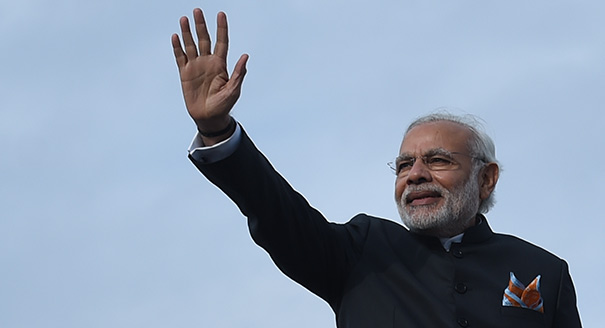
Prime Minister Modi hopes the wider South Asian diaspora will contribute to India’s economic development, act as a bridge to the nations that host them, and help promote broader international goals.
Source: Indian Express
As Prime Minister Narendra Modi’s political romance with the Indian diaspora continues, there is a strong case for extending his outreach to all the peoples of South Asian origin. Having transformed the way Delhi thinks about diaspora, Modi must now try and connect it to the Subcontinent’s expatriate communities around the world.
Modi made no mention of the South Asian diaspora at the opening of the biennial Pravasi Bharatiya Divas in Bengaluru on Sunday. But his remark that Delhi must look beyond the ‘colour of the passport’ to the ‘blood relationships’ applies to all of the South Asian diaspora. Since South Asia has multiple sovereign entities, Delhi can’t extend all possible support to the Subcontinent’s diaspora population. For example India can’t provide consular services to citizens of its neighbouring countries.
But given the depth of historic, cultural, ethnic and commercial links that bind the South Asian people and the varying levels of contemporary special relationships with the neighbours , there is much that Delhi can do in promoting links with the Subcontinental diaspora–from mobilizing their resources for common developmental goals in the region to providing humanitarian assistance to those caught in crisis zones.
If the Indian diaspora (including citizens and people of Indian origin) is today estimated to be around 30 million, the numbers from our neighbours are equally impressive. If we take the expat communities from Afghanistan, Pakistan, Nepal, Bangladesh and Sri Lanka, the total South Asian diaspora could add up to more than 50 million. The premises of Modi’s engagement with the Indian diaspora are equally applicable in connecting to the rest.
If Atal Bihari Vajpayee laid the foundation for reimagining India’s ties with the diaspora at the turn of the millennium, Modi has made it a key area of national priority. For Modi, the diaspora is an ‘asset’ rather than a ‘liability’ and India’s intellectual power beyond borders ‘brain gain’ and not ‘brain drain’.
Modi has bet that Indian diaspora can enhance its contribution to India’s economic development, act a bridge to the nations that host them, and help promote India’s broader international goals. Beyond these objectives, the South Asian diaspora could facilitate some special goals that Modi has set for the nation–of accelerating regional economic integration and building on the shared cultural heritage.
Promoting bonds with the South Asian diaspora could help rejuvenate historic cross-border associations and moderate some of the inter-state conflicts. All the South Asian diasporic communities are all loyal to their own particular countries. Living as they do in distant lands, they are acutely conscious of the shared Subcontinental identity. This is a very precious resource that remains to be tapped by Modi’s foreign policy activism. A modest beginning can be made my inviting South Asian community leaders to Modi’s interaction with the diaspora during his travels abroad and to the PBD conventions and conferences in India.
This article was originally published in the Indian Express.
Former Nonresident Senior Fellow, Carnegie India
A leading analyst of India’s foreign policy, Mohan is also an expert on South Asian security, great-power relations in Asia, and arms control.
Recent Work

C. Raja Mohan, Darshana M. Baruah


Alexander Gabuev, Paul Haenle, C. Raja Mohan, …
Carnegie India does not take institutional positions on public policy issues; the views represented herein are those of the author(s) and do not necessarily reflect the views of Carnegie, its staff, or its trustees.

A partnership between India, a country of subcontinental size, and Africa, a continent of fifty-four countries, may seem asymmetric until one notes that both are home to nearly the same number of people—1.4 billion. This essay spells out the existing challenges to the partnership, its optimal potential, and the possible pathways to realize it over the next quarter-century.

Rajiv Bhatia

The U.S.–India semiconductor cooperation story is well-stocked with top-level strategic intent. What remains unresolved, however, are some underlying challenges that will determine whether the cooperation actually functions. Three such friction points stand out.

Shruti Mittal

The India–EU Free Trade Agreement (FTA) is shaping up to be one of the most consequential trade negotiations, both economically and strategically. But, what’s in the agreement, what’s missing, and what will determine its success in the years ahead

Vrinda Sahai, Nicolas Köhler-Suzuki

Drawing on ten public discussions from the India AI Impact Summit 2026, this article highlights key outlooks on open source in AI that are likely to shape policy and governance conversations going forward.
Shruti Mittal
This collection of essays by scholars from Carnegie India’s Technology and Society program traces the evolution of the AI summit series and examines India’s framing around the three sutras of people, planet, and progress. Scholars have catalogued and assessed the concrete deliverables that emerged and assessed what the precedent of a Global South country hosting means for the future of the multilateral conversation.


Nidhi Singh, Tejas Bharadwaj, Shruti Mittal, …