
This piece argues that India’s central challenge is not managing a single flashpoint but resolving the underlying tension between expansion and institutional coherency of the BRICS grouping.
Vrinda Sahai
{
"authors": [
"Arushi Kumar"
],
"type": "legacyinthemedia",
"centerAffiliationAll": "",
"centers": [
"Carnegie Endowment for International Peace",
"Carnegie India"
],
"collections": [],
"englishNewsletterAll": "",
"nonEnglishNewsletterAll": "",
"primaryCenter": "Carnegie India",
"programAffiliation": "",
"programs": [],
"projects": [],
"regions": [
"South Asia",
"Afghanistan",
"India"
],
"topics": [
"Foreign Policy",
"Security"
]
}Source: Getty
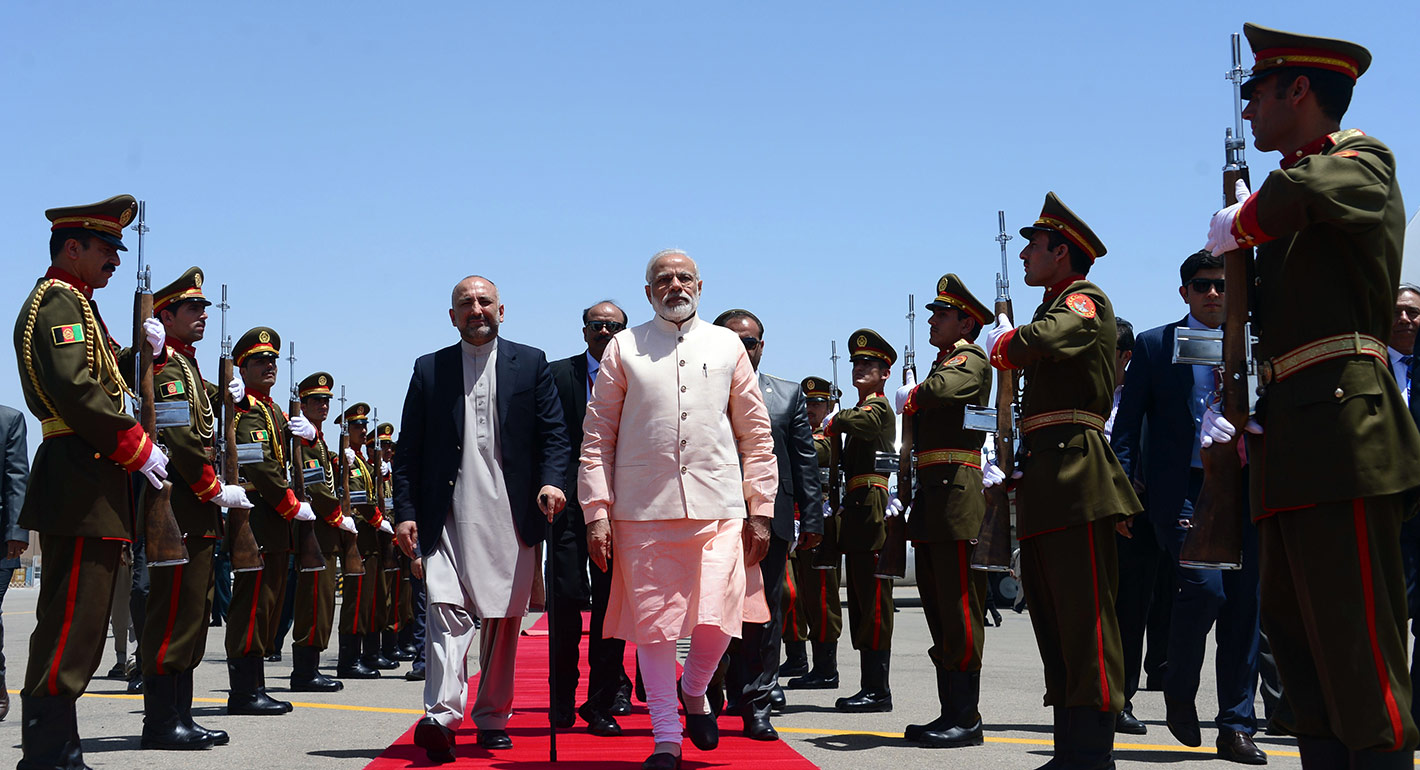
Donald Trump’s presidency presents an unexpected opportunity for India in its continued efforts to stabilize Afghanistan.
Source: Diplomat
Donald Trump’s presidency presents an unexpected opportunity for India in its continued efforts to stabilize Afghanistan. As Western forces reduce their presence on Afghan soil and the formidable Haqqani-Taliban combination consolidates control over increasingly larger areas, the Afghan government’s position continues to diminish. The Trump administration brings with it the opportunity to make a concrete shift in policy to deal with the challenges that threaten to undo the progress made in Afghanistan over the last decade and a half. Given President Donald Trump, Secretary of Defense Gen. James Mattis, and National Security Advisor Lt. Gen. Michael Flynn’s statements on Afghanistan, the incoming administration may push for increased troop levels in Afghanistan and confront Pakistan over its role as the major destabilizing force in South Asia.
Arushi Kumar
Carnegie India does not take institutional positions on public policy issues; the views represented herein are those of the author(s) and do not necessarily reflect the views of Carnegie, its staff, or its trustees.
This piece argues that India’s central challenge is not managing a single flashpoint but resolving the underlying tension between expansion and institutional coherency of the BRICS grouping.
Vrinda Sahai
The ASML MoU with Tata Electronics is an indicator of how far the Indian semiconductor ecosystem has come. This ecosystem has been years in the making and represents real commercial logic.
Konark Bhandari
This paper examines the relationship between India’s evolving space policy and the corresponding growth in private space ventures. It analyzes both the enabling factors created by recent regulatory changes and the persistent challenges facing entrepreneurs in this capital-intensive, highly regulated industry.
Harshan Vazhakunnam
A partnership between India, a country of subcontinental size, and Africa, a continent of fifty-four countries, may seem asymmetric until one notes that both are home to nearly the same number of people—1.4 billion. This essay spells out the existing challenges to the partnership, its optimal potential, and the possible pathways to realize it over the next quarter-century.
Rajiv Bhatia
The U.S.–India semiconductor cooperation story is well-stocked with top-level strategic intent. What remains unresolved, however, are some underlying challenges that will determine whether the cooperation actually functions. Three such friction points stand out.
Shruti Mittal







