

Article
C. Raja Mohan, Darshana M. Baruah
{
  "authors": [
    "C. Raja Mohan"
  ],
  "type": "legacyinthemedia",
  "centerAffiliationAll": "dc",
  "centers": [
    "Carnegie Endowment for International Peace",
    "Carnegie India"
  ],
  "collections": [],
  "englishNewsletterAll": "ctw",
  "nonEnglishNewsletterAll": "",
  "primaryCenter": "Carnegie India",
  "programAffiliation": "SAP",
  "programs": [
    "South Asia"
  ],
  "projects": [],
  "regions": [
    "Asia",
    "South Asia",
    "India",
    "Pakistan",
    "East Asia",
    "China"
  ],
  "topics": [
    "Foreign Policy",
    "Security"
  ]
}
Source: Getty
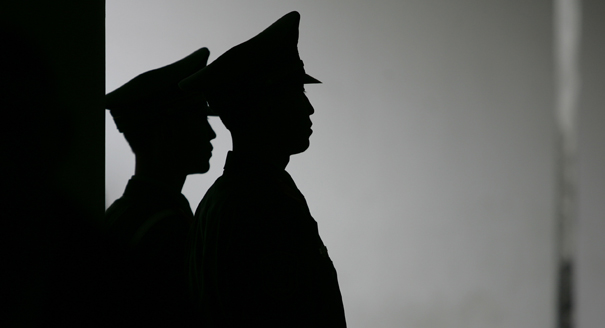
The Chinese defense profile is expanding beyond Pakistan to cover India’s other neighbors in South Asia and the Indian Ocean.
Source: Indian Express
India’s plans to sign agreements on defence cooperation with Bangladesh during PM Sheikh Hasina’s visit to Delhi next month and the Chinese Defence Minister General Chang Wanquan’s travels to Sri Lanka and Nepal last week, underline the new dynamic of defence diplomacy in the neighbourhood. The Indian Army Chief, General Bipin Rawat, is also travelling this week to Nepal and Bangladesh.
One would think these would be routine among neighbouring countries, but Delhi and Dhaka have not had institutionalised defence engagement all these years. That it might happen finally has generated an anxious debate in the Bangladeshi press. Some in Dhaka wonder if this is about Delhi trying to limit Beijing’s rising military profile in Bangladesh, including the most recent sale of submarines. Others worry about Dhaka drawing too close to Delhi.
On the eve of General Chang’s visit to Sri Lanka and Nepal, the Chinese newspaper, Global Times, warned Delhi not to meddle in Beijing’s strategic cooperation with India’s neighbours and accused it of “treating South Asia and the Indian Ocean as its backyard”. If “India seeks to balance China,” the Times warned, Beijing “will have to fight back, because its core interests will have been violated”. That’s strong stuff, even from the usually outspoken Global Times.
What’s going on here? It is not that China’s security cooperation with India’s neighbours is new. China’s defence collaboration with Pakistan has long been a feature of India’s security environment. It has included such extraordinary elements such as the transfer of nuclear weapons and missile technology to Pakistan.
What we see today is the geographic expansion of the Chinese defence profile way beyond Pakistan to cover India’s other neighbours in South Asia and the Indian Ocean. The scope of Chinese defence cooperation now includes potential military basing arrangements in the region.
That China’s port construction activity in Colombo and Hambantota might have a strategic dimension was highlighted when a PLA submarine showed up in Sri Lanka’s waters in 2014. Meanwhile, China’s first foreign military base is coming up in Djibouti. The Chinese navy has an impressive presence in Pakistan’s Karachi port and Gwadar could turn into a formal military facility in the not too distant future.
The Global Times advised Delhi that it should “get used to” China’s deepening ties with India’s neighbours. “When an increasing number of Chinese companies get established in these countries”, under China’s One Belt, One Road initiative, the Times went on, “it is inevitable that Beijing will boost defence collaboration with them to protect not only China’s, but also the region’s interest”.
This point is beginning to register, if belatedly, in India. Delhi is now waking up to the proposition that the expansion of Chinese commercial and infrastructure cooperation with India’s neighbours will have strategic consequences, including stronger defence and security partnerships.
The government of Prime Minister Narendra Modi has discarded the UPA government’s low-key endorsement of President Xi Jinping’s Belt and Road initiative, become more critical of the China-Pakistan Economic Corridor, stepped up work on its own trans-border connectivity initiatives, and intensified its defence diplomacy. That this is generating political friction between Beijing and Delhi is not surprising: It is the fact that India has taken so long to consider effective responses to China’s strategic power play in the Subcontinent.
Despite its negative assessment of China’s long-standing strategic military cooperation with Pakistan, and the growing volume of Chinese arms sales to South Asian countries, Delhi has been utterly unprepared for Beijing’s widening strategic influence in its neighbourhood. Delhi has long been complacent in its assumptions about India’s natural strengths in the Subcontinent.
After Independence, India was worried about Western, especially Anglo-American, military influence in its neighbourhood. It watched warily as Soviet Russia occupied Afghanistan in the 1980s. But the strategic influence of a distant America is diminishing in the 21st century — it is China’s military power that has begun to envelop India.
But Delhi gains little by whining about Beijing’s “encirclement of India”. China is doing what comes naturally to great powers. Beijing is projecting military power and limiting the strategic influence of other nations in its neighbourhood. India, instead, must raise its own regional game by overcoming multiple limitations on its defence cooperation.
Two problems stand out. One is the lack of a defence industrial base. Delhi may not like Sri Lanka or Bangladesh buying Chinese military systems, but it has little to offer as alternatives. While PM Modi has talked up indigenous arms production and exports, he has not been able to get the Ministry of Defence to shed its indolent ways.
Nor has he been able to make the MoD receptive to the idea of defence diplomacy. Despite repeated entreaties from the armed services and the foreign office, the MoD has been unwilling to facilitate vigorous defence exchanges with the neighbours. Without changing the MoD’s current approach to defence diplomacy, Beijing will have little difficulty in chipping away at Delhi’s much vaunted claims on “India’s regional primacy” and the “strategic unity of the Subcontinent”.
This article was originally published in the Indian Express.
Former Nonresident Senior Fellow, Carnegie India
A leading analyst of India’s foreign policy, Mohan is also an expert on South Asian security, great-power relations in Asia, and arms control.
Recent Work

C. Raja Mohan, Darshana M. Baruah


Alexander Gabuev, Paul Haenle, C. Raja Mohan, …
Carnegie India does not take institutional positions on public policy issues; the views represented herein are those of the author(s) and do not necessarily reflect the views of Carnegie, its staff, or its trustees.

On the last day of the India AI Impact Summit, India signed Pax Silica, a U.S.-led declaration seemingly focused on semiconductors. While India’s accession to the same was not entirely unforeseen, becoming a signatory nation this quickly was not on the cards either.

Konark Bhandari

On January 12, 2026, India's "workhorse," the Polar Satellite Launch Vehicle, experienced a consecutive mission failure for the first time in its history. This commentary explores the implications of this incident on India’s space sector and how India can effectively address issues stemming from the incident.

Tejas Bharadwaj
Connecting real-world AI use cases across sectors such as health, education, agriculture, and livelihoods can help policymakers, innovators, and institutions align around a shared goal. This article looks at a framework ensuring that AI works for everyone.

Shalini Kapoor, Tanvi Lall

This piece examines India’s response to U.S. sanctions and tariffs, specifically assessing the immediate market consequences, such as alterations in import costs, and the broader strategic implications for India’s energy security and foreign policy orientation.
Vrinda Sahai
This article looks at the progress of the Semiconductor Laboratory fab modernization plan based on publicly available documents, and potential learnings for future upgrades to government-owned fabs and India’s larger semiconductor ecosystem, especially regarding the use of refurbished equipment.
Shruti Mittal, Konark Bhandari