

• Research
  • About
  • Experts
Carnegie India logoCarnegie lettermark logo
AI
{
  "authors": [
    "Richard Sokolsky",
    "Aaron David Miller"
  ],
  "type": "legacyinthemedia",
  "centerAffiliationAll": "",
  "centers": [
    "Carnegie Endowment for International Peace"
  ],
  "collections": [],
  "englishNewsletterAll": "",
  "nonEnglishNewsletterAll": "",
  "primaryCenter": "Carnegie Endowment for International Peace",
  "programAffiliation": "",
  "programs": [],
  "projects": [],
  "regions": [
    "North America",
    "United States"
  ],
  "topics": [
    "Security",
    "Foreign Policy"
  ]
}

Source: Getty

In The Media

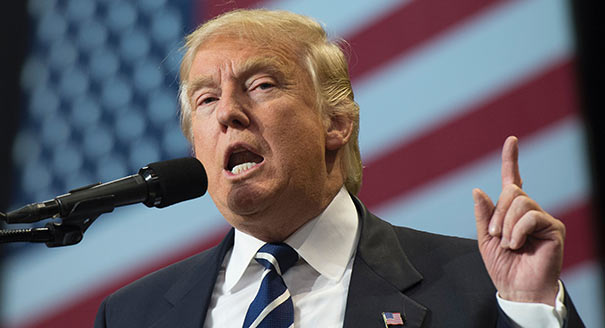
A Politically Inconvenient Guide to Trump’s National Security Strategy Speech

National Security Strategies are typically less detailed foreign policy to do lists than broad principles and platitudes designed to persuade people that an administration has a compelling and effective strategy. A year in it’s not at all clear that the Trump administration has one.

Link Copied
By Richard Sokolsky and Aaron David Miller
Published on Dec 19, 2017

Source: USA Today

Who says Donald Trump doesn’t have a foreign policy? He does, but it wasn’t the one he rolled out in a speech Monday on his administration’s national security strategy.

Much of the speech contains language quite consistent with Trumpian values, particularly the focus on America first, homeland security, trade protectionism, America’s sovereignty, and withdrawal from Paris Climate and Trans-Pacific Partnership. But it’s also full of bromides, slogans and platitudes to persuade Congress, the media and the public that the administration has a coherent strategy to protect U.S. interests in a turbulent world.

Still, there is little in the speech that reflects much of what Trump has actually done in foreign policy or why. Here’s a more politically inconvenient guide to Trump’s foreign policy. And unlike the national security strategy, it may well provide clues as to how he’ll operate for the remainder of his presidency....

Read Full Text

This article was originally published by USA Today.

About the Authors

Richard Sokolsky

Nonresident Senior Fellow, Russia and Eurasia Program

Richard Sokolsky is a nonresident senior fellow in Carnegie’s Russia and Eurasia Program. His work focuses on U.S. policy toward Russia in the wake of the Ukraine crisis.

Aaron David Miller

Senior Fellow, American Statecraft Program

Aaron David Miller is a senior fellow at the Carnegie Endowment for International Peace, focusing on U.S. foreign policy.

Authors

Richard Sokolsky
Nonresident Senior Fellow, Russia and Eurasia Program
Richard Sokolsky
Aaron David Miller
Senior Fellow, American Statecraft Program
Aaron David Miller
SecurityForeign PolicyNorth AmericaUnited States

Carnegie India does not take institutional positions on public policy issues; the views represented herein are those of the author(s) and do not necessarily reflect the views of Carnegie, its staff, or its trustees.

More Work from Carnegie India

  • Article
    India’s Oil Security Strategy: Structural Vulnerabilities and Strategic Choices

    This piece argues that the present Indian strategy, based on opportunistic diversification and utilization of limited strategic reserves, remains inadequate when confronting supply disruptions. It evaluates India’s options in the short, medium, and long terms.

      Vrinda Sahai

  • Article
    What Could a Reciprocal Defense Procurement Agreement Do for U.S.-India Ties?

    India and the United States are close to concluding a Reciprocal Defense Procurement Agreement (RDPA) that will allow firms from the two countries to sell to each other’s defense establishments more easily. While this may not remedy the specific grievances both sides may have regarding larger bilateral issues, an RDPA could restore some momentum, following the trade deal announcement.

      Konark Bhandari

  • Commentary
    India Signs the Pax Silica—A Counter to Pax Sinica?

    On the last day of the India AI Impact Summit, India signed Pax Silica, a U.S.-led declaration seemingly focused on semiconductors. While India’s accession to the same was not entirely unforeseen, becoming a signatory nation this quickly was not on the cards either.

      Konark Bhandari

  • Commentary
    The Impact of U.S. Sanctions and Tariffs on India’s Russian Oil Imports

    This piece examines India’s response to U.S. sanctions and tariffs, specifically assessing the immediate market consequences, such as alterations in import costs, and the broader strategic implications for India’s energy security and foreign policy orientation.

      Vrinda Sahai

  • Article
    Military Lessons from Operation Sindoor

    The India-Pakistan conflict that played out between May 6 and May 10, 2025, offers several military lessons. This article presents key takeaways from Operation Sindoor and breaks down how India’s preparations shaped the outcome and what more is needed to strengthen future readiness.

      Dinakar Peri

Get more news and analysis from
Carnegie India
Carnegie India logo, white
Unit C-4, 5, 6, EdenparkShaheed Jeet Singh MargNew Delhi – 110016, IndiaPhone: 011-40078687
  • Research
  • About
  • Experts
  • Projects
  • Events
  • Contact
  • Careers
  • Privacy
  • For Media
Get more news and analysis from
Carnegie India
© 2026 Carnegie Endowment for International Peace. All rights reserved.








