

Report
- +8
Salman Ahmed, Wendy Cutler, Rozlyn C. Engel, …
{
  "authors": [
    "Jake Sullivan"
  ],
  "type": "legacyinthemedia",
  "centerAffiliationAll": "dc",
  "centers": [
    "Carnegie Endowment for International Peace"
  ],
  "collections": [],
  "englishNewsletterAll": "americanStatecraft",
  "nonEnglishNewsletterAll": "",
  "primaryCenter": "Carnegie Endowment for International Peace",
  "programAffiliation": "ASP",
  "programs": [
    "American Statecraft"
  ],
  "projects": [],
  "regions": [
    "North America",
    "United States"
  ],
  "topics": [
    "Foreign Policy",
    "Global Governance"
  ]
}
Source: Getty
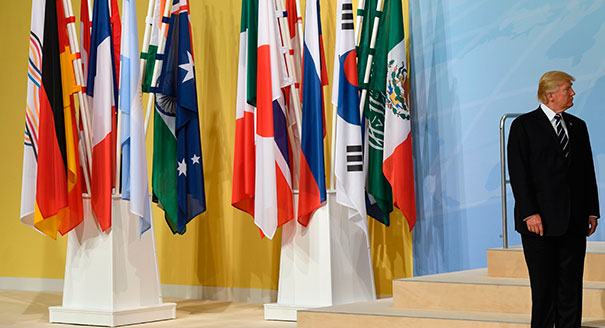
The international order is built to last through significant shifts in global politics and economics and strong enough to survive a term of President Trump.
Source: Foreign Affairs
The warnings started long before Donald Trump was even a presidential candidate. For at least a decade, a growing chorus of foreign policy experts had been pointing to signs that the international order was coming apart. Authoritarian powers were flouting long-accepted rules. Failed states were radiating threats. Economies were being disrupted by technology and globalization; political systems, by populism. Meanwhile, the gap in power and influence between the United States—the leader and guarantor of the existing order—and the rest of the world was closing.
Then came Trump’s election. To those already issuing such warnings, it sounded the death knell of the world as it was. Even many of those who had previously resisted pessimism suddenly came to agree. As they saw it, the U.S.-led order—the post–World War II system of norms, institutions, and partnerships that has helped manage disputes, mobilize action, and govern international conduct—was ending for good. And what came next, they argued, would be either an entirely new order or a period with no real order at all.
But the existing order is more resilient than this assessment suggests. There is no doubt that Trump represents a meaningful threat to the health of both American democracy and the international system. And there is a nonnegligible risk that he could drag the country into a constitutional crisis, or the world into a crippling trade war or even an all-out nuclear war. Yet despite these risks, rumors of the international order’s demise have been greatly exaggerated. The system is built to last through significant shifts in global politics and economics and strong enough to survive a term of President Trump.
Former U.S. National Security Advisor to Former President Joe Biden
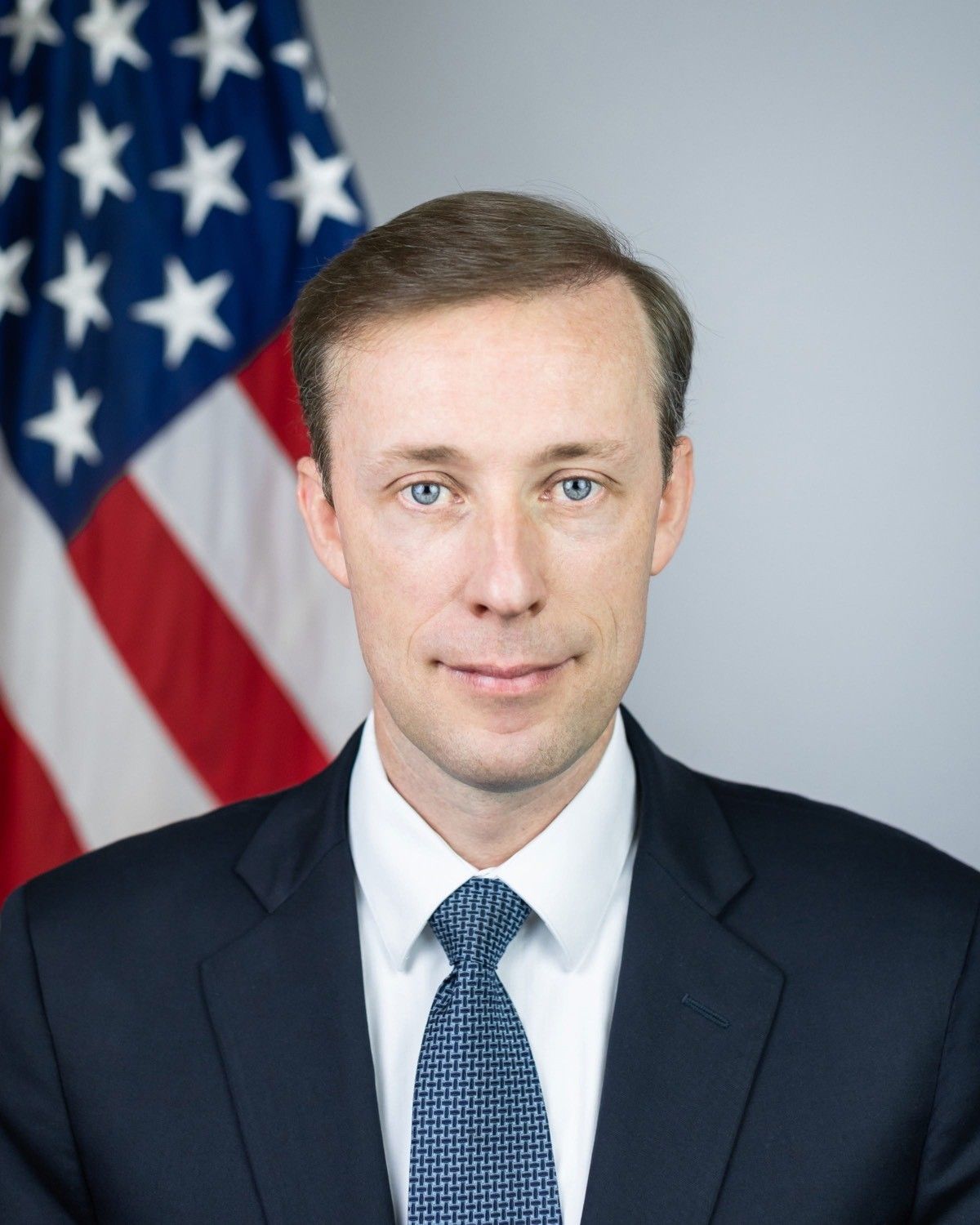
Jake Sullivan, a senior fellow at the University of New Hampshire's Carsey School of Public Policy, served as the United States national security advisor to former President Joe Biden from 2021 to 2025. Sullivan previously served as deputy assistant to former President Barack Obama, national security advisor to former Vice President Biden, director of policy planning in the State Department, and as deputy chief of staff to former U.S. Secretary of State Hillary Clinton.
Recent Work
Salman Ahmed, Wendy Cutler, Rozlyn C. Engel, …
Salman Ahmed, Allison Gelman, Tarik Abdel-Monem, …
Carnegie India does not take institutional positions on public policy issues; the views represented herein are those of the author(s) and do not necessarily reflect the views of Carnegie, its staff, or its trustees.

How is AI reshaping space security, creating governance challenges, and where does international diplomacy stand today?


Tejas Bharadwaj, Almudena Azcárate Ortega

After the chill in ties between 2020 and 2024 that brought India–China relations to their lowest point in several decades, the two countries have engaged each other afresh. This paper argues that there are predominantly four imperatives guiding India’s approach to China, and they exist in an order of priority.

Saheb Singh Chadha

This piece argues that India’s central challenge is not managing a single flashpoint but resolving the underlying tension between expansion and institutional coherency of the BRICS grouping.

Vrinda Sahai

A partnership between India, a country of subcontinental size, and Africa, a continent of fifty-four countries, may seem asymmetric until one notes that both are home to nearly the same number of people—1.4 billion. This essay spells out the existing challenges to the partnership, its optimal potential, and the possible pathways to realize it over the next quarter-century.

Rajiv Bhatia

The U.S.–India semiconductor cooperation story is well-stocked with top-level strategic intent. What remains unresolved, however, are some underlying challenges that will determine whether the cooperation actually functions. Three such friction points stand out.

Shruti Mittal