

Other
- +18
James M. Acton, Saskia Brechenmacher, Cecily Brewer, …
{
  "authors": [
    "Marc Pierini"
  ],
  "type": "legacyinthemedia",
  "centerAffiliationAll": "dc",
  "centers": [
    "Carnegie Endowment for International Peace",
    "Carnegie Europe"
  ],
  "collections": [
    "Europe’s Southern Neighborhood"
  ],
  "englishNewsletterAll": "",
  "nonEnglishNewsletterAll": "",
  "primaryCenter": "Carnegie Europe",
  "programAffiliation": "EP",
  "programs": [
    "Europe"
  ],
  "projects": [],
  "regions": [
    "Middle East",
    "Europe",
    "Syria",
    "Western Europe",
    "France",
    "Iran"
  ],
  "topics": [
    "Foreign Policy",
    "Security"
  ]
}
Source: Getty
Cruise missiles and lofty speeches will not bring peace to the Syrians. France must enlist the EU to start working on a real settlement.
Source: Politico Europe
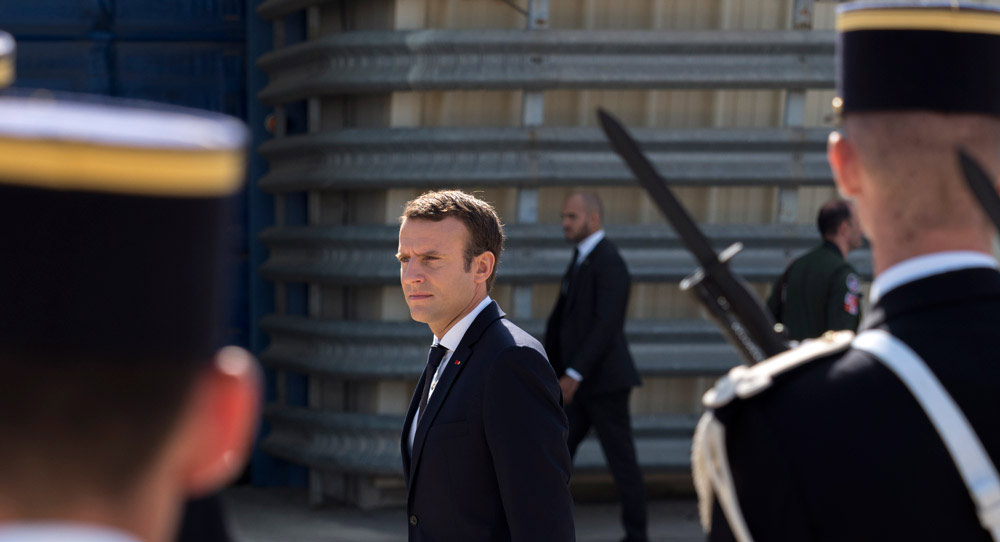
In Syria, French President Emmanuel Macron has acted like the leader of a permanent member of the U.N. Security Council and a country with significant military assets. Last week, France joined the United States and the United Kingdom in a strike on Syria’s chemical weapons facilities and stockpiles.
The attacks were not meant to start an open conflict with Moscow, another well-armed member of the security council. They were deliberately limited to highlighting the West’s much-touted red line on the use of chemical weapons against civilians. As strikes intended to send a strong message, they were effective. But peace in Syria remains far away.The real test is what happens next on the diplomatic front — and there, Macron would do well to remember that France is also a member of a great economic and diplomatic power: the European Union.
It would be hard to detect a common EU voice on Syria.
Macron has played a leading role in the military action against Syria; he claims to have had some influence on the posture taken by the U.S. and Turkey. But it would be hard to detect a common EU voice on Syria. Even the three leading figures of the EU institutional scene — Donald Tusk, Jean-Claude Juncker and Federica Mogherini — couldn’t manage to produce a joint statement.
The losers of this dynamic include Germany, Italy and other EU members. The winner is Moscow, which has a taste for dividing the bloc whenever it can.
What’s needed to bring peace to Syria is a serious return to talks at the U.N. table. This will require EU-wide resolve — not just Macron’s national posturing — to bear down first on the United States, and second on the negotiations themselves. Adding an EU dimension to the talks would bring Germany squarely on board, help better manage Donald Trump’s unpredictability, open a channel for cooperation with Turkey and contribute to fending off Moscow’s influence in some European capitals.
To be sure, it won’t be easy. In addition to managing to hang together, the EU will need to bring three other reluctant players to agree to a U.N.-brokered settlement.
In the past 30 months, Russian President Vladimir Putin has achieved a lot: Syrian President Bashar al-Assad’s survival, a large air base in Latakia, an expanded naval station in Tartus, and a new place on the world diplomatic stage. Now, Putin’s choice is between remaining a permanent spoiler or talking seriously to Western leaders about bringing peace to Syria.
Despite all the costs and risks involved, Putin probably has more incentives — and perhaps a taste — to spoil than cooperate. Foreign Minister Sergey Lavrov’s April 13 statement about a new wave of refugees as a result of miscalculation in Syria is an illustration of the Russian president’s penchants.
The EU needs to engage Turkey regarding Syria, despite the dismal state of its governance illustrated by the Commission’s “progress report.”
The EU needs to engage Turkey regarding Syria, despite the dismal state of its governance illustrated by the Commission’s “progress report.” As Ankara’s approval of the Western strikes has shown, the country is torn between its longstanding NATO membership and an opportunistic yet uncomfortable alliance with Moscow and Tehran.
The EU must convince President Recep Tayyip Erdoğan that a lasting U.S.-French-British presence in northwestern Syria alongside Syrian Kurdish forces is in Turkey’s interest. He will also have to be persuaded to put a stop to further military forays into northern Syria.
The rogue factor to peace in Syria remains Assad. Remember: His grandfather’s first nickname was al-Wahhish — the wild beast in Arabic — before being swapped for al-Assad — the lion — which became the family name. Wielding unimaginable violence is the clan’s trademark.
A few years ago, the Syrian president himself launched the Islamic State by freeing radical Islamists from the Sednaya prison, and he is no doubt ready to rekindle what is left of the self-proclaimed caliphate if he deems this will serve his goals. Similarly, he may well use chemicals again.
For the European Union, the test is one of cohesion. Macron was elected on a pro-EU ticket, but his voters haven’t yet seen much Europe in his foreign policy moves, including in the diplomatic initiative he called for on Syria on April 15 and to the European Parliament on April 17.
Macron’s Gaullian instincts could well make him privilege France’s grandeur, ignore the EU dimension of the Syrian settlement, and simply keep the EU as a sideshow where only humanitarian aid and reconstruction are discussed
Macron’s Gaullian instincts could well make him privilege France’s grandeur, ignore the EU dimension of the Syrian settlement, and simply keep the EU as a sideshow where only humanitarian aid and reconstruction are discussed. But that would be a mistake. Working instead to unite the EU around a common cause would be the fulfillment of the promise he made to voters before his election.
The military strikes have now sent a clear signal to Damascus and Moscow that using chemical weapons will have a price. Now, it’s time for the French president to activate the EU foreign policy machinery and trigger a real debate in the U.N. about the future of Syria.
Cruise missiles and lofty speeches will not bring peace to the Syrians. Macron must enlist the EU to start working on a real settlement.

Senior Fellow, Carnegie Europe
Pierini is a senior fellow at Carnegie Europe, where his research focuses on developments in the Middle East and Turkey from a European perspective.
Recent Work

James M. Acton, Saskia Brechenmacher, Cecily Brewer, …
Marc Pierini
Carnegie India does not take institutional positions on public policy issues; the views represented herein are those of the author(s) and do not necessarily reflect the views of Carnegie, its staff, or its trustees.

This piece examines India’s response to U.S. sanctions and tariffs, specifically assessing the immediate market consequences, such as alterations in import costs, and the broader strategic implications for India’s energy security and foreign policy orientation.
Vrinda Sahai
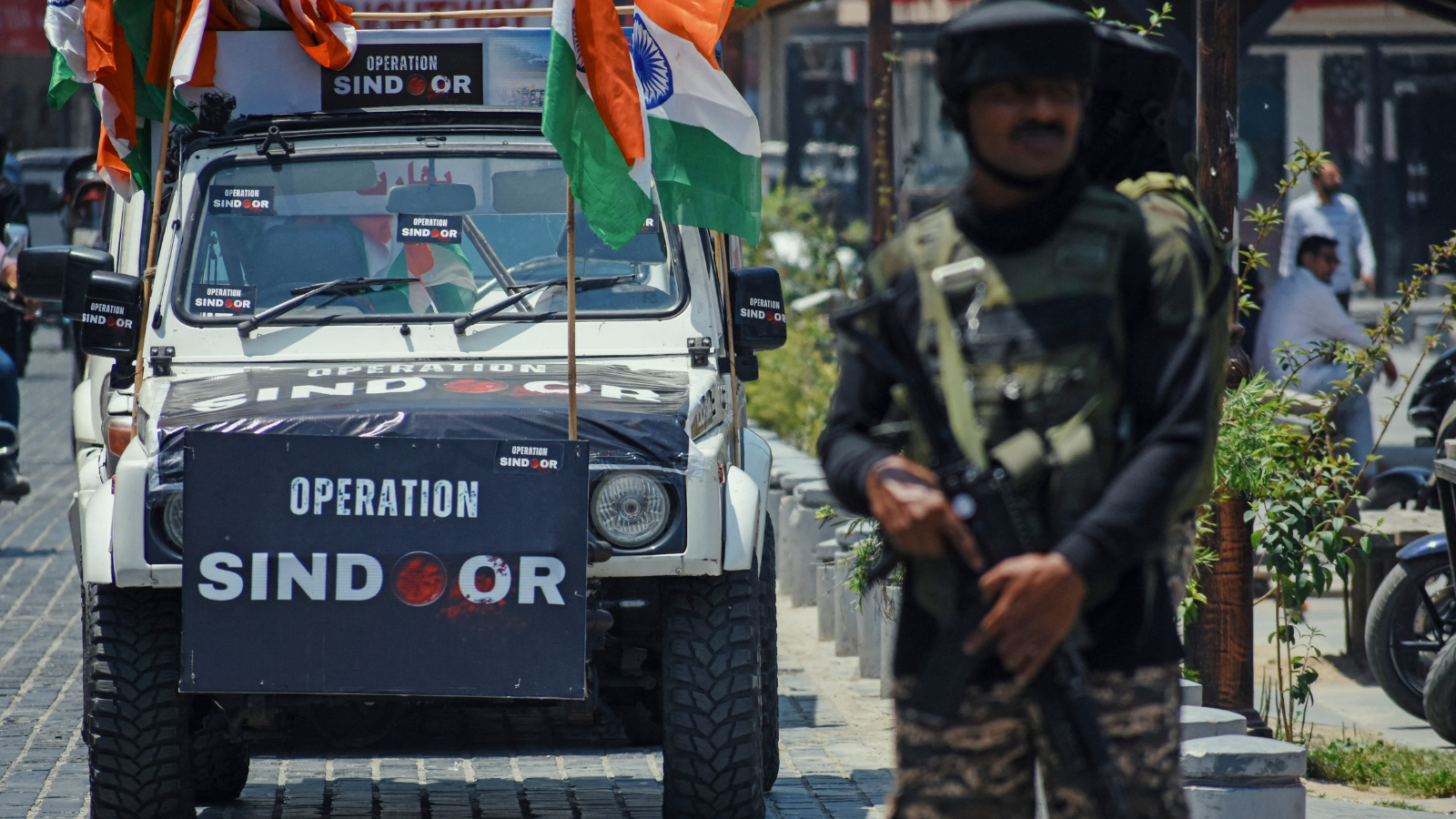
The India-Pakistan conflict that played out between May 6 and May 10, 2025, offers several military lessons. This article presents key takeaways from Operation Sindoor and breaks down how India’s preparations shaped the outcome and what more is needed to strengthen future readiness.

Dinakar Peri
This book offers a comprehensive analysis of India's evolving relationship with sovereignty in a complex global order. Moving beyond conventional narratives, it examines how the sovereignty principle shapes India's behavior across four critical domains—from traditional military power to contemporary data governance.

Rudra Chaudhuri, Nabarun Roy
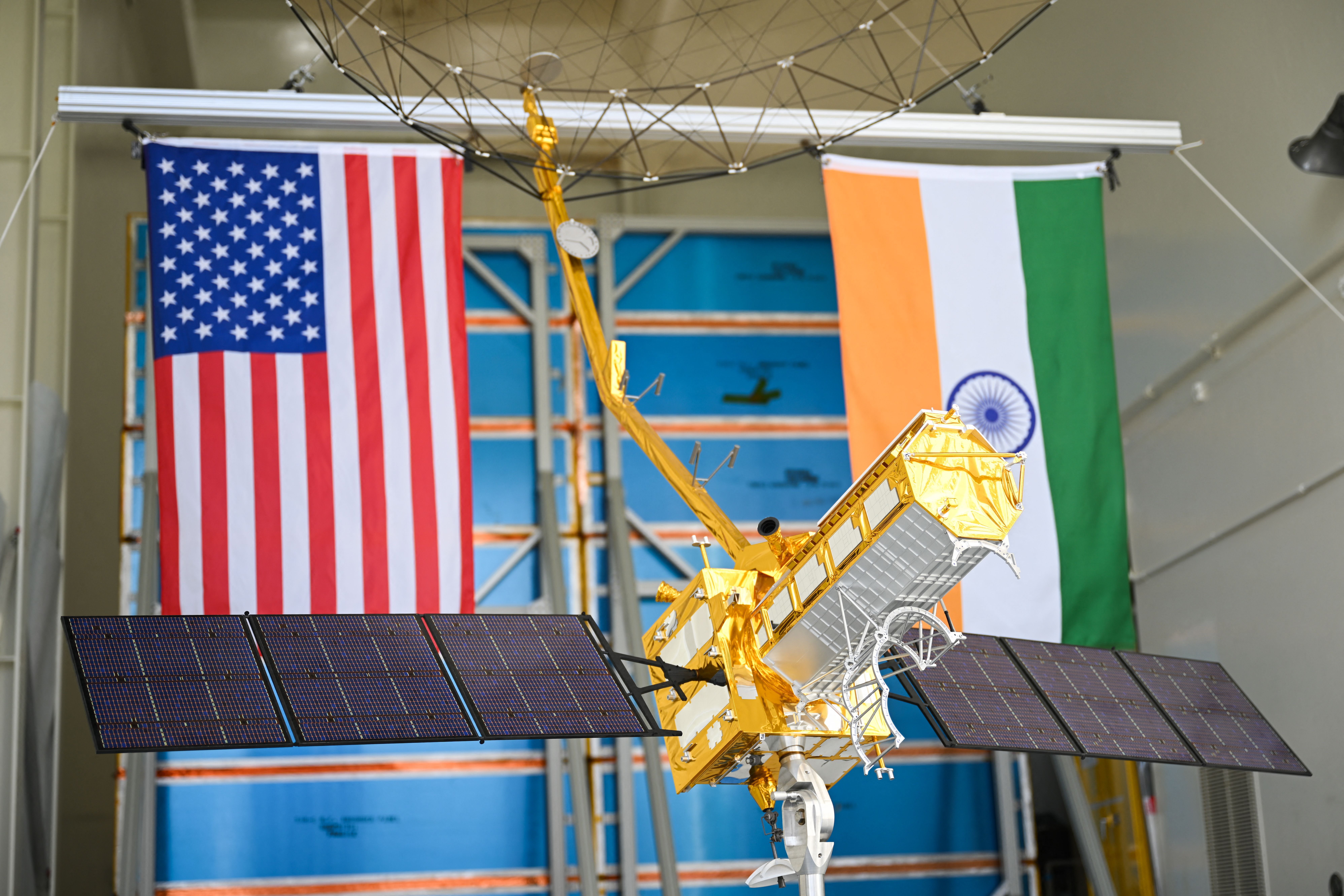
On July 30, 2025, the United States announced 25 percent tariffs on Indian goods. While diplomatic tensions simmered on the trade front, a cosmic calm prevailed at the Sriharikota launch range. Officials from NASA and ISRO were preparing to launch an engineering marvel into space—the NASA-ISRO Synthetic Aperture Radar (NISAR), marking a significant milestone in the India-U.S. bilateral partnership.

Tejas Bharadwaj
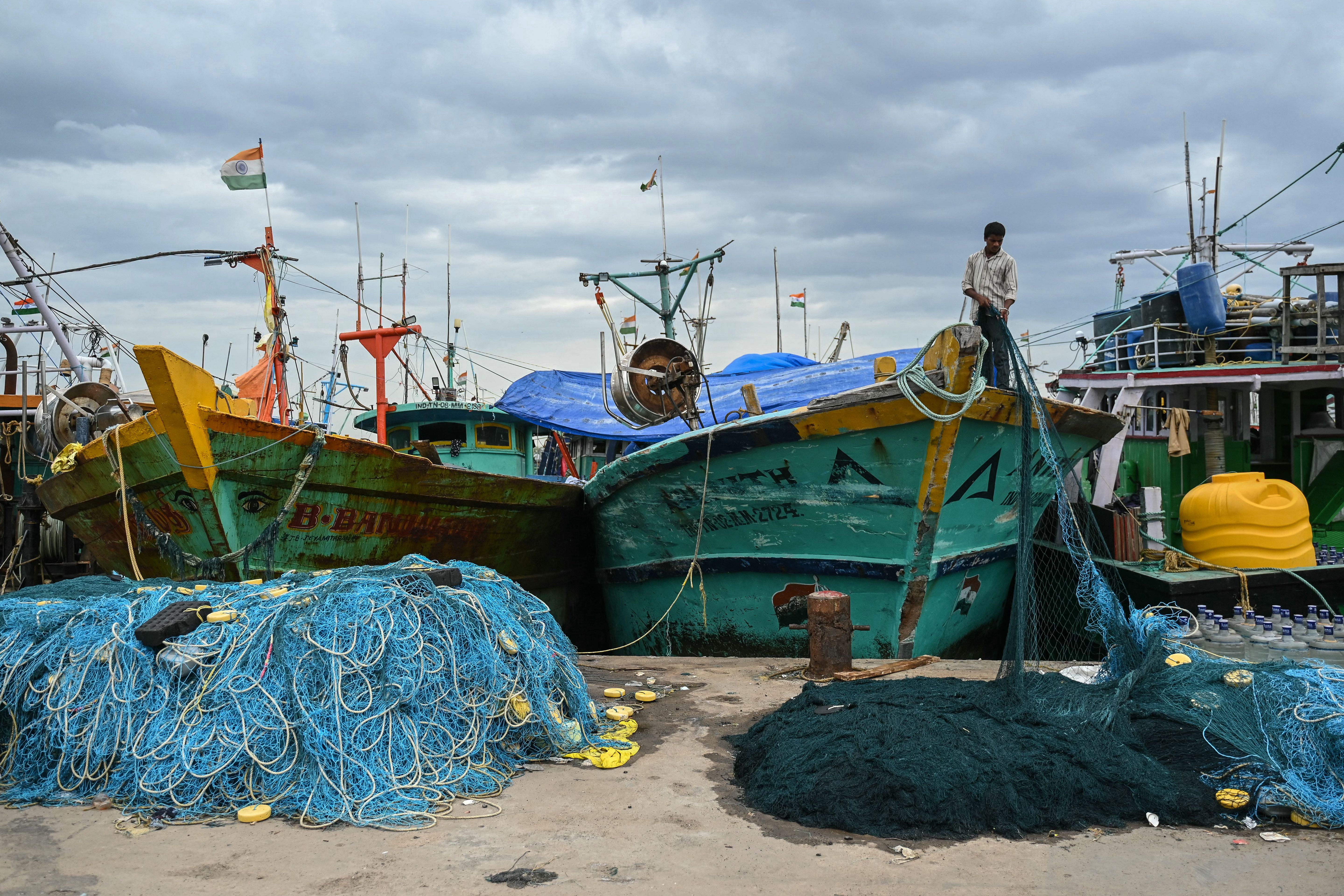
This article examines the scale and impact of Chinese IUU fishing operations globally and identifies the nature of the challenge posed by IUU fishing in the Indian Ocean Region (IOR). It also investigates why existing maritime law and international frameworks have struggled to address this growing threat.

Ajay Kumar, Charukeshi Bhatt