
• Research
  • About
  • Experts
Carnegie India logoCarnegie lettermark logo
AI
{
  "authors": [
    "Rhea Menon"
  ],
  "type": "legacyinthemedia",
  "centerAffiliationAll": "",
  "centers": [
    "Carnegie Endowment for International Peace",
    "Carnegie India"
  ],
  "collections": [],
  "englishNewsletterAll": "",
  "nonEnglishNewsletterAll": "",
  "primaryCenter": "Carnegie India",
  "programAffiliation": "",
  "programs": [],
  "projects": [],
  "regions": [
    "Southeast Asia",
    "China"
  ],
  "topics": [
    "Foreign Policy"
  ]
}

Source: Getty

In The Media
Carnegie India

Thailand’s Kra Canal: China’s Way Around the Malacca Strait

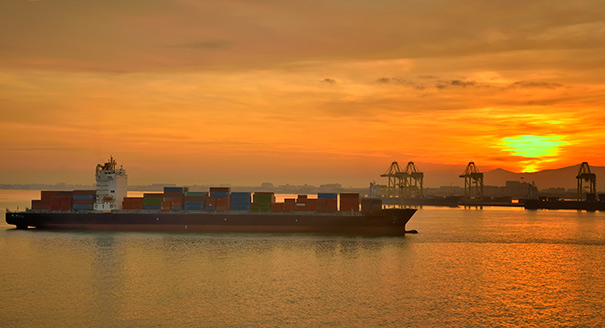
The establishment of a Kra Canal in Thailand may soon become a reality as part of China’s Belt and Road Initiative (BRI). The canal would permit ships to bypass the Malacca Strait, a crucial maritime chokepoint, amplifying the strategic significance of the project.

Link Copied
By Rhea Menon
Published on Apr 6, 2018

Source: Diplomat

The establishment of a Kra Canal in Thailand may soon become a reality as part of China’s Belt and Road Initiative (BRI). The canal would permit ships to bypass the Malacca Strait, a crucial maritime chokepoint, amplifying the strategic significance of the project.

Throughout history, there have been multiple attempts by the Thai monarchy and European colonists to capitalize on the commercial and strategic importance of the region by constructing a canal across the narrow isthmus that connects Thailand to the Malay peninsula. In recent times, China’s global vision of a new Maritime Silk Road has renewed the attention on the possibility of developing the Kra Canal. The modern Kra or Thai Canal project would be connected to the various Chinese infrastructure and connectivity projects in the region.

Read the Full Article

This article was originally published in the Diplomat.

About the Author

Rhea Menon

Rhea Menon is a research assistant at Carnegie India.

Rhea Menon

Rhea Menon is a research assistant at Carnegie India.

Foreign PolicySoutheast AsiaChina

Carnegie India does not take institutional positions on public policy issues; the views represented herein are those of the author(s) and do not necessarily reflect the views of Carnegie, its staff, or its trustees.

More Work from Carnegie India

  • Article
    India–Africa Strategic Partnership: Challenges, Potential, and Possible Pathways

    A partnership between India, a country of subcontinental size, and Africa, a continent of fifty-four countries, may seem asymmetric until one notes that both are home to nearly the same number of people—1.4 billion. This essay spells out the existing challenges to the partnership, its optimal potential, and the possible pathways to realize it over the next quarter-century.

      Rajiv Bhatia

  • Commentary
    Emerging From the “Zombie State” of Trade Agreements: The India-EU FTA

    The India–EU Free Trade Agreement (FTA) is shaping up to be one of the most consequential trade negotiations, both economically and strategically. But, what’s in the agreement, what’s missing, and what will determine its success in the years ahead

      Vrinda Sahai, Nicolas Köhler-Suzuki

  • India and a Changing Global Order: Foreign Policy in the Trump 2.0 Era
    Research
    India and a Changing Global Order: Foreign Policy in the Trump 2.0 Era

    Trump 2.0 has unsettled India’s external environment—but has not overturned its foreign policy strategy, which continues to rely on diversification, hedging, and calibrated partnerships across a fractured order.

      • Sameer Lalwani
      • +6

      Milan Vaishnav, ed., Sameer Lalwani, Tanvi Madan, …

  • Commentary
    The Impact of U.S. Sanctions and Tariffs on India’s Russian Oil Imports

    This piece examines India’s response to U.S. sanctions and tariffs, specifically assessing the immediate market consequences, such as alterations in import costs, and the broader strategic implications for India’s energy security and foreign policy orientation.

      Vrinda Sahai

  • Paper
    India-China Economic Ties: Determinants and Possibilities

    This paper examines the evolution of India-China economic ties from 2005 to 2025. It explores the impact of global events, bilateral political ties, and domestic policies on distinct spheres of the economic relationship.

      Santosh Pai

Get more news and analysis from
Carnegie India
Carnegie India logo, white
Unit C-4, 5, 6, EdenparkShaheed Jeet Singh MargNew Delhi – 110016, IndiaPhone: 011-40078687
  • Research
  • About
  • Experts
  • Projects
  • Events
  • Contact
  • Careers
  • Privacy
  • For Media
Get more news and analysis from
Carnegie India
© 2026 Carnegie Endowment for International Peace. All rights reserved.