

Commentary
Experts weigh in on whether the United States is too hostile toward China.
Stephen Wertheim, Evan S. Medeiros, Vijay Gokhale
{
  "authors": [
    "Rachel Kleinfeld",
    "Elena Barham"
  ],
  "type": "other",
  "centerAffiliationAll": "dc",
  "centers": [
    "Carnegie Endowment for International Peace"
  ],
  "collections": [
    "Violence and Conflict"
  ],
  "englishNewsletterAll": "democracy",
  "nonEnglishNewsletterAll": "",
  "primaryCenter": "Carnegie Endowment for International Peace",
  "programAffiliation": "DCG",
  "programs": [
    "Democracy, Conflict, and Governance"
  ],
  "projects": [],
  "regions": [],
  "topics": [
    "Political Reform",
    "Democracy"
  ]
}
Source: Getty
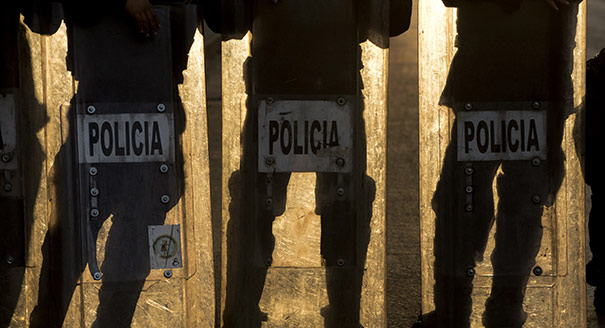
Many states beset with endemic violence are not institutionally weak, but rather suffer from complicit economic and political elites that use violence in order to preserve their status, a phenomenon that should be called privilege violence.
Source: Annual Review of Political Science
This article seeks to explain why some high-capacity democracies have high levels of internal violence. These regimes present a puzzle: Why are bureaucratically capable states that ostensibly answer to voters failing to provide security? Challenging the “weak states” paradigm, we argue that states with high capacity and significant violence within marginalized populations exhibit a governance pattern in which governing factions deliberately weaken security services and collude with nonstate violent actors to maintain power and ensure extreme levels of privilege and impunity. Although these states do not feature ideal-type institutions, they are not weak. Instead, economic and political elites are complicit in enforcing a system of material inequality and uneven democratic incorporation maintained by violence. As politicized security agencies become incapacitated and repressive, citizens turn to nonstate security providers for protection, from private firms to criminals and insurgents, increasing social violence and obscuring the state origins of what we term privilege violence.
This article was originally published in the Annual Review of Political Science.

Senior Fellow, Democracy, Conflict, and Governance Program
Rachel Kleinfeld is a senior fellow in Carnegie’s Democracy, Conflict, and Governance Program, where she focuses on issues of rule of law, security, and governance in democracies experiencing polarization, violence, and other governance problems.
Elena Barham
Former James C. Gaither Junior Fellow, Democracy and Rule of Law Program
Carnegie India does not take institutional positions on public policy issues; the views represented herein are those of the author(s) and do not necessarily reflect the views of Carnegie, its staff, or its trustees.

Experts weigh in on whether the United States is too hostile toward China.

Stephen Wertheim, Evan S. Medeiros, Vijay Gokhale
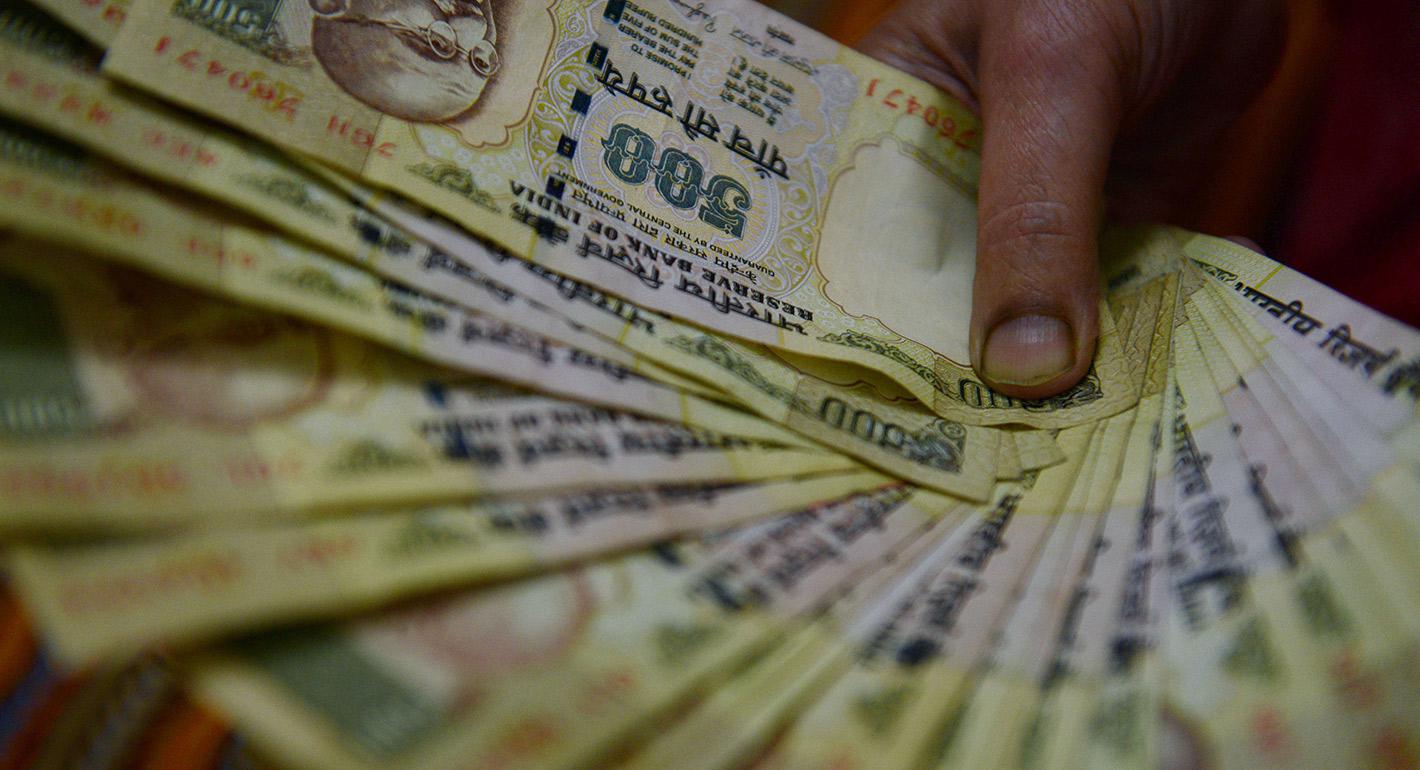
As India’s economy recovers from the coronavirus pandemic, Indian businesses need efficient financial structures to regain their ground. Key reforms to India’s Insolvency and Bankruptcy Code could fill these gaps.

Anirudh Burman
Access to cross-border data is an integral piece of the law enforcement puzzle. India is well placed to lead the discussions on international data agreements subject to undertaking necessary surveillance reforms.

Smriti Parsheera, Prateek Jha
After the coronavirus pandemic wanes, how will China’s reorientation of the Belt and Road Initiative to address global health concerns influence its relationships with South Asian countries?
Deep Pal, Rahul Bhatia
Early in the outbreak, government researchers forecast several high-risk scenarios that were downplayed or ignored in public messaging.
Gautam I. Menon