

Commentary
Matthew T. Page, Feyi Fawehinmi
{
  "authors": [
    "Matthew T. Page"
  ],
  "type": "legacyinthemedia",
  "centerAffiliationAll": "dc",
  "centers": [
    "Carnegie Endowment for International Peace"
  ],
  "collections": [],
  "englishNewsletterAll": "democracy",
  "nonEnglishNewsletterAll": "",
  "primaryCenter": "Carnegie Endowment for International Peace",
  "programAffiliation": "DCG",
  "programs": [
    "Democracy, Conflict, and Governance"
  ],
  "projects": [],
  "regions": [
    "Southern, Eastern, and Western Africa"
  ],
  "topics": [
    "Political Reform",
    "Democracy"
  ]
}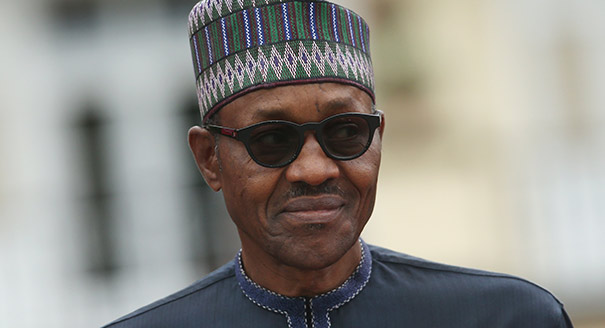
Source: Getty
In Nigeria, shifting alliances might indicate the construction of strong opposition coalitions, but the ever-changing political field may present challenges for building good governance.
Source: Quartz Africa
Lately, Nigerian political parties are a lot like Lagos’ iconic yellow danfo minibuses—swerving erratically, bulging as too many riders squeeze inside, their drivers’ clinging vise-like to both steering wheel and wads of naira notes. Monday was one such political rush hour, when 37 parties and a faction of president Muhammadu Buhari’s ruling All Progressives Congress (APC) party agreed to work together to unseat him February elections. Should Buhari be worried or will this pact—like a Lagos go-slow—generate a lot of noise but no forward momentum?
Impressive at first glance, this new anti-Buhari coalition is deceptively broad and not especially deep. At its core is the opposition People’s Democratic Party (PDP), which ran Nigeria from 1999 until 2015. Dogged and resilient, the PDP is nevertheless a shadow of its former self, still rebuilding its party structures after years of infighting. Lining up behind it are many smaller parties, most of which are ‘mom-and-pop’ operations.
These opportunistic parties possess little more than their acronyms, subsisting day-to-day by selling endorsements or renting themselves out to defeated APC or PDP primary candidates seeking a second chance to run in the general election. Some are used by ambitious politicians to build up sufficient voting strength to be co-opted by one of the major parties.
More damaging to Buhari, however, is the high-profile defection of a cadre of APC rebels—the so-called Reformed APC or rAPC—to this new PDP-led coalition. These rebels, which include a former Buhari confidente and campaign manager, reportedly enjoy the support of two APC bigwigs and known ‘frenemies’ of the president: Senate president Bukola Saraki and speaker of the House of Representatives Yakubu Dogara. The emergence of the rAPC and the PDP’s grand coalition suggests that Buhari’s reelection calculus is becoming increasingly complicated.
While still the odds-on favorite to win reelection, Buhari’s political power is visibly waning. His opponents continue to get mileage out of his many political weaknesses, including his aloof leadership style, his many unmet campaign promises, and his failure to address worsening violence between farmers and livestock herders. It is too early to say, however, whether the acquisition of a few second-tier APC rebels and several third-rate political parties amounts to anything more than a public relations win for the PDP. Neither groupings appear to add much to the PDP’s capacity to mobilize a significant number of voters nationally or sabotage APC power structures in particular states.
What Monday’s political theater does prove, however, is how fluid political loyalties in Nigeria have become. With barely a second thought, politicians routinely defect—’decamp’ or ‘cross-carpet’ in local parlance—in pursuit of new opportunities and financial resources. As a result, parties lack any discernible ideology or set of values other than a desire to hold on to power: a situation that begets poor governance and a corrupt political culture. As elections approach, it will be increasingly difficult to keep track of Nigeria’s shifting constellation of political elites whose favorite saying—“in politics, there are no permanent friends and no permanent enemies”—should give President Buhari pause.

Former Nonresident Scholar, Democracy, Conflict, and Governance Program
Matthew T. Page was a nonresident scholar at the Carnegie Endowment for International Peace.
Recent Work
Matthew T. Page, Feyi Fawehinmi
Matthew T. Page, Abdul H. Wando
Carnegie India does not take institutional positions on public policy issues; the views represented herein are those of the author(s) and do not necessarily reflect the views of Carnegie, its staff, or its trustees.

A partnership between India, a country of subcontinental size, and Africa, a continent of fifty-four countries, may seem asymmetric until one notes that both are home to nearly the same number of people—1.4 billion. This essay spells out the existing challenges to the partnership, its optimal potential, and the possible pathways to realize it over the next quarter-century.

Rajiv Bhatia

Experts weigh in on whether the United States is too hostile toward China.


Stephen Wertheim, Evan S. Medeiros, Vijay Gokhale
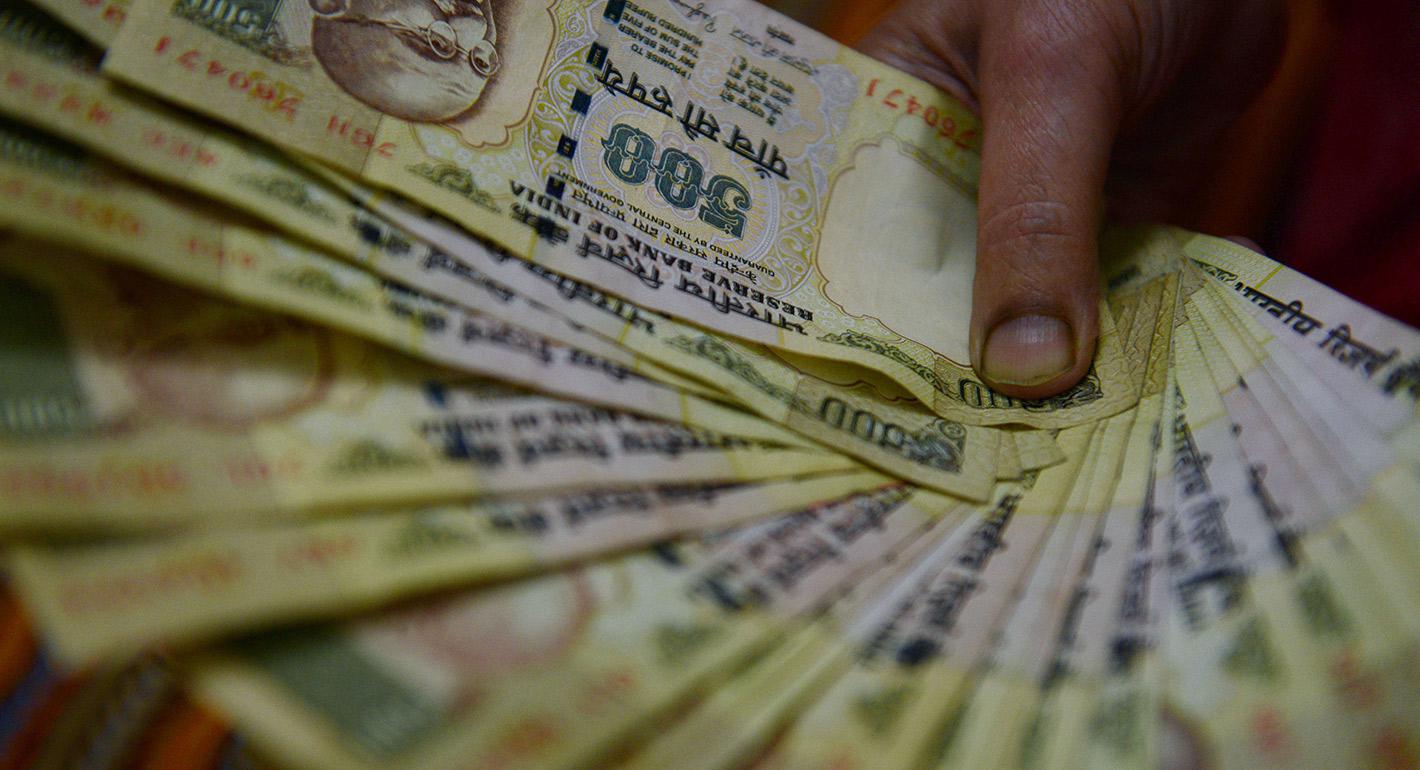
As India’s economy recovers from the coronavirus pandemic, Indian businesses need efficient financial structures to regain their ground. Key reforms to India’s Insolvency and Bankruptcy Code could fill these gaps.

Anirudh Burman

Access to cross-border data is an integral piece of the law enforcement puzzle. India is well placed to lead the discussions on international data agreements subject to undertaking necessary surveillance reforms.
Smriti Parsheera, Prateek Jha
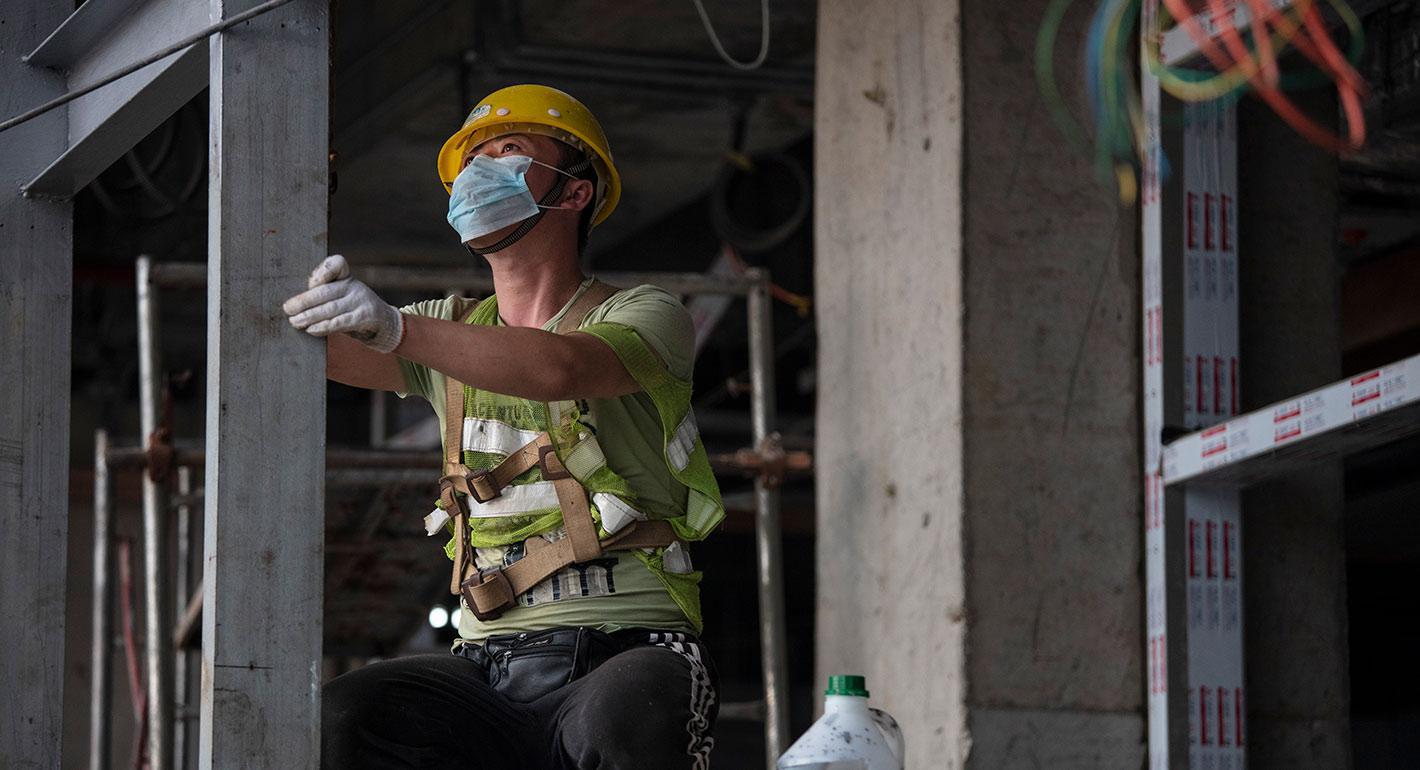
After the coronavirus pandemic wanes, how will China’s reorientation of the Belt and Road Initiative to address global health concerns influence its relationships with South Asian countries?

Deep Pal, Rahul Bhatia