

Commentary
Marc Pierini
{
  "authors": [
    "Marc Pierini"
  ],
  "type": "legacyinthemedia",
  "centerAffiliationAll": "dc",
  "centers": [
    "Carnegie Endowment for International Peace",
    "Carnegie Europe",
    "Malcolm H. Kerr Carnegie Middle East Center"
  ],
  "collections": [
    "Europe’s Southern Neighborhood"
  ],
  "englishNewsletterAll": "ctw",
  "nonEnglishNewsletterAll": "",
  "primaryCenter": "Carnegie Europe",
  "programAffiliation": "EP",
  "programs": [
    "Europe"
  ],
  "projects": [],
  "regions": [
    "Europe",
    "Türkiye",
    "Middle East",
    "Iran"
  ],
  "topics": [
    "Foreign Policy",
    "EU",
    "Political Reform"
  ]
}
Source: Getty
Turkey crucially needs EU markets, funds, and investment to prosper. This in turn requires the rule of law, not the rule of the arbitrary. Choices will have to be made in Ankara.
Source: Euronews
European governments are currently witnessing a seemingly positive move by Turkey’s leadership toward the EU. On the surface, this makes sense: Turkey’s economy is in very dire straits (and still depends on European markets and financial flows); the Lira is plummeting; hurtful sanctions have recently been imposed by the United States (and more may be coming); and Russia is having it its way in Syria (which will probably end up not being Turkey’s way).
As a result, the Turkish foreign ministry is issuing statements. The “EU Reform Action Group” met on August 29 and promised reforms of the judiciary and more. The Turkish president will soon go to Berlin, while the economy and finance minister has just visited Paris.But words and visits are not policy, and Turkey’s rejuvenated feeling toward Europe is not very credible for two major reasons (other than its obvious anti-U.S. motivation.
First, for years President Erdoğan has based his electoral strategy on sharp criticisms of Europe. In 2017, he even pelted EU leaders with offensive remarks, including references to “Nazis” and “gas chambers,” a total anathema in European politics. No politician in Berlin, Paris, The Hague, or Vienna will easily be convinced that these were passing, innocuous campaign words. They are seen as part of a carefully crafted nationalist narrative, and they have lasting effects.
Second, a return to the rule of law in Turkey is in principle conceivable but will not happen. President Erdoğan’s power system (the new constitution, the judiciary under control, the 50,000 people in jail, the 150,000 presumed Gülenists sacked from their jobs, the absence of media freedom, the policy of taking foreign hostages) is a road of no return. Any move toward the independence of the judiciary, for example, would either have to be fake or, if real, would sap Mr. Erdoğan’s grasp on power. On top of this, the suspension of EU of accession negotiations exonerates the Turkish leadership from “EU impositions” (read: EU governance standards) and therefore, despite the formal statements against the suspension, constitutes a win for the Turkish leader.
Looking at the European side of the story, a striking sea change on Turkey’s accession has taken place over the past year or so. Now, not only has France ruled out accession, but the Austrian, Dutch, and German governments have made “no accession” one of the pillars of their coalition agreements. Add to this the EU’s rule of unanimity for all enlargement issues, and it becomes obvious that accession will not happen—not even preparatory work toward accession, as stated by the European Council in June.
This being said, European governments consider Turkey a strategic partner for a host of reasons and want to maintain strong ties with the country, particularly in the commercial, economic, military, counterterrorism, and humanitarian fields. Therefore, even if a political alliance—once embodied in the accession ambitions of Turkey—is now out of the question due to Ankara going down the autocratic path, a substantial strategic partnership is possible. The domains for cooperation that were just outlined by the EU Reform Action Group are primarily on the Customs Union and visas, and this is in itself positive. Yet, Turkey will have to demonstrate some improvements in its governance system if it wants to see progress in these limited areas.
Progress or not, it seems likely that the atmosphere of EU-Turkey relations will remain tense, for reasons mostly related to Turkey’s domestic politics. President Erdoğan’s political fortunes are now linked to the goodwill of the nationalist party, the MHP, which itself is not pro-European and backs the ultra-presidential system now in place. This means that Turkish politics will uphold the one-man-rule system and will not steer the country toward European democratic standards.
The key challenge for Turkey is not the form of its relationship with the EU, but the fact that it crucially needs EU markets, funds, and investment to prosper. This in turn requires the rule of law, not the rule of the arbitrary. Choices will have to be made in Ankara.

Senior Fellow, Carnegie Europe
Marc Pierini is a senior fellow at Carnegie Europe, where his research focuses on developments in the Middle East and Turkey from a European perspective.
Recent Work
Marc Pierini
Marc Pierini
Carnegie India does not take institutional positions on public policy issues; the views represented herein are those of the author(s) and do not necessarily reflect the views of Carnegie, its staff, or its trustees.

After the chill in ties between 2020 and 2024 that brought India–China relations to their lowest point in several decades, the two countries have engaged each other afresh. This paper argues that there are predominantly four imperatives guiding India’s approach to China, and they exist in an order of priority.

Saheb Singh Chadha

This piece argues that India’s central challenge is not managing a single flashpoint but resolving the underlying tension between expansion and institutional coherency of the BRICS grouping.

Vrinda Sahai
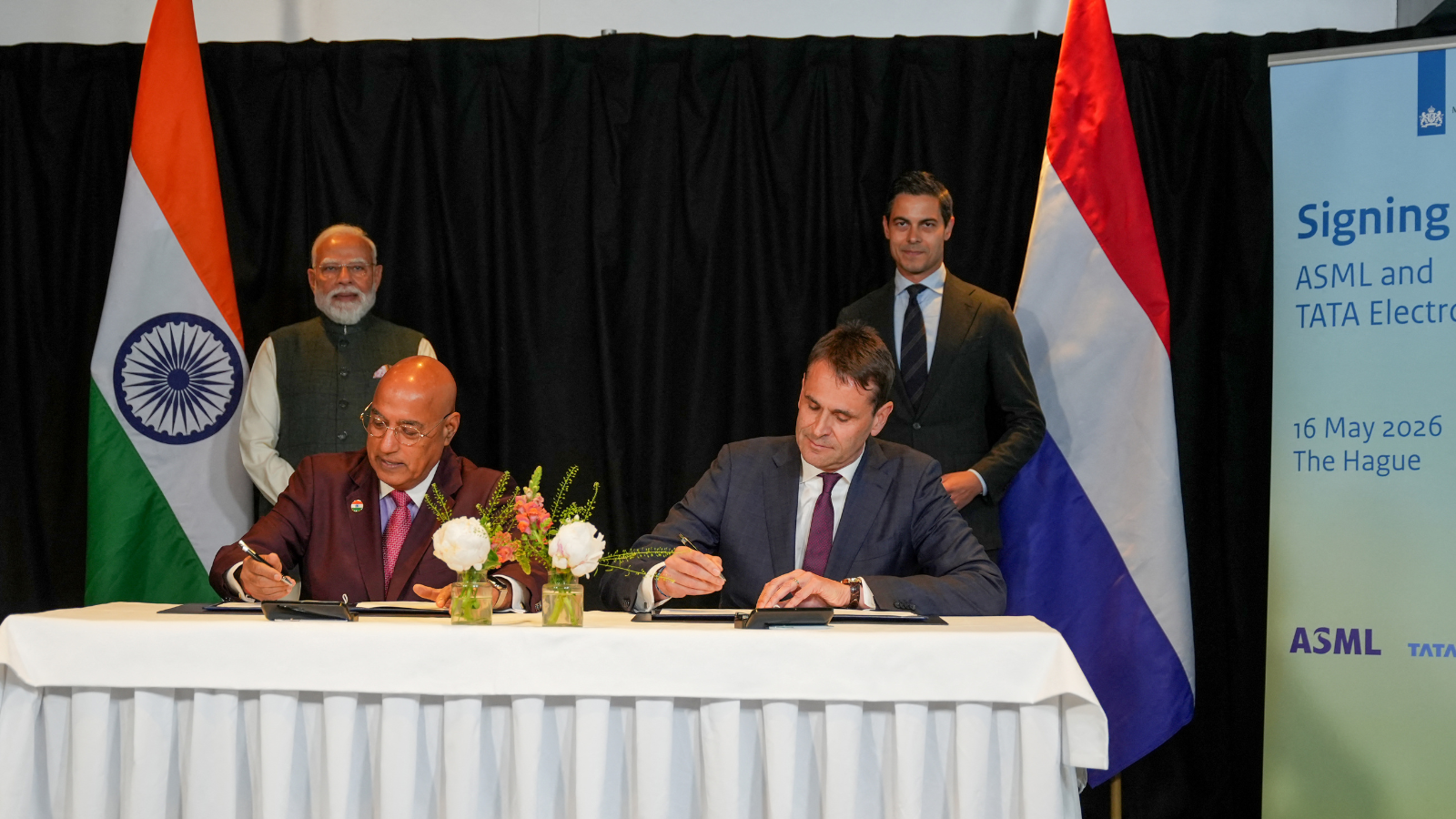
The ASML MoU with Tata Electronics is an indicator of how far the Indian semiconductor ecosystem has come. This ecosystem has been years in the making and represents real commercial logic.

Konark Bhandari

A partnership between India, a country of subcontinental size, and Africa, a continent of fifty-four countries, may seem asymmetric until one notes that both are home to nearly the same number of people—1.4 billion. This essay spells out the existing challenges to the partnership, its optimal potential, and the possible pathways to realize it over the next quarter-century.

Rajiv Bhatia

The India–EU Free Trade Agreement (FTA) is shaping up to be one of the most consequential trade negotiations, both economically and strategically. But, what’s in the agreement, what’s missing, and what will determine its success in the years ahead
Vrinda Sahai, Nicolas Köhler-Suzuki