

Article
This piece argues that India’s central challenge is not managing a single flashpoint but resolving the underlying tension between expansion and institutional coherency of the BRICS grouping.
Vrinda Sahai
{
  "authors": [
    "Jarrett Blanc"
  ],
  "type": "legacyinthemedia",
  "centerAffiliationAll": "dc",
  "centers": [
    "Carnegie Endowment for International Peace",
    "Malcolm H. Kerr Carnegie Middle East Center"
  ],
  "collections": [],
  "englishNewsletterAll": "americanStatecraft",
  "nonEnglishNewsletterAll": "",
  "primaryCenter": "Carnegie Endowment for International Peace",
  "programAffiliation": "ASP",
  "programs": [
    "American Statecraft"
  ],
  "projects": [],
  "regions": [
    "North America",
    "United States",
    "Middle East",
    "Saudi Arabia",
    "Gulf",
    "Türkiye"
  ],
  "topics": [
    "Political Reform",
    "Democracy",
    "Foreign Policy"
  ]
}
Source: Getty
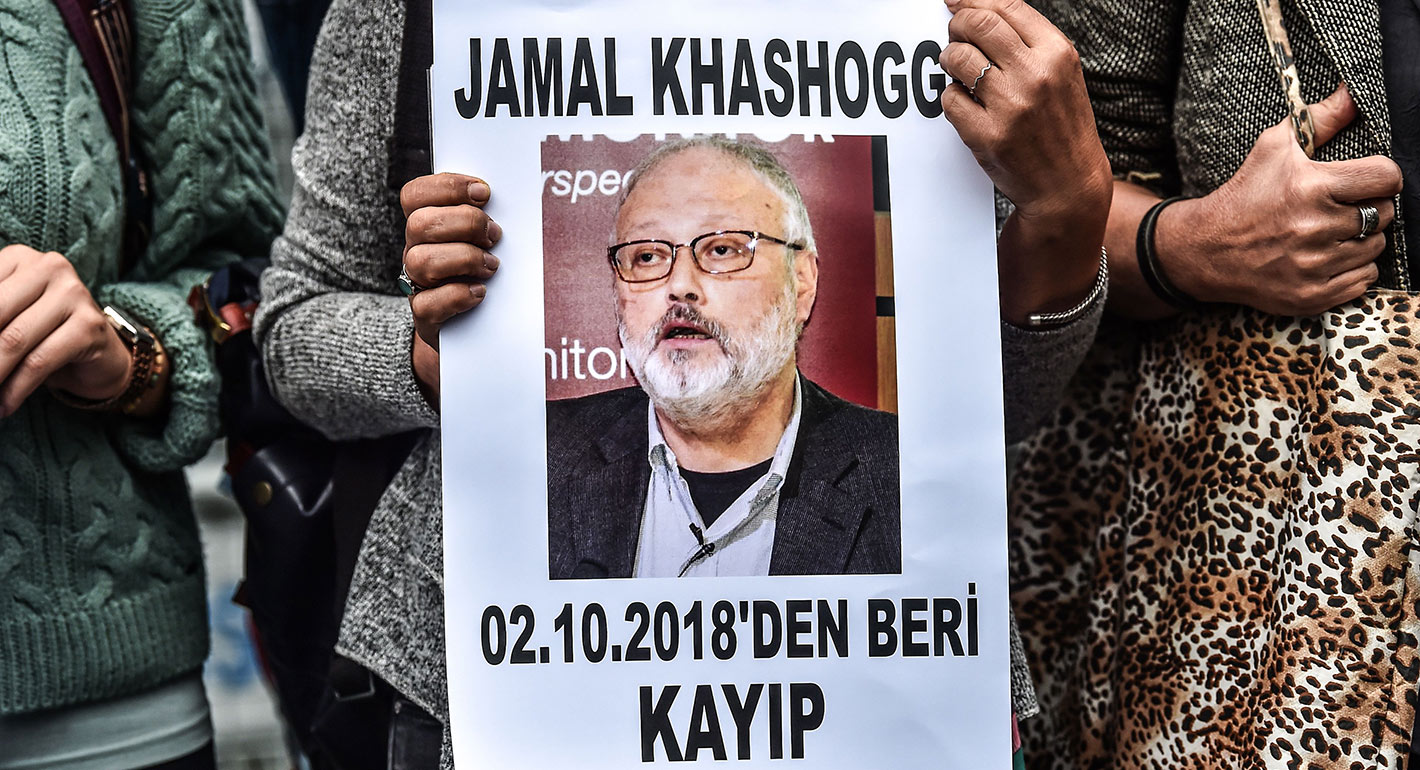
The Trump administration needs to work closely with Turkey to address the disappearance of Saudi journalist Jamal Khashoggi. It is almost certain though that decisions will be made more slowly and communication handled more haltingly.
Source: Axios
In August, President Trump sanctioned Turkish Minister of Justice Abdulhamit Gul and Minister of the Interior Suleyman Soylu in an as-yet unsuccessful effort to secure the release of an American clergyman implausibly accused of involvement in the failed 2016 Turkish coup attempt. It was the beginning of an unprecedented economic attack against a NATO ally.
What’s new: The Trump administration now needs to work closely with Turkey to address the disappearance of Saudi journalist Jamal Khashoggi, a Virginia resident and Washington Post contributor who disappeared from the Saudi Consulate in Istanbul. Resolving the issue will require hand-in-glove cooperation with intelligence and law enforcement units under the control of Gul and Soylu — both presumably smarting from having their assets blocked and travel restricted — as well as President Erdogan, surely furious about the damage to his economy.
The background: On August 10, after the sanctions had pushed Turkey’s already fragile currency down 15% against the dollar, Trump announced that the U.S. would double tariffs on Turkish steel and aluminum, to 20% and 50%. The lira’s slide then turned into a free fall, dropping more than 18% in a single day. There were fears of “contagion” among other developing economies, but Turkey reluctantly hiked interest rates and stabilized the situation. The frayed U.S.–Turkey relationship has since been on display, with Trump claiming and Turkey denying that U.S. investigators are in Turkey.
Khashoggi’s disappearance is a matter of great consequence to the U.S. Khashoggi was a moderate Saudi critic and an important voice on al-Qaeda and other terrorist movements with Saudi roots. If Crown Prince Mohammed bin Salman was involved — as recent reporting suggests — it would point to a brittleness in the Saudi partner and a disregard for press freedom that demand urgent attention.
What’s next: Turkey would be pleased to see a rift between Washington and Riyadh, so they will probably overcome the political and practical hurdles created by this summer’s sanctions and tariffs. It is almost certain, though, that decisions will be made more slowly and communication handled more haltingly, possibly costing important time for investigators and intelligence officers.
The bottom line: Targeting individual cabinet officers in an allied country for sanctions was unprecedented, but the Trump Administration seems to have similar targets in mind, from the International Criminal Court to European Central Bank officials. The Khashoggi case is a reminder that the U.S. needs allies and partners, and sometimes may need to resist exerting power in the interest of preserving long-term relationships.
Jarrett Blanc
Former Senior Fellow, Geoeconomics and Strategy Program
Jarrett Blanc was a senior fellow in the Geoeconomics and Strategy Program at the Carnegie Endowment for International Peace.
Carnegie India does not take institutional positions on public policy issues; the views represented herein are those of the author(s) and do not necessarily reflect the views of Carnegie, its staff, or its trustees.

This piece argues that India’s central challenge is not managing a single flashpoint but resolving the underlying tension between expansion and institutional coherency of the BRICS grouping.

Vrinda Sahai

A partnership between India, a country of subcontinental size, and Africa, a continent of fifty-four countries, may seem asymmetric until one notes that both are home to nearly the same number of people—1.4 billion. This essay spells out the existing challenges to the partnership, its optimal potential, and the possible pathways to realize it over the next quarter-century.

Rajiv Bhatia

The U.S.–India semiconductor cooperation story is well-stocked with top-level strategic intent. What remains unresolved, however, are some underlying challenges that will determine whether the cooperation actually functions. Three such friction points stand out.

Shruti Mittal

The India–EU Free Trade Agreement (FTA) is shaping up to be one of the most consequential trade negotiations, both economically and strategically. But, what’s in the agreement, what’s missing, and what will determine its success in the years ahead
Vrinda Sahai, Nicolas Köhler-Suzuki
Trump 2.0 has unsettled India’s external environment—but has not overturned its foreign policy strategy, which continues to rely on diversification, hedging, and calibrated partnerships across a fractured order.



Milan Vaishnav, ed., Sameer Lalwani, Tanvi Madan, …