
• Research
  • About
  • Experts
Carnegie India logoCarnegie lettermark logo
{
  "authors": [
    "Anirudh Burman",
    "Bhargavi Zaveri"
  ],
  "type": "legacyinthemedia",
  "centerAffiliationAll": "",
  "centers": [
    "Carnegie Endowment for International Peace",
    "Carnegie India"
  ],
  "collections": [],
  "englishNewsletterAll": "",
  "nonEnglishNewsletterAll": "",
  "primaryCenter": "Carnegie India",
  "programAffiliation": "",
  "programs": [],
  "projects": [
    "Political Economy"
  ],
  "regions": [
    "India"
  ],
  "topics": [
    "Domestic Politics",
    "Economy"
  ]
}

Source: Getty

In The Media
Carnegie India

How Responsive Are India’s Regulators?

India’s transition to private markets is predicated on how well it regulates private activities across a range of economic sectors, such as finance, telecom, and infrastructure.

Link Copied
By Anirudh Burman and Bhargavi Zaveri
Published on Apr 19, 2019
Project hero Image

Project

Political Economy

This program studies contemporary developments in India’s political economy, with a view towards understanding and informing India’s developmental choices. Scholars in the program analyze economic and regulatory policies, design and working of public institutions, interfaces between politics and the economy, and performance of key sectors of the economy such as finance and land.

Learn More

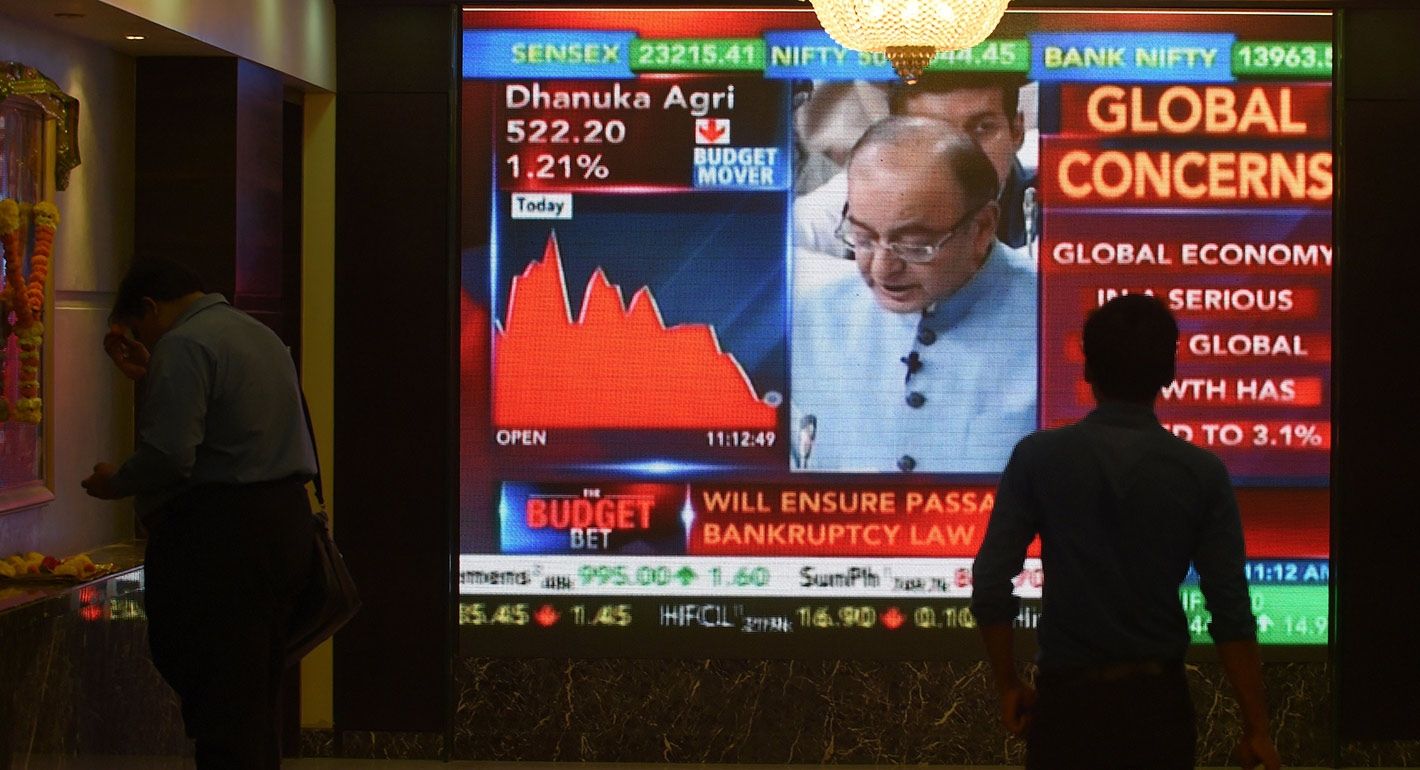
Source: BloombergQuint

India’s transition to private markets is predicated on how well it regulates private activities across a range of economic sectors such as finance, telecom, and infrastructure. Since 1991, the government has signaled its willingness to regulate private markets technocratically and neutrally by creating independent regulators such as the Securities and Exchange Board of India, Telecom Regulatory Authority of India, Insolvency and Bankruptcy Board of India, and others. 

Read the Full Text

This article was originally published by BloombergQuint.

About the Authors

Anirudh Burman

Former Associate Research Director and Fellow, Carnegie India

Anirudh Burman was an associate research director and fellow at Carnegie India. He works on key issues relating to public institutions, public administration, the administrative and regulatory state, and state capacity.

Bhargavi Zaveri

Bhargavi Zaveri is part of the Finance Research Group, Mumbai. She works in the areas of financial regulation, land and access to finance and regulatory governance. She has previously held research positions at IGIDR, the National Institute of Public Finance and Policy and the Harvard Law School. She has advised the Ministry of Finance on issues relating to financial regulation. She has published academic work on Indian financial regulation in Indian and international journals. She often writes about land and access to finance in the public media.

Authors

Anirudh Burman
Former Associate Research Director and Fellow, Carnegie India
Anirudh Burman
Bhargavi Zaveri

Bhargavi Zaveri is part of the Finance Research Group, Mumbai. She works in the areas of financial regulation, land and access to finance and regulatory governance. She has previously held research positions at IGIDR, the National Institute of Public Finance and Policy and the Harvard Law School. She has advised the Ministry of Finance on issues relating to financial regulation. She has published academic work on Indian financial regulation in Indian and international journals. She often writes about land and access to finance in the public media.

Bhargavi Zaveri
Domestic PoliticsEconomyIndia

Carnegie India does not take institutional positions on public policy issues; the views represented herein are those of the author(s) and do not necessarily reflect the views of Carnegie, its staff, or its trustees.

More Work from Carnegie India

  • Commentary
    India Signs the Pax Silica—A Counter to Pax Sinica?

    On the last day of the India AI Impact Summit, India signed Pax Silica, a U.S.-led declaration seemingly focused on semiconductors. While India’s accession to the same was not entirely unforeseen, becoming a signatory nation this quickly was not on the cards either.

      Konark Bhandari

  • Commentary
    The PSLV Setback: Restoring India’s Workhorse

    On January 12, 2026, India's "workhorse," the Polar Satellite Launch Vehicle, experienced a consecutive mission failure for the first time in its history. This commentary explores the implications of this incident on India’s space sector and how India can effectively address issues stemming from the incident.

      Tejas Bharadwaj

  • Commentary
    AI Adoption Journey for Population Scale

    Connecting real-world AI use cases across sectors such as health, education, agriculture, and livelihoods can help policymakers, innovators, and institutions align around a shared goal. This article looks at a framework ensuring that AI works for everyone.

      Shalini Kapoor, Tanvi Lall

  • Commentary
    The Impact of U.S. Sanctions and Tariffs on India’s Russian Oil Imports

    This piece examines India’s response to U.S. sanctions and tariffs, specifically assessing the immediate market consequences, such as alterations in import costs, and the broader strategic implications for India’s energy security and foreign policy orientation.

      Vrinda Sahai

  • Article
    Revisiting the Usage of Refurbished Equipment in India’s Semiconductor Ecosystem

    This article looks at the progress of the Semiconductor Laboratory fab modernization plan based on publicly available documents, and potential learnings for future upgrades to government-owned fabs and India’s larger semiconductor ecosystem, especially regarding the use of refurbished equipment.

      Shruti Mittal, Konark Bhandari

Get more news and analysis from
Carnegie India
Carnegie India logo, white
Unit C-4, 5, 6, EdenparkShaheed Jeet Singh MargNew Delhi – 110016, IndiaPhone: 011-40078687
  • Research
  • About
  • Experts
  • Projects
  • Events
  • Contact
  • Careers
  • Privacy
  • For Media
Get more news and analysis from
Carnegie India
© 2026 Carnegie Endowment for International Peace. All rights reserved.






