

Commentary
How is AI reshaping space security, creating governance challenges, and where does international diplomacy stand today?
Tejas Bharadwaj, Almudena Azcárate Ortega
{
  "authors": [
    "Federiga Bindi",
    "Mimosa Giamanco"
  ],
  "type": "legacyinthemedia",
  "centerAffiliationAll": "",
  "centers": [
    "Carnegie Endowment for International Peace"
  ],
  "collections": [],
  "englishNewsletterAll": "",
  "nonEnglishNewsletterAll": "",
  "primaryCenter": "Carnegie Endowment for International Peace",
  "programAffiliation": "",
  "programs": [],
  "projects": [],
  "regions": [
    "North America",
    "United States"
  ],
  "topics": []
}
Source: Getty
In the world of D.C. think tanks, being visible is essential for professional advancement. The first step toward increased visibility is speaking on panels. If women are to have equal opportunities in foreign policy, think tanks must work to ensure gender parity on panels.
Source: Washington Post
Throughout academia, including in political science, women haven’t achieved parity with men. As this series explores, implicit bias holds women back at every stage, from the readings professors assign to the student evaluations that influence promotions and pay, from journal publications to book awards. These political and sociological problems deserve study as much as any of the other issues the academy investigates. Here’s the fifth piece in our two-week series on the gender gap in political science — and what we can do about it. — Kim Yi Dionne
Although women make up half the world’s population and a growing proportion of scholars and analysts, they’re often absent in convenings of “experts.” That’s true across a number of industries, according to an event management company’s report on gender diversity in about 60,000 events between 2013 and 2018 across 23 countries; the company found that 69 percent of all speakers were male. That’s close to what political scientists Tamara Cofman Wittes and Marc Lynch found when examining women’s participation in Middle East Policy panel events in 2014: Less than one-quarter of all the speakers at 232 events put on by six Washington think tanks were women — and 65 percent of the events included no women at all.
That matters, for a variety of reasons. It means women with expertise aren’t getting the kind of exposure that helps their ideas spread and their careers advance. And it means that policies and decisions are made with only men’s input, depriving us all of women’s knowledge and insights.
In the past several years, however, observers have begun calling out all-male panels, now ridiculed with the term “manels.” We wanted to know whether that had made a difference in one particular area of expertise: public forums on foreign policy. Our research found that in 2018, women experts still made up only one-third of the speakers at public foreign policy events — a proportion that varied from one think tank to another.
Supported by an E.U. research grant at the Institute for Women’s Policy Research, we studied women’s speaker participation at 2018 public foreign policy events hosted by 20 major think tanks based in Washington. We decided to look at the 20 think tanks captured by the WIIS Gender Scorecard, which in fall 2018 had released a report ranking think tanks according to the number of women scholars in foreign policy.
For foreign policy-focused think tanks such as the Carnegie Endowment for International Peace, we included all public events listed on their websites in 2018. For multidisciplinary think tanks such as the Brookings Institution, we counted all public events that specifically dealt with foreign policy. For each event, we collected names from the published event schedule, such as speakers, chairs and moderators. We then used Internet searches to read bios and look at photos to determine which speakers were women.
In all, our data include 5,192 speakers who participated in 967 public events at these 20 major D.C. think tanks in 2018. These events included a former State Department official talking about strategy in a specific region at the Center for Strategic and International Studies (CSIS), an Atlantic Council panel about the status of NATO cooperation in Europe, and more.
In 2018, women made up 34 percent of experts featured on D.C. foreign policy panels. Fully 27 percent of the panels in our study included only male speakers.
Of the panels that included women, those women often served as the panel moderator, not as a speaker. Women moderators in the absence of women expert panelists perpetuates the idea that women can be gracious hosts but are not actually experts.
There are a few exceptions, of course, as you can see in the figure below. Rand had slightly more than 50 percent women in its foreign policy panels, closely followed by the Council on Foreign Relations, the Center for American Progress, the U.S. Institute for Peace (USIP), the Center for a New American Security (CNAS) and the Stimson Center. All these think tanks’ panels consisted of 40 percent or more women.

Only the liberal Center for American Progress avoided organizing single-gender panels. Half or more of the foreign policy panels were all-male at the libertarian Cato Institute, the liberal Institute for Policy Studies and the conservative American Enterprise Institute. One-third or more of the events were all-male at the right-wing Heritage Foundation, the nonpartisan Aspen Institute and Carnegie Endowment for International Peace, and the Bipartisan Policy Center. Of all the events we found, only a handful were women-only — and those were either held on International Women’s Day or focused on topics such as sexual violence.

In the world of D.C. think tanks, being visible is essential for professional advancement. The first step toward increased visibility is speaking on panels. If women are to have equal opportunities in foreign policy, think tanks must work to ensure gender parity on panels. Think tanks wishing to avoid “manels” can turn to a variety of sources to find female experts, including Women Also Know Stuff and the Brussels Binder.
This article was originally published in the Washington Post.
Former Nonresident Scholar, Europe Program
Federiga Bindi was a nonresident scholar in the Europe Program at the Carnegie Endowment for International Peace working on European politics, EU foreign policy, and transatlantic relations.
Mimosa Giamanco
Mimosa Giamanco is Research Assistant for the Foreign Policy Initiative at the Institute of Women Policy Research.
Carnegie India does not take institutional positions on public policy issues; the views represented herein are those of the author(s) and do not necessarily reflect the views of Carnegie, its staff, or its trustees.

How is AI reshaping space security, creating governance challenges, and where does international diplomacy stand today?


Tejas Bharadwaj, Almudena Azcárate Ortega

The U.S.–India semiconductor cooperation story is well-stocked with top-level strategic intent. What remains unresolved, however, are some underlying challenges that will determine whether the cooperation actually functions. Three such friction points stand out.

Shruti Mittal
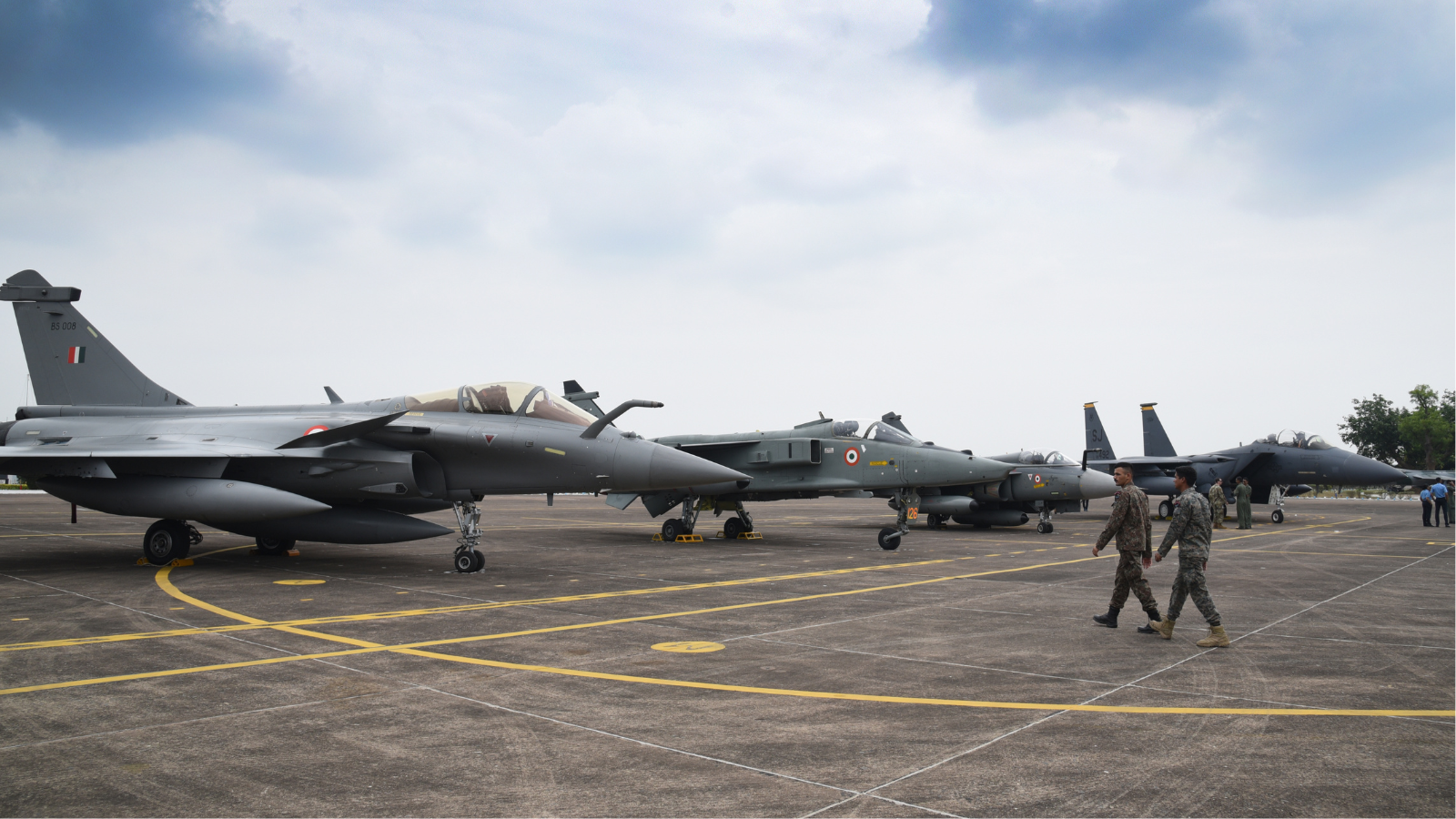
India and the United States are close to concluding a Reciprocal Defense Procurement Agreement (RDPA) that will allow firms from the two countries to sell to each other’s defense establishments more easily. While this may not remedy the specific grievances both sides may have regarding larger bilateral issues, an RDPA could restore some momentum, following the trade deal announcement.

Konark Bhandari

On the last day of the India AI Impact Summit, India signed Pax Silica, a U.S.-led declaration seemingly focused on semiconductors. While India’s accession to the same was not entirely unforeseen, becoming a signatory nation this quickly was not on the cards either.
Konark Bhandari

This piece examines India’s response to U.S. sanctions and tariffs, specifically assessing the immediate market consequences, such as alterations in import costs, and the broader strategic implications for India’s energy security and foreign policy orientation.

Vrinda Sahai