

Other
François Godement, Ashley J. Tellis
{
  "authors": [
    "François Godement"
  ],
  "type": "legacyinthemedia",
  "centerAffiliationAll": "dc",
  "centers": [
    "Carnegie Endowment for International Peace"
  ],
  "collections": [],
  "englishNewsletterAll": "asia",
  "nonEnglishNewsletterAll": "",
  "primaryCenter": "Carnegie Endowment for International Peace",
  "programAffiliation": "AP",
  "programs": [
    "Asia"
  ],
  "projects": [],
  "regions": [
    "North America",
    "United States"
  ],
  "topics": [
    "Economy"
  ]
}
Source: Getty
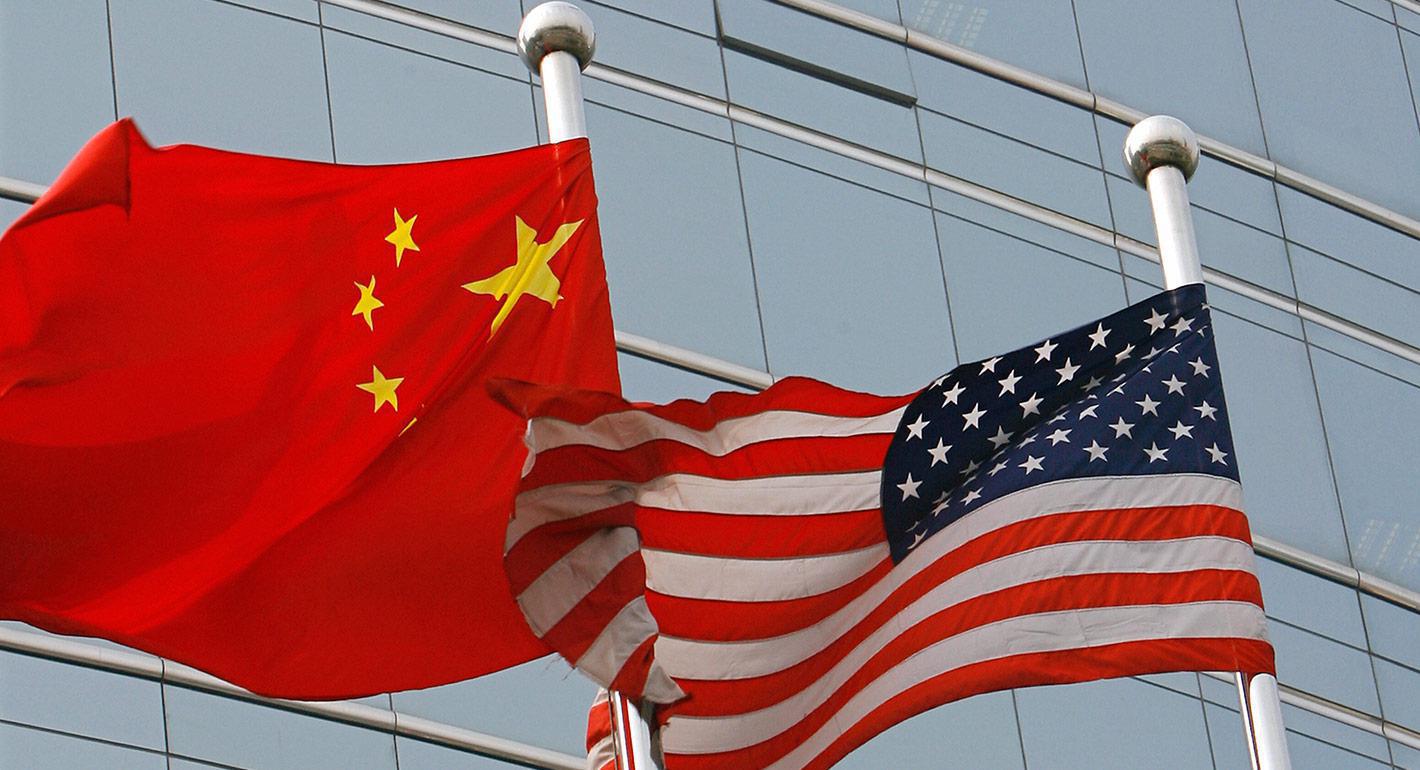
The coronavirus crisis has provided a live experiment of the consequences of a massive, if perhaps short-term, involuntary decoupling between China and the United States.
Source: Institut Montaigne
As fate would have it, the coronavirus crisis has provided a live experiment of the consequences of a massive, if perhaps short-term, involuntary decoupling. The interruption of global value chains leads to the sudden stoppage of factories far away from China – tourism and the travel industry, the auto industry, pharmaceuticals where China is a leading provider of ingredients, smartphone production, and a dive in prices for energy and raw materials. Financial consequences are less easy to ascertain as we write, simply because the direction of China’s foreign trade and the current account has become unpredictable over the next few weeks or months. It also has implications for future preventive measures against such an event: overdependence on any single supplier is obviously a hazard. Regardless of geopolitical trends, the virus crisis will lead many companies to further diversify their choices of location for production capacities and sourcing.
"Decoupling" has been the keyword lurking in the shadow of the US-China trade conflict since the election of Donald Trump. It is not recognized as a policy by his administration, even as it restricts some exports and exchanges with China in the name of national security. Yet, it is often cited by Chinese commentators and by partners alike, especially in East Asia. The measures taken – and to some degree contemplated or partially enacted by the European Union and Japan – are much more narrowly focused on a few key areas: a reinforcement of oversight over foreign direct investment, placement on an "entity list" of companies suspected with acquiring items related to national security and critical technologies, a reinforced law enforcement effort against technological espionage, including illegal tech transfers.
At its most extensive, the administration has owned up to the word decoupling by explaining that this had been China’s actual policy for years, through restrictions on foreign investment and public markets, a largely closed internet, the drive for self-reliance and domestic technologies. Requiring "reciprocity" from China may indeed lead to asymmetrical decoupling from the Chinese economy.
This article was originally published by Institut Montaigne.

Former Nonresident Senior Fellow, Asia Program
Godement, an expert on Chinese and East Asian strategic and international affairs, was a nonresident senior fellow in the Asia Program at the Carnegie Endowment for International Peace.
Recent Work
François Godement, Ashley J. Tellis

François Godement, Abigaël Vasselier
Carnegie India does not take institutional positions on public policy issues; the views represented herein are those of the author(s) and do not necessarily reflect the views of Carnegie, its staff, or its trustees.

How is AI reshaping space security, creating governance challenges, and where does international diplomacy stand today?


Tejas Bharadwaj, Almudena Azcárate Ortega

The U.S.–India semiconductor cooperation story is well-stocked with top-level strategic intent. What remains unresolved, however, are some underlying challenges that will determine whether the cooperation actually functions. Three such friction points stand out.

Shruti Mittal

On March 10, 2026, India’s Union Cabinet approved amendments to Press Note 3, a regulation that mandated government approval on all foreign direct investment (FDI) from countries sharing a land border with India. This amendment raises questions primarily about whether its stated benefits will materialize and if the risks have been adequately weighed. This piece will address the same.

Konark Bhandari

India and the United States are close to concluding a Reciprocal Defense Procurement Agreement (RDPA) that will allow firms from the two countries to sell to each other’s defense establishments more easily. While this may not remedy the specific grievances both sides may have regarding larger bilateral issues, an RDPA could restore some momentum, following the trade deal announcement.
Konark Bhandari

On the last day of the India AI Impact Summit, India signed Pax Silica, a U.S.-led declaration seemingly focused on semiconductors. While India’s accession to the same was not entirely unforeseen, becoming a signatory nation this quickly was not on the cards either.
Konark Bhandari