

Article
Dan Baer
{
  "authors": [
    "Dan Baer"
  ],
  "type": "legacyinthemedia",
  "centerAffiliationAll": "dc",
  "centers": [
    "Carnegie Endowment for International Peace"
  ],
  "collections": [],
  "englishNewsletterAll": "ctw",
  "nonEnglishNewsletterAll": "",
  "primaryCenter": "Carnegie Endowment for International Peace",
  "programAffiliation": "EP",
  "programs": [
    "Europe"
  ],
  "projects": [],
  "regions": [
    "Russia",
    "Eastern Europe",
    "Iran"
  ],
  "topics": [
    "Political Reform",
    "Democracy",
    "Foreign Policy",
    "Global Governance",
    "Civil Society"
  ]
}
Source: Getty
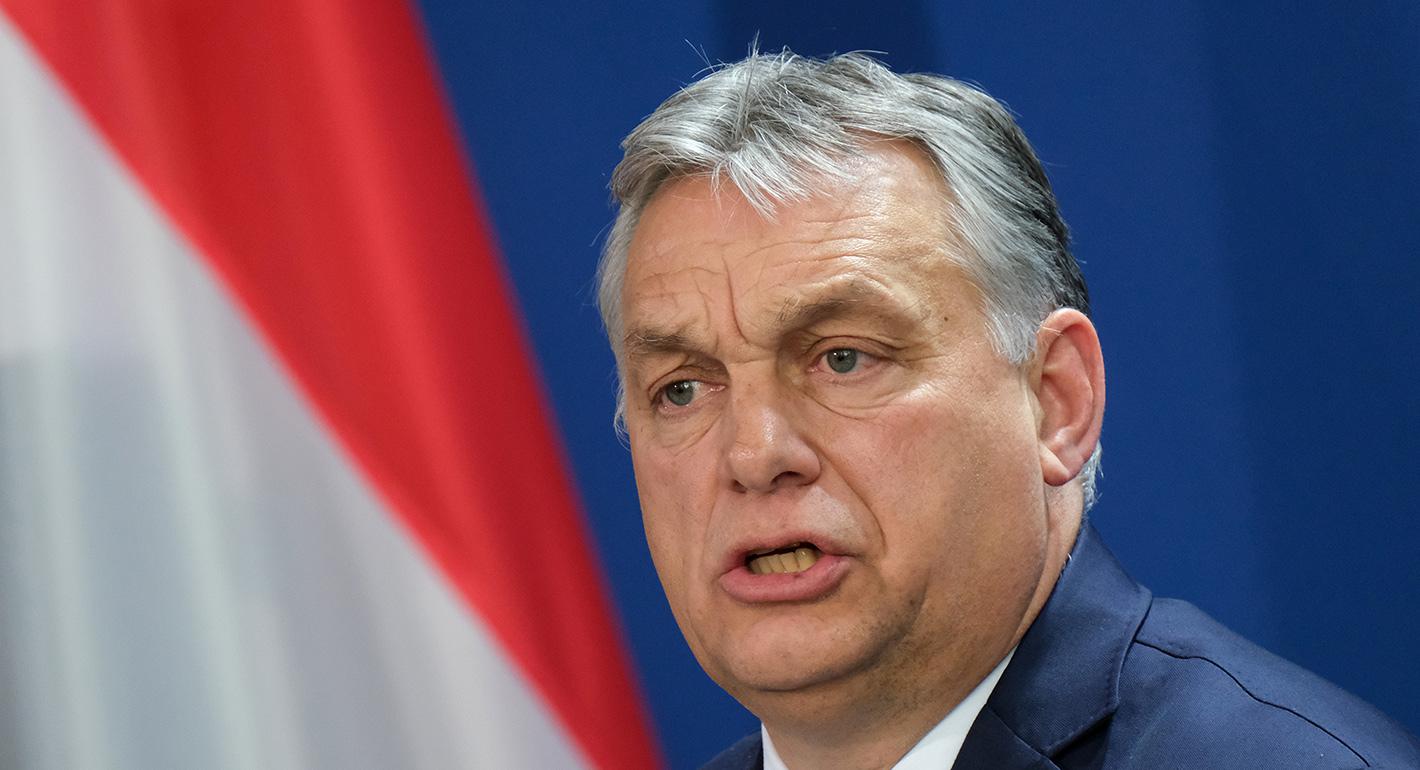
The cancer on Hungarian democracy preceded the virus, and we did too little to try to stop it sooner.
Source: Foreign Policy
On Monday, the Hungarian parliament passed a coronavirus bill that gave Prime Minister Viktor Orban the power to rule by decree, with no end date, and established chilling new penalties on speech and on those who violate quarantine. The draft legislation had been released a week earlier and drew criticism from civil society groups and the Council of Europe’s human rights chief, Dunja Mijatovic, among others. Orban and his Fidesz party charged ahead with the move, which was greeted by declarations that democracy in Hungary was effectively over.
It was a reminder of something we should already know: While much of the world has shut down in the face of the pandemic, history hasn’t stopped. The coronavirus is—understandably—consuming an enormous share of our collective attention right now; that means that other things that warrant our attention—Russia’s plans to intervene in the 2020 U.S. presidential election, the pre-existing humanitarian catastrophe in Syria’s Idlib region, the calamitous state of climate change policy, the geopolitical and security concerns surrounding 5G digital infrastructure, European right-wing populism, and so on—are getting less of it than they otherwise would.
This presents an opportunity for bad actors, not only because they think they can make moves while our attention is focused elsewhere but also because they know that even actions that don’t escape our attention are likely to be met with muted responses during a moment of crisis. Thus, while on Monday former Italian Prime Minister Matteo Renzi and former U.S. National Security Advisor Susan Rice called for Hungary to be booted out of the European Union (which is not really possible under EU rules, though suspension and sanctions are), there was little reason to hope that the EU itself was eager to take action. EU Justice Commissioner Didier Reynders (a former Belgian foreign minister who thought it was appropriate to wear blackface in 2015) responded to the latest news with a tweet that would fit well in a satire of official EU mealy-mouthedness.
Other things that warrant our attention are getting less of it than they otherwise would.
Whether Hungary will face any consequences within the EU or NATO, where it is also a member, remains to be seen. But Orban’s move might inspire helpful caution as the international community moves forward with its coronavirus response. The first phase of the outbreak played out in China; the second phase is unfolding in Japan, South Korea, Australia, Europe, and North America. The next phase of the pandemic, as public health experts assess and India’s national shutdown suggests, is likely to take place in the developing world. The effects could be especially devastating for vulnerable populations like refugees.
The United States and other Western industrialized countries—even as they struggle to manage the crisis within their borders—must marshal resources and expertise to help mitigate the effects of the virus in the developing world for both humanitarian and self-interested economic reasons. As these countries prepare to deploy aid, they should think about how to structure and deliver that assistance so that it does not exacerbate corruption problems. They should warn recipients of consequences if they use the coronavirus emergency as cover for anti-democratic or unconstitutional power grabs. Having witnessed the opportunistic exploitation of the crisis in a country at the heart of Europe, we must not feign surprise when we see similar efforts unfold elsewhere. Front-end planning to deter such actions is essential. The aim should be not only to deny the coronavirus its victims but also to deny leaders the opportunity to victimize their societies by using the virus as an excuse.
Yet, while we should keep Orban’s example in mind as we move forward in dealing with the pandemic, we should also recognize that our tendency today to see all things and all questions refracted through the prism of the pandemic can also blind us. The explanatory power of the coronavirus is limited: While it is the backdrop for almost every conversation in international politics right now, we shouldn’t let it, or the associated atmosphere of emergency, be a veil that prevents us from keeping a longer-term perspective.
Orban’s power grab is shocking but not surprising: Hungary’s democratic backsliding has been going on for well over a decade. Orban—who started in politics as part of the wave of young leaders who planted new democracies in Central and Eastern Europe after the collapse of communism—and his right-of-center Fidesz party have long engaged in a systematic dismantling of the institutional protections that secured an independent judiciary and free media in Hungary. They have used these and other institutional changes to secure and accumulate political power. Orban’s exploitation of the current coronavirus moment is less reflective of the chaos caused by the pandemic than of the collective failure of democratic actors and institutions—including the EU and NATO—to have put a check on Orban’s anti-democratic moves over the last 10 years.
We shouldn’t let the coronavirus, or the associated atmosphere of emergency, be a veil that prevents us from keeping a longer-term perspective.
Too many in the international community have been unwilling to confront Orban, in part because they have seen him (and because he has presented himself) as the more acceptable version of Hungarian right-wing populism. “Look,” Orban and his cronies would tell concerned Europeans and Americans behind closed doors, “would you rather see Fidesz or Jobbik in charge?” For many years, Hungary’s neo-Nazi Jobbik party has been instrumentalized by Orban both domestically and internationally to achieve his own political objectives. (Other European leaders on the right have similarly attempted to embrace the far-right populists in their countries but none with the cunning cynicism or disastrous constitutional consequences of Orban.)
Now the supposedly more acceptable right-wing populist has dismantled Hungary’s constitutional democracy by stacking the parliament with his lackeys and convincing them to cede their powers to him. As we look to other struggling democracies elsewhere in Europe and around the world, we cannot be so naive as to console ourselves by choosing to accommodate the lesser of two evils. The thing about two evils is that they are both evil. Democracy problems are like credit card debt: They don’t get easier to address over time—they compound, and they become insurmountable. The pandemic is not chiefly to blame for creating the permissive environment that allowed what some have called the “coronavirus coup” in Hungary. The cancer on Hungarian democracy preceded the virus, and we did too little to try to stop it sooner.

Senior Vice President; Director, Europe Program
Dan Baer is a senior vice president of the Carnegie Endowment for International Peace and director of the Europe Program. Under President Obama, he was U.S. ambassador to the Organization for Security and Cooperation in Europe (OSCE) and he also served deputy assistant secretary of state for the Bureau of Democracy, Human Rights, and Labor.
Recent Work


Richard Youngs, Erik Jones, Dan Baer, …
Carnegie India does not take institutional positions on public policy issues; the views represented herein are those of the author(s) and do not necessarily reflect the views of Carnegie, its staff, or its trustees.

After the chill in ties between 2020 and 2024 that brought India–China relations to their lowest point in several decades, the two countries have engaged each other afresh. This paper argues that there are predominantly four imperatives guiding India’s approach to China, and they exist in an order of priority.

Saheb Singh Chadha

This piece argues that India’s central challenge is not managing a single flashpoint but resolving the underlying tension between expansion and institutional coherency of the BRICS grouping.

Vrinda Sahai

A partnership between India, a country of subcontinental size, and Africa, a continent of fifty-four countries, may seem asymmetric until one notes that both are home to nearly the same number of people—1.4 billion. This essay spells out the existing challenges to the partnership, its optimal potential, and the possible pathways to realize it over the next quarter-century.

Rajiv Bhatia

The India–EU Free Trade Agreement (FTA) is shaping up to be one of the most consequential trade negotiations, both economically and strategically. But, what’s in the agreement, what’s missing, and what will determine its success in the years ahead
Vrinda Sahai, Nicolas Köhler-Suzuki
Trump 2.0 has unsettled India’s external environment—but has not overturned its foreign policy strategy, which continues to rely on diversification, hedging, and calibrated partnerships across a fractured order.



Milan Vaishnav, ed., Sameer Lalwani, Tanvi Madan, …