

Research
- +6
Yasmine Farouk, Nathan J. Brown, Maysaa Shuja Al-Deen, …
{
  "authors": [
    "Anouar Boukhars"
  ],
  "type": "other",
  "centerAffiliationAll": "dc",
  "centers": [
    "Carnegie Endowment for International Peace"
  ],
  "collections": [],
  "englishNewsletterAll": "menaTransitions",
  "nonEnglishNewsletterAll": "",
  "primaryCenter": "Carnegie Endowment for International Peace",
  "programAffiliation": "MEP",
  "programs": [
    "Middle East"
  ],
  "projects": [],
  "regions": [
    "North Africa",
    "Mauritania"
  ],
  "topics": [
    "Security"
  ]
}
Source: Getty
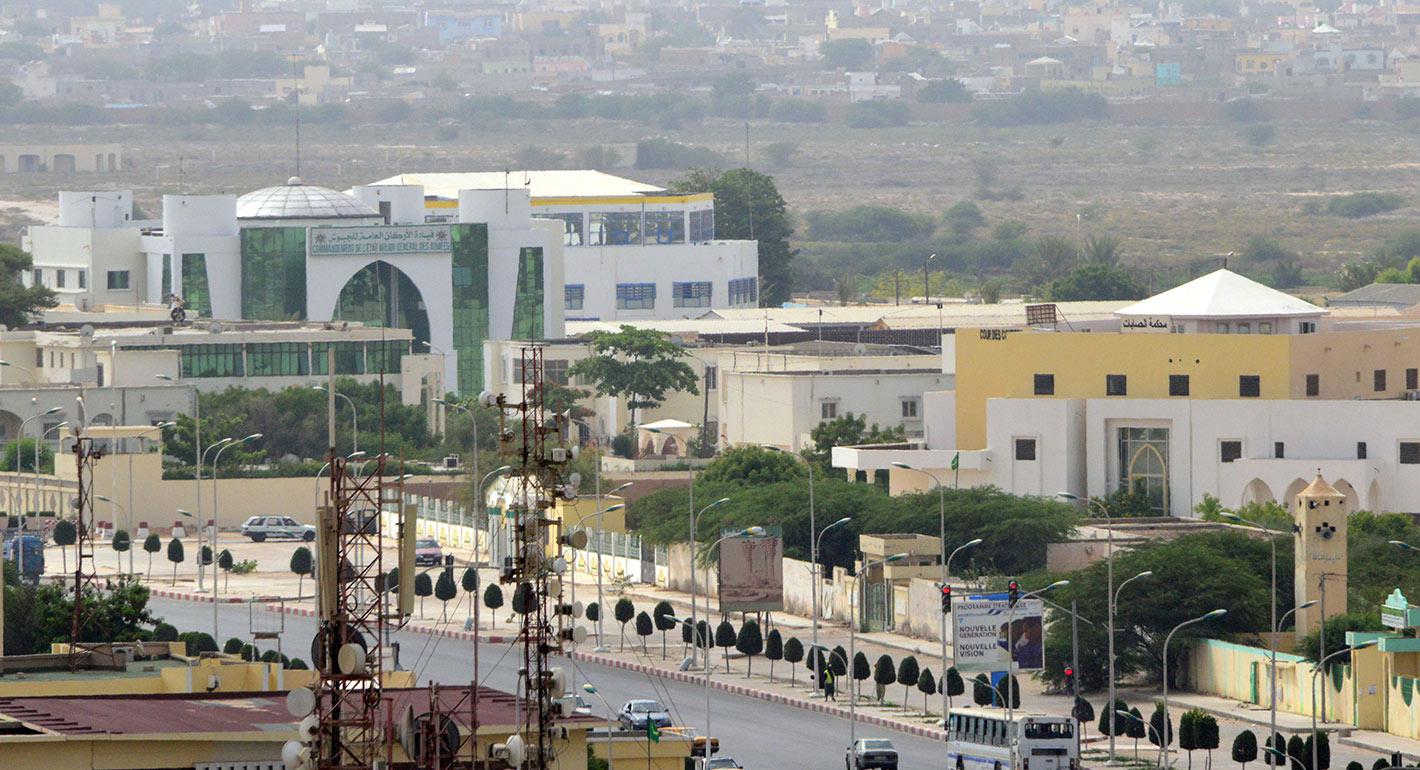
The story of Mauritania’s transformation from the weakest link in the crisis-ridden Sahel to one of its most resilient is instructive.
Source: Africa Center for Strategic Studies
Violent extremism continues to be one of the most significant challenges to peace and security in the Sahel. Militant Islamist groups have shown remarkable staying power despite their military rout in northern Mali in 2013 following the deployment of French-led Operation Serval (now Operation Barkhane). Indeed, violent extremist groups in the Sahel have grown in number, size, and lethality—now concentrated in central Mali, northeastern Burkina Faso, and western Niger.
Largely absent from this narrative is Mauritania. The story of Mauritania’s transformation from the weakest link in this crisis-ridden neighborhood to one of its most resilient is instructive. The country was the first in the Sahel to be hit by terrorist attacks in 2005. However, since 2011 it has avoided the expanding and diversifying threat from militant Islamist groups. That security threats in the Sahel are characterized by layers of intertwined and crosscutting interests at the local, national, and regional levels makes Mauritania’s example all the more informative. Importantly, the government has managed to restore its authority and control over border regions, which militant Islamist groups in the Sahel have often exploited to their advantage....
This article was originally published by the Africa Center for Strategic Studies
Former Nonresident Fellow, Middle East Program
Boukhars was a nonresident fellow in Carnegie’s Middle East Program. He is a professor of countering violent extremism and counter-terrorism at the Africa Center for Strategic Studies, National Defense University.
Recent Work



Yasmine Farouk, Nathan J. Brown, Maysaa Shuja Al-Deen, …

Frederic Wehrey, Nathan J. Brown, Bader Al-Saif, …
Carnegie India does not take institutional positions on public policy issues; the views represented herein are those of the author(s) and do not necessarily reflect the views of Carnegie, its staff, or its trustees.

In any defense establishment, change is an ongoing process. However, despite the best of intentions, existing bureaucracies, bound by habit and years of socialization, have their limits in implementing transformative change.

Anit Mukherjee

After the chill in ties between 2020 and 2024 that brought India–China relations to their lowest point in several decades, the two countries have engaged each other afresh. This paper argues that there are predominantly four imperatives guiding India’s approach to China, and they exist in an order of priority.

Saheb Singh Chadha

A partnership between India, a country of subcontinental size, and Africa, a continent of fifty-four countries, may seem asymmetric until one notes that both are home to nearly the same number of people—1.4 billion. This essay spells out the existing challenges to the partnership, its optimal potential, and the possible pathways to realize it over the next quarter-century.

Rajiv Bhatia

This piece argues that the present Indian strategy, based on opportunistic diversification and utilization of limited strategic reserves, remains inadequate when confronting supply disruptions. It evaluates India’s options in the short, medium, and long terms.

Vrinda Sahai

This piece examines India’s response to U.S. sanctions and tariffs, specifically assessing the immediate market consequences, such as alterations in import costs, and the broader strategic implications for India’s energy security and foreign policy orientation.
Vrinda Sahai