

Paper
James L. Schoff, Douglas E. Rake, Joshua Levy
{
  "authors": [
    "James L. Schoff"
  ],
  "type": "legacyinthemedia",
  "centerAffiliationAll": "dc",
  "centers": [
    "Carnegie Endowment for International Peace"
  ],
  "collections": [],
  "englishNewsletterAll": "asia",
  "nonEnglishNewsletterAll": "",
  "primaryCenter": "Carnegie Endowment for International Peace",
  "programAffiliation": "AP",
  "programs": [
    "Asia"
  ],
  "projects": [],
  "regions": [
    "North America",
    "United States"
  ],
  "topics": [
    "Political Reform",
    "Democracy",
    "Foreign Policy",
    "Global Governance"
  ]
}
Source: Getty
Ninja diplomacy maintains a low profile but is constantly active, and tries to shape outcomes as part of a broader strategy involving many other actors. In this case, those actors are Japan’s various government ministries, its private sector and other countries and international organisations.
Source: East Asia Forum
Bitter and deepening political division in the United States is a serious challenge for Japanese foreign policy — a challenge that is likely to grow in the coming year amid political dysfunction and the impact of COVID-19.
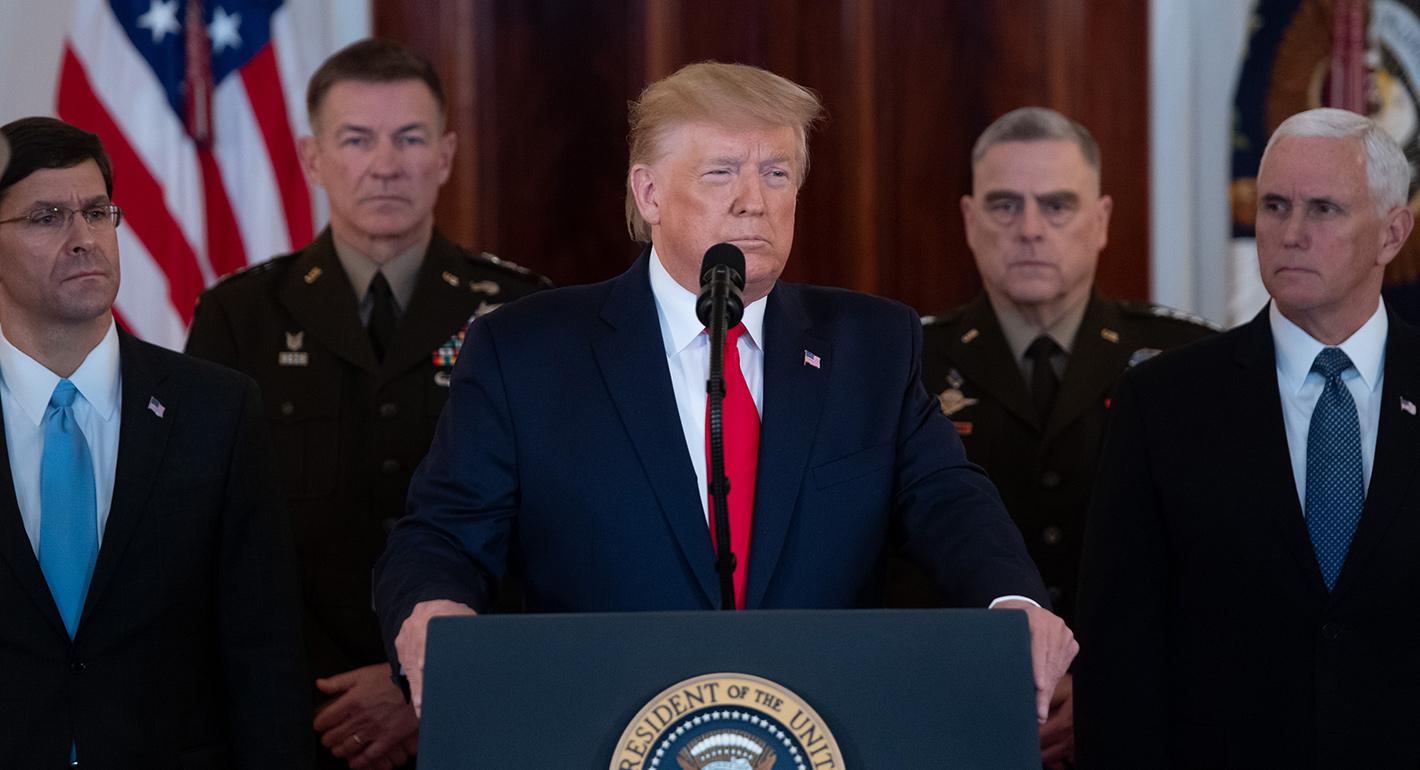
US political decline is not a new phenomenon but it is becoming more acute under President Donald Trump, who has taken an already politicised US electorate and amplified it. Unfortunately, the promise of US democracy — and the vitality that often flows from its liberty and diversity — is in danger of being overwhelmed by tribalism and economic inequality. This would make the United States a less reliable bilateral and multilateral partner for Japan.
Japanese foreign policy was already turning away from a central focus on alignment with the United States to a more proactive, nimble and often quiet approach. This Japanese ‘ninja diplomacy’ contrasts with China’s more abrasive ‘wolf warrior diplomacy’ or the United States’ brash ‘cowboy diplomacy’.
Ninja diplomacy maintains a low profile but is constantly active, and tries to shape outcomes as part of a broader strategy involving many other actors. In this case, those actors are Japan’s various government ministries, its private sector and other countries and international organisations. Applying this type of cultural iconography might seem a superficial way to describe a nation’s foreign policy strategy, but it conveys succinctly key aspects of its character.
Japan is gradually hedging its heavy reliance on the US–Japan relationship. It signed on to new security and economic cooperation agreements with countries including Australia, India, Canada and the Philippines, as well as collective agreements with NATO and the European Union. Japan is also investing in international organisations such as ASEAN, the Asian Development Bank and APEC.
None of these new or expanding partnerships can substitute for the depth of US–Japan cooperation across economics, security and technology — nor have they needed to so far. The alliance has been mutually beneficial throughout the post-Cold War era, and Japan has a large stake in US success.
Japan cannot choose between the US alliance, bandwagoning with China or pursuing middle power diplomacy. Instead, it must pursue all of them together, requiring deft manoeuvring and — at times — plausible deniability. Tokyo will need to double down on its two-pronged diplomatic strategy that tries to support US standing in the world while also diversifying its international relationships and influence.
There were times in Japanese history when the main foreign policy debate was about choosing between a predominantly Western versus Asian orientation. Contrasting Trump’s protectionist policies with economic dynamism in Asia, one might think a ‘return to Asia’ approach could gain favour in Tokyo. But while Beijing is promoting the concept of ‘Asia for Asians’, Japanese policymakers have little confidence that their Chinese counterparts will accommodate Japan’s interests sufficiently.
China’s excessive claims and coercive behaviour in the South and East China Seas, its bullying behaviour against Australia and its smothering of political dissent in Hong Kong continue to push Japan into an ‘all of the above’ approach. This approach embraces multiple regions around the world to expand partnerships and blunt Chinese diplomatic advances, while still promoting a stable and productive relationship with China.
It could be that US political decline is emboldening Chinese diplomats and military leaders to be more aggressive in protecting what they believe are China’s core interests. The United States alone will be increasingly less inclined or able to stymie Chinese gains in Asia, and if Beijing can deter other Asian countries from acting together, then its dominance in the region is virtually assured.
Japan’s diplomacy aims to avoid this worst-case outcome. Its ability to coordinate among multiple domestic and international actors and interests will be especially important when Japan’s long-serving Prime Minister Shinzo Abe completes his final term as head of the ruling party.
Japan cannot afford to oppose China bluntly or aggressively — China remains Japan’s largest trading partner and a valuable market for direct investment. Addressing regional challenges including North Korea’s nuclear weapons development, environmental degradation and crisis management will also benefit from cooperation with China. Simply joining a US-led anti-China coalition, sanctioning Chinese firms and shaming Chinese officials will be self-defeating.
At the same time Japan wants to undercut China’s ability to leverage its massive domestic market to make diplomatic and economic gains at Japan’s expense. Japan also needs to protect its firms’ intellectual property and compete effectively in emerging technologies.
Japan is working with the United States, Europe and others to divert sensitive supply chains away from China, establish high standards for digital trade and protect the integrity of data flows along undersea cables. It also aims to provide investment alternatives for Southeast Asian countries, push for reform at the World Trade Organization and limit Chinese investment in Japanese high-tech companies. Japan is seeking an open regional and global order based on predictably enforced rules, rather than one where ‘might makes right’. On this last point, Tokyo will be seeking partners internationally to counter both Beijing and — more quietly — Trump’s Washington.
Overall, Japan will need to keep up Abe’s active and multi-directional diplomacy by building or supporting coalitions wherever feasible while avoiding confrontation with China. The goal will be to help countries in Asia avoid Chinese coercion without choosing sides on sensitive political issues. Ideally, this will force Beijing to soften its diplomacy.
The United States can still be an important and constructive player in this effort, and can coordinate with Japan’s ninja diplomacy to protect their many shared interests. While Japan cannot afford to wait for the United States when promoting international agreements (such as the World Health Organization), it should make an effort to not leave Washington behind.

Former Senior Fellow, Asia Program
James L. Schoff was a senior fellow in the Carnegie Asia Program. His research focuses on U.S.-Japan relations and regional engagement, Japanese technology innovation, and regional trade and security dynamics.
Recent Work
James L. Schoff, Douglas E. Rake, Joshua Levy
James L. Schoff
Carnegie India does not take institutional positions on public policy issues; the views represented herein are those of the author(s) and do not necessarily reflect the views of Carnegie, its staff, or its trustees.

How is AI reshaping space security, creating governance challenges, and where does international diplomacy stand today?


Tejas Bharadwaj, Almudena Azcárate Ortega

After the chill in ties between 2020 and 2024 that brought India–China relations to their lowest point in several decades, the two countries have engaged each other afresh. This paper argues that there are predominantly four imperatives guiding India’s approach to China, and they exist in an order of priority.

Saheb Singh Chadha

This piece argues that India’s central challenge is not managing a single flashpoint but resolving the underlying tension between expansion and institutional coherency of the BRICS grouping.

Vrinda Sahai

A partnership between India, a country of subcontinental size, and Africa, a continent of fifty-four countries, may seem asymmetric until one notes that both are home to nearly the same number of people—1.4 billion. This essay spells out the existing challenges to the partnership, its optimal potential, and the possible pathways to realize it over the next quarter-century.

Rajiv Bhatia

The U.S.–India semiconductor cooperation story is well-stocked with top-level strategic intent. What remains unresolved, however, are some underlying challenges that will determine whether the cooperation actually functions. Three such friction points stand out.

Shruti Mittal