

Commentary
How is AI reshaping space security, creating governance challenges, and where does international diplomacy stand today?
Tejas Bharadwaj, Almudena Azcárate Ortega
{
  "authors": [
    "Aaron David Miller",
    "Richard Sokolsky"
  ],
  "type": "legacyinthemedia",
  "centerAffiliationAll": "",
  "centers": [
    "Carnegie Endowment for International Peace"
  ],
  "collections": [
    "Foreign Policy Strategy"
  ],
  "englishNewsletterAll": "",
  "nonEnglishNewsletterAll": "",
  "primaryCenter": "Carnegie Endowment for International Peace",
  "programAffiliation": "",
  "programs": [],
  "projects": [],
  "regions": [
    "North America",
    "United States"
  ],
  "topics": [
    "Foreign Policy"
  ]
}
Source: Getty
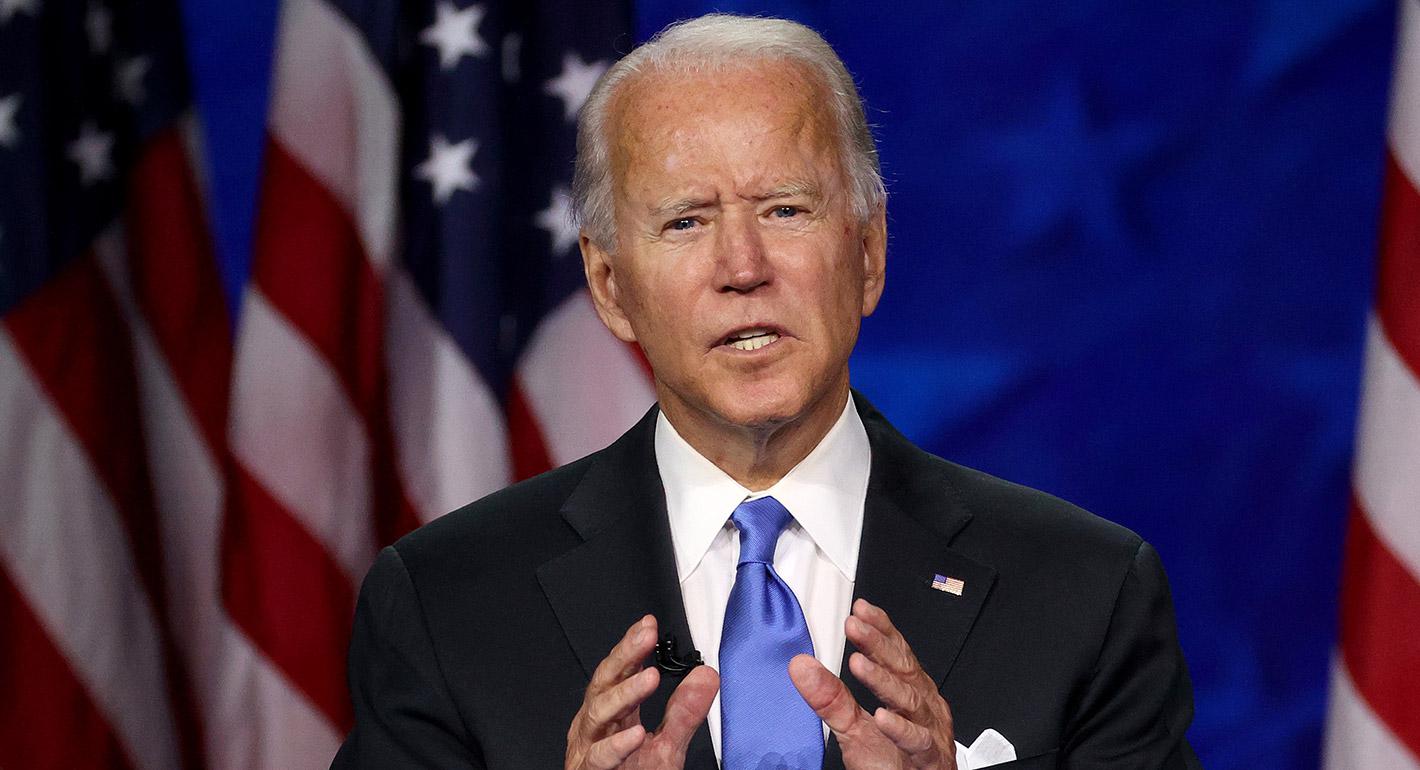
The world Biden will inherit is a far cry from the one he occupied when he was the vice-president and during the 1990s when he chaired the Senate Foreign Relations Committee. America’s unipolar moment has long been relegated to the dustbin of history.
Source: Politico
And Joe Biden means it, tethered as he is to a romanticized view of America as the world’s greatest power destined to lead and to do good. The new president will have much going for him. He’s the anti-Trump. And after four years of norm-busting disruption, expectations for Biden are so low that Europeans might be inclined to give him a Nobel Peace Prize for just showing up.
But the world Biden will inherit is a far cry from the one he occupied when he was the vice-president and during the 1990s when he chaired the Senate Foreign Relations Committee. America’s unipolar moment has long been relegated to the dustbin of history. China, in the Pentagon’s parlance, is a peer competitor. Other powers, both large and small, including Russia, Iran and North Korea, can easily frustrate U.S. ambitions. Rarely has the environment for international cooperation seemed more challenging.
The president-elect has said repeatedly that his primary goal abroad is to put American back at “the head of the table” because “the world won’t organize itself.” But the shape of that table has changed profoundly. A global pandemic has laid bare the limits of globalization and multilateral diplomacy and accelerated the demise of the liberal international order that America created and that sustained its primacy; it has also exacerbated preexisting trends toward renewed geopolitical competition and heightened sensitivities about national sovereignty on issues from border security to the economy and health care. A powerful China and a declining yet still determined Russia have conspired successfully to oppose Pax Americana.
So how can Biden create a foreign policy that is both effective and designed to meet the new world realities he’ll confront? The new administration should focus on three objectives.

Senior Fellow, American Statecraft Program
Aaron David Miller is a senior fellow at the Carnegie Endowment for International Peace, focusing on U.S. foreign policy.

Nonresident Senior Fellow, Russia and Eurasia Program
Richard Sokolsky is a nonresident senior fellow in Carnegie’s Russia and Eurasia Program. His work focuses on U.S. policy toward Russia in the wake of the Ukraine crisis.
Carnegie India does not take institutional positions on public policy issues; the views represented herein are those of the author(s) and do not necessarily reflect the views of Carnegie, its staff, or its trustees.

How is AI reshaping space security, creating governance challenges, and where does international diplomacy stand today?


Tejas Bharadwaj, Almudena Azcárate Ortega

After the chill in ties between 2020 and 2024 that brought India–China relations to their lowest point in several decades, the two countries have engaged each other afresh. This paper argues that there are predominantly four imperatives guiding India’s approach to China, and they exist in an order of priority.

Saheb Singh Chadha

This piece argues that India’s central challenge is not managing a single flashpoint but resolving the underlying tension between expansion and institutional coherency of the BRICS grouping.

Vrinda Sahai

A partnership between India, a country of subcontinental size, and Africa, a continent of fifty-four countries, may seem asymmetric until one notes that both are home to nearly the same number of people—1.4 billion. This essay spells out the existing challenges to the partnership, its optimal potential, and the possible pathways to realize it over the next quarter-century.

Rajiv Bhatia

The U.S.–India semiconductor cooperation story is well-stocked with top-level strategic intent. What remains unresolved, however, are some underlying challenges that will determine whether the cooperation actually functions. Three such friction points stand out.

Shruti Mittal