

Commentary
H. A. Hellyer
{
  "authors": [
    "H. A. Hellyer"
  ],
  "type": "legacyinthemedia",
  "centerAffiliationAll": "dc",
  "centers": [
    "Carnegie Endowment for International Peace"
  ],
  "collections": [],
  "englishNewsletterAll": "menaTransitions",
  "nonEnglishNewsletterAll": "",
  "primaryCenter": "Carnegie Endowment for International Peace",
  "programAffiliation": "MEP",
  "programs": [
    "Middle East"
  ],
  "projects": [],
  "regions": [
    "Western Europe",
    "France"
  ],
  "topics": [
    "Religion"
  ]
}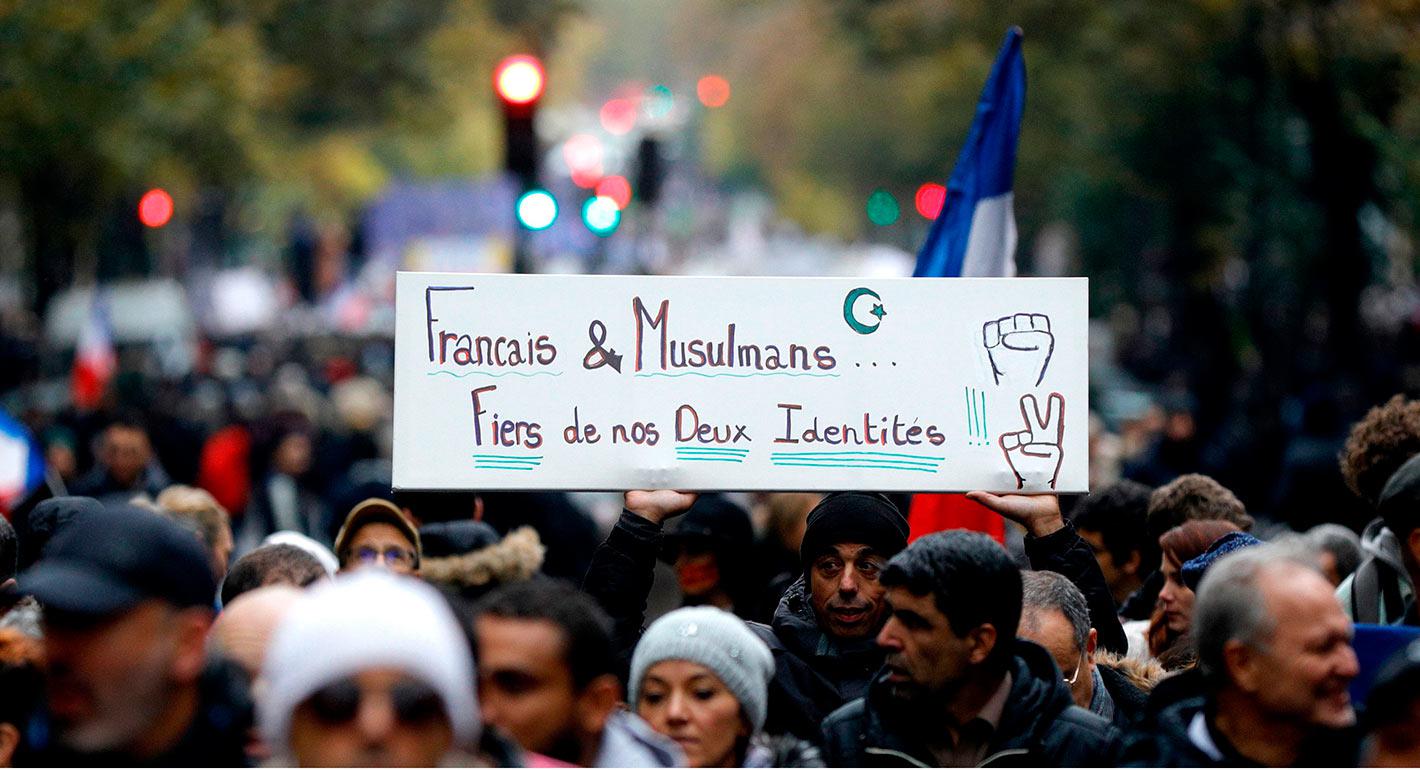
Source: Getty
The current furor around France’s relationship with its Muslim citizens in recent weeks seems new, but contemporary European history would teach us otherwise.
Source: Contending Modernities
Some things change, and some things stay the same. The current furor around France’s relationship with its Muslim citizens in recent weeks seems new, but contemporary European history would teach us otherwise. The question is: Did we ever learn those lessons?
In 2005, the Danish newspaper, Jyllands-Posten, published an article with cartoons the newspaper claimed depicted the person of the Prophet Muhammad. In the article, the culture editor of the newspaper wrote:
Modern, secular society is rejected by some Muslims. They demand a special position, insisting on special consideration of their own religious feelings. It is incompatible with contemporary democracy and freedom of speech . . . we are on our way to a slippery slope where no-one can tell how the self-censorship will end. (emphasis mine)
The assertion was clear: contemporary democracy, freedom of speech, secular society—even modernity itself— is “rejected” by “some” Muslims. The “some” here refer to those who object to the cartoons. The culture editor, in making this claim, tied together modernity, secularism, and democracy into the broader ideological frame of Western civilization.
It’s important to reflect on this statement in the aftermath of the October 2020 killings carried out in France by radical Islamist extremists, as well as Macron’s previous claims of a “crisis in Islam.” In the wake of these killings, many of the same issues have been raised.
This article was originally published in Contending Modernities.
Former Nonresident Scholar, Middle East Program
Dr. H.A. Hellyer was a nonresident scholar at the Carnegie Endowment for International Peace. He serves as a senior associate fellow at the Royal United Services Institute for Defence and Security Studies in London, and as a Cambridge University fellow.
Recent Work
H. A. Hellyer
H. A. Hellyer
Carnegie India does not take institutional positions on public policy issues; the views represented herein are those of the author(s) and do not necessarily reflect the views of Carnegie, its staff, or its trustees.
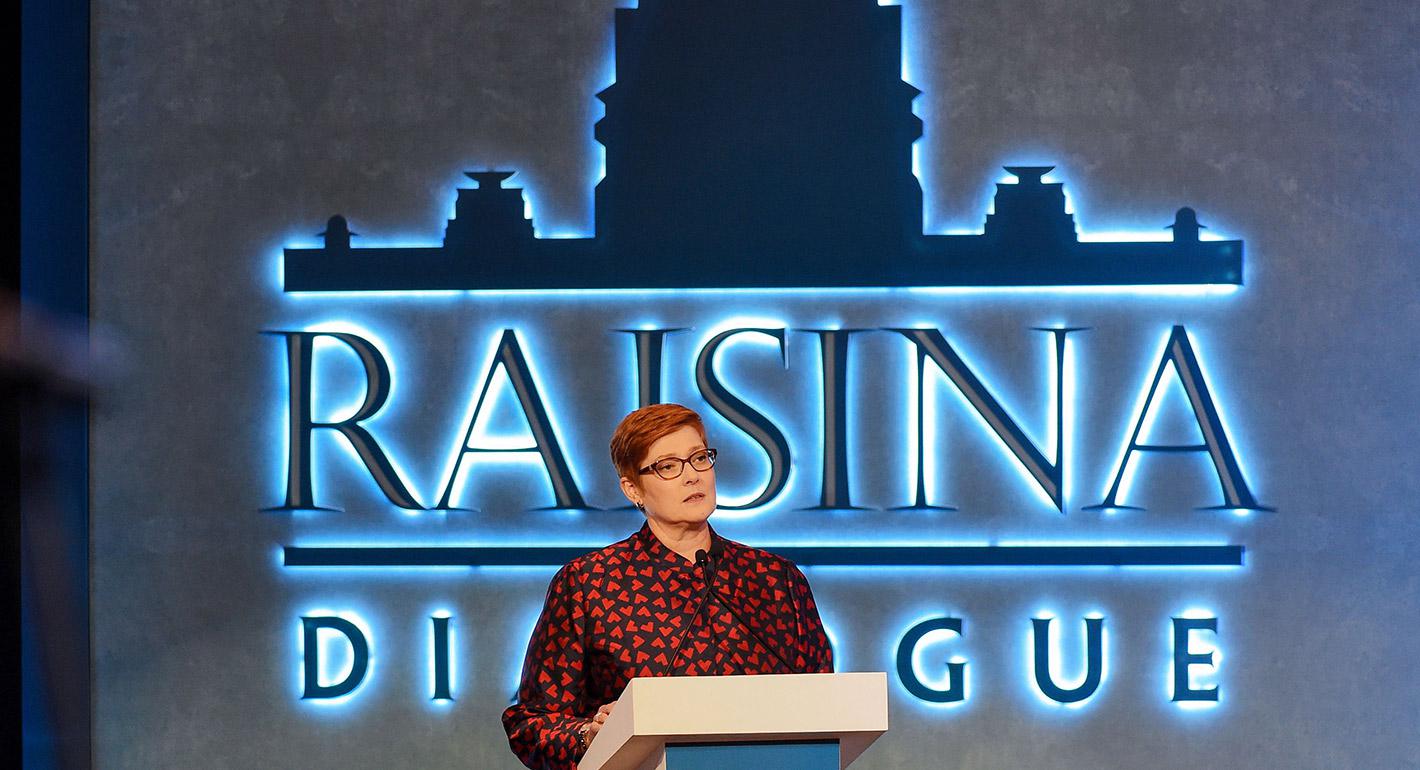
Foreign ministers from India, France, and Australia recently met (virtually) at the Raisina Dialogue, India’s flagship annual conference on geopolitics and geoeconomics. What can they get done if they work together?


Rudra Chaudhuri, Shibani Mehta
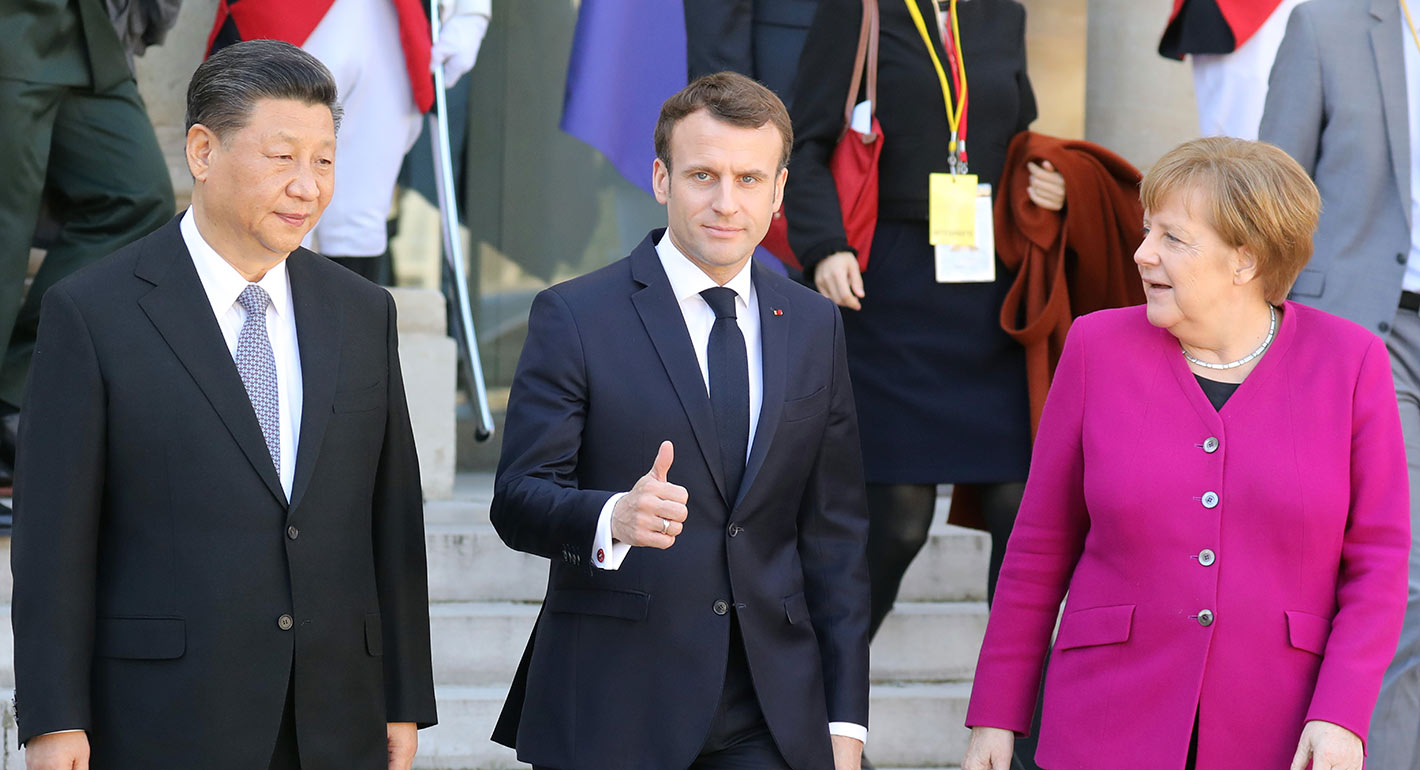
Europe’s huge stakes in the economic stability of Asia, the sea lines of communication connecting Europe and Asia through the Indo-Pacific, and threat of U.S. retrenchment may force Europe to reconsider its role in Asia. Asia needs a robust European contribution to connectivity and security.
C. Raja Mohan, John J. Vater
Pitched as a new Silk Road sweeping from Asia to Europe, China’s enormous Belt and Road Initiative is an ambitious, multinational infrastructure project. Experts from four Carnegie global centers explain other countries’ perspectives.


Paul Haenle, Dmitri Trenin, Alexander Gabuev, …
As countries debate an emerging security architecture in the Indo-Pacific, a key area is missing from the discussion: the role of islands. Much as they did in the past, islands will come to play a critical role in shaping the new order in the Indian Ocean region.

Darshana M. Baruah
Ending India’s amnesia about the two World Wars must now be followed by a more purposeful engagement with Europe in reordering the security architecture of Eurasia and the Indo-Pacific.
C. Raja Mohan