

Article
This piece argues that India’s central challenge is not managing a single flashpoint but resolving the underlying tension between expansion and institutional coherency of the BRICS grouping.
Vrinda Sahai
{
  "authors": [
    "Marcel Salikhov"
  ],
  "type": "commentary",
  "centerAffiliationAll": "",
  "centers": [
    "Carnegie Endowment for International Peace",
    "Carnegie Russia Eurasia Center"
  ],
  "collections": [],
  "englishNewsletterAll": "",
  "nonEnglishNewsletterAll": "",
  "primaryCenter": "Carnegie Russia Eurasia Center",
  "programAffiliation": "",
  "programs": [],
  "projects": [],
  "regions": [
    "Russia",
    "Western Europe"
  ],
  "topics": [
    "Economy"
  ]
}
Source: Getty
How much additional gas is required to stabilize the European market, and are Russia and other key suppliers able to provide it?
Record gas prices in Europe of over $1,000 per thousand cubic meters since the start of October have given rise to polar opinions on the future of Russia and the EU’s energy relationship. Some EU politicians are demanding an investigation into whether Gazprom is manipulating the market by deliberately limiting supplies, while others are calling for Moscow to increase gas exports to Europe as soon as possible.
Earlier this month, Russian President Vladimir Putin asked participants of a meeting devoted to the development of Russia’s energy industry to present their proposals on what could be done to stabilize the global energy market, which calmed the markets a little. At Russian Energy Week last week, he reiterated Russia’s willingness to help the EU overcome the energy crisis, and urged the removal of administrative barriers to the Nord Stream 2 pipeline, whose launch Putin said would ease tension on the European energy market. But after a small dip, prices once again continued to climb: it seems that verbal interventions are not enough. What’s needed is an increase in gas supplies—but how much additional gas is required to stabilize the market, and are Russia and other key suppliers able to provide it?
Currently, the EU’s underground storage facilities contain 87.2 billion cubic meters of gas, making them about 78 percent full. In the last five years, they have, on average, been about 90 percent full at this time of year, meaning about another 13 billion cubic meters would be required for them to reach the usual levels.
Taking into account possible fluctuations in demand and in the winter temperatures in EU countries, an additional 10–15 billion cubic meters would be required to safely weather the winter. That’s not that much: about 2–3 percent of the EU’s annual consumption. The problem is that right now, the entire global market is under pressure and is unlikely to be able to provide such volumes in the near future.
The liquefied natural gas (LNG) market is global thanks to the fact that liquefied gas is easy to transport. Accordingly, a drastic increase in demand in one part of the world increases prices and reduces availability of LNG in other areas. This is precisely what we have been seeing in recent months. Increased demand for gas in Asia, particularly in China, prompted major suppliers to adjust the focus of their deliveries to Asia, which caused exports to the EU to fall. Natural gas liquefaction plants usually operate at close to full capacity in any case, so cannot make sudden short-term increases to supply.
As for pipeline gas, the main suppliers to Europe are Russia, Norway, and Algeria. The Norwegian government said it would allow a 2 billion cubic meter increase in export volumes from October 1, but that increase will take place over the next twelve months. In recent months, deliveries of gas from Norway to the continent and the UK have decreased. Algeria, meanwhile, has increased the amount of gas it pumps to Italy since the end of September, but not enough to impact on the EU market.
Given the circumstances, Russia—which provides Europe with about 35 percent of all of its gas, making it the biggest supplier—remains the only provider that could potentially influence the situation on the market.
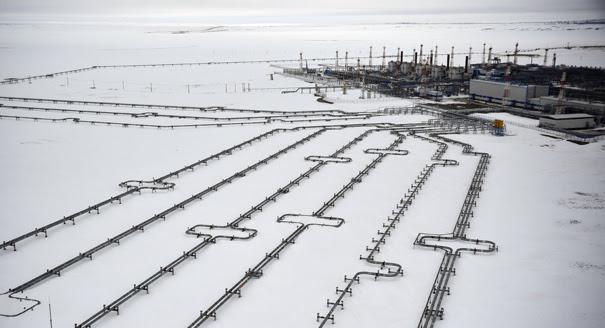
There are doubts, however, over whether or not the state-controlled giant Gazprom and other Russian gas producers can rapidly and significantly boost supply volumes. Gazprom extracts most of its gas from large fields in the Nadym-Pur-Tazovsky area of the Yamal-Nenets autonomous district, such as the Urengoy, Yamburg, and Zapolyarnoye fields. The company doesn’t release official data on production volumes at individual deposits, but overall, output has been steadily falling: by about 20 percent in the last ten years.
To make up for this reduction, the large Bovanenkovo gas field on the Yamal Peninsula was brought online in 2012. In 2020, production there reached 99 billion cubic meters. The next major Yamal field—Kharasavey—is due to start producing gas in 2023.
Gazprom CEO Alexei Miller said at the beginning of this year that the company had additional production capacity of almost 100 billion cubic meters of gas. So if in 2020 the company’s total production volume was 452 billion cubic meters, current capacity can be estimated at 550 billion cubic meters.
In the first nine months of 2021, Russia produced 60 billion more cubic meters of gas than in the same period in 2020. It won’t be easy to increase production further any time soon, especially during the winter months, when it is already at its maximum level in order to meet seasonal demand.
Indirect confirmation that Gazprom has already hit a production wall is the low level of gas supplies in its own European storage facilities. The Haidach underground gas storage facility in Austria, for example, was only 2.14 percent full on October 20, while the Rehden facility in Germany was at 9.45 percent. Of course, Gazprom does have room for maneuver, and the company could try to meet European demand by shipping gas from its Russian storage facilities, but having such low levels in storage in Europe is not without risks, even for Gazprom itself.
This year, Gazprom’s supplies to the domestic market have also grown significantly: by 20 percent compared to last year (and by 7 percent compared to 2019). This growth in demand at home is largely due to increased electricity consumption, which grew by 6–7 percent in recent months. Since electricity is generated by combined heat and power plants, that results in additional demand for gas.
Gazprom also needs to fill its Russian storage facilities. During the heating season of 2020–2021, 61 billion cubic meters of gas left Russian storage: that’s significantly more than the usual 30–40 billion. That gas had to be replaced before the new heating season.
In all likelihood, Gazprom could increase gas supplies to Europe to some extent, including by using reserves from its Russian facilities. Still, it does not have unlimited resources, and it’s not likely to be enough to provide Europe with an additional 10–15 billion cubic meters before the end of the year.
Gazprom isn’t Russia’s only gas producer, of course. Independent companies such as Novatek and Rosneft account for about one third of the country’s total gas production. They cannot quickly access the European market, however, because Gazprom holds a monopoly on exporting pipeline gas. Changes to the law passed in 2013 enabled other Russian companies to export LNG, but only if they already held a license for the construction of gas liquefaction plants. The only beneficiary of those amendments was Novatek.
This system of a “unified export channel,” as it is often called, was established to make Russian gas more competitive on the all-important European market. Independent producers have repeatedly proposed changing the scheme in recent years, but to no avail. Even if Gazprom did lose its monopoly on exports, those other producers would have very limited capacity to noticeably boost their output in the short term: Novatek uses any new deposits as a resource base for its own LNG plants, and while the oil and gas giant Rosneft does have ambitious plans to develop its gas arm, it has seen production fall steadily since 2017.
Europe doesn’t have many options for increasing its gas supplies in the near future. It’s obvious that the main source of additional gas will be Russia. Yet Gazprom’s current output is already close to full capacity, and on balance, it’s unlikely that the company is capable of plugging the deficit in Europe single-handedly. Since independent producers can’t increase production that quickly either, European gas prices will remain high this winter.
Marcel Salikhov
Carnegie India does not take institutional positions on public policy issues; the views represented herein are those of the author(s) and do not necessarily reflect the views of Carnegie, its staff, or its trustees.

This piece argues that India’s central challenge is not managing a single flashpoint but resolving the underlying tension between expansion and institutional coherency of the BRICS grouping.

Vrinda Sahai

On March 10, 2026, India’s Union Cabinet approved amendments to Press Note 3, a regulation that mandated government approval on all foreign direct investment (FDI) from countries sharing a land border with India. This amendment raises questions primarily about whether its stated benefits will materialize and if the risks have been adequately weighed. This piece will address the same.

Konark Bhandari

This piece examines India’s response to U.S. sanctions and tariffs, specifically assessing the immediate market consequences, such as alterations in import costs, and the broader strategic implications for India’s energy security and foreign policy orientation.
Vrinda Sahai

This paper examines the evolution of India-China economic ties from 2005 to 2025. It explores the impact of global events, bilateral political ties, and domestic policies on distinct spheres of the economic relationship.

Santosh Pai
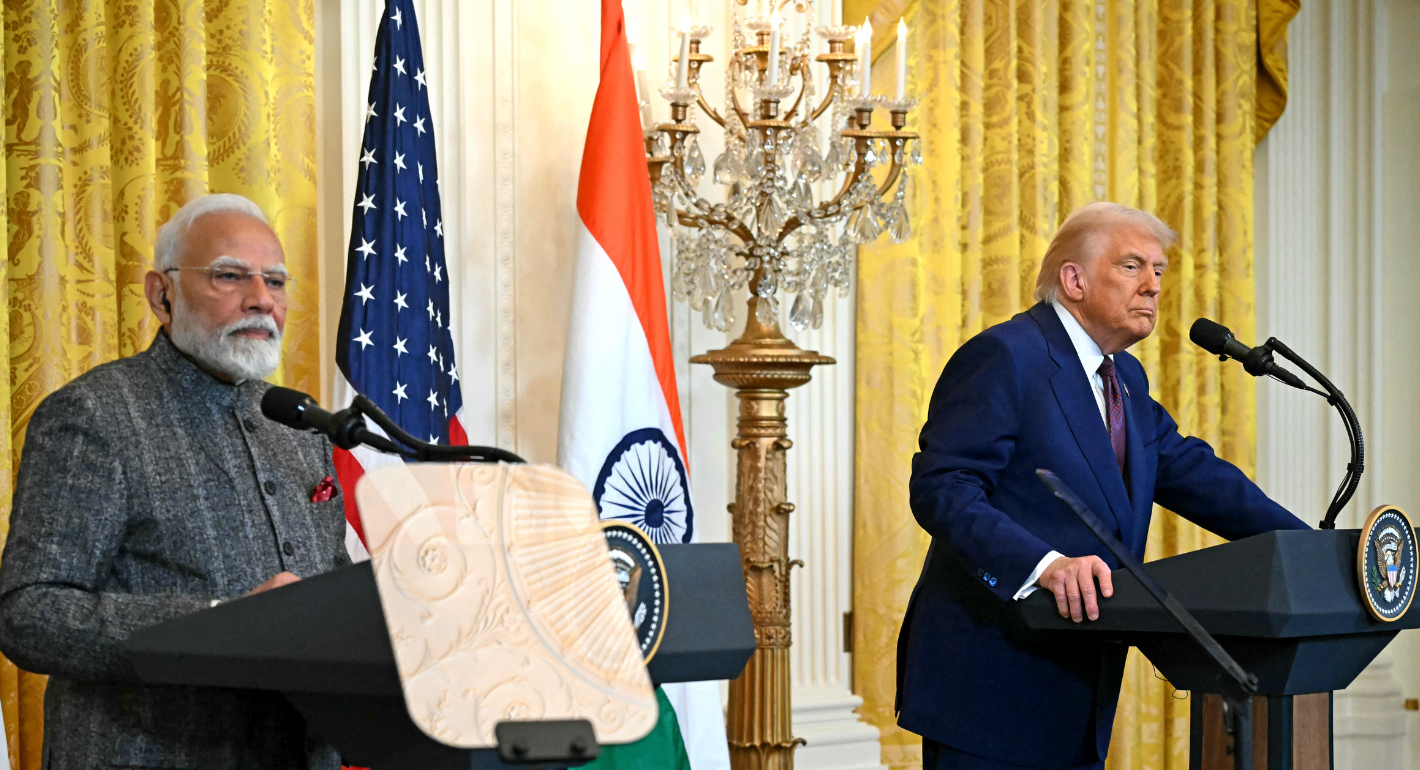
The India-U.S. relationship currently appears buffeted between three “Ts”—TRUST, Tariffs, and Trump.
Arun K. Singh