Rarely in the world have women’s and girls’ rights been challenged as they have been in Afghanistan. The latest developments give cause for great concern. The EU has made it clear that future EU development assistance to Afghanistan will depend on the respect for the international legal framework and for norms on human rights, including women’s and girls’ rights. The EU is determined and committed to continue to support the women and girls of Afghanistan and worldwide, sticking to our values and beliefs.
Together with human rights, freedom, and democracy, equality represents one of the core values that make the European Union what it is. It enriches our societies and strengthens their resilience. Gender equality is a core part of peace, security, economic prosperity, and sustainable development. Moreover, defending and promoting gender equality is required by the EU treaties.
That is why working politically, operationally, and financially to promote and safeguard progress on gender equality is a political priority and a key objective for the EU. The EU Gender Action Plan III and the new EU external action budget provide a roadmap for global action toward a gender-equal world. We work closely together with multilateral, regional, and bilateral partners, including civil society organizations, to achieve those objectives. We still have a long way to go; there is no room for complacency. However, we are stronger together while many challenges remain.
In many countries, the COVID-19 crisis has exacerbated existing gender inequalities across different areas: education, vocational training, health, security and safety, sexual and reproductive health and rights, decision-making, and economic opportunities.
The COVID-19 lockdowns have often seen an increase in gender-based violence, in particular domestic violence, while women and girls’ access to sexual and reproductive health services has been reduced. At the same time, a significant part of the care burden has fallen on women and girls. Workers in the informal economy and in low-skilled jobs (most of whom are women), migrants, and those belonging to minorities, have been more at risk and face multiple and intersecting forms of discrimination.
Moreover, school closures have exposed girls to an increased risk of sexual exploitation, early pregnancy, child labor, and forced marriage. The Malala Fund estimates that 20 million more girls risk dropping out of school, adding up to a total of 150 million girls—equivalent to a third of the EU population—without educational prospects.
According to a recent UN report, military spending in 2020 still outpaced the worldwide expenses on health, even in a year that was dominated by the coronavirus pandemic. For a sustainable recovery from the COVID-19 pandemic, we need to redouble our efforts to promote gender equality.
Now Is the Time to Do More
This challenge requires a global response and needs to be tackled now, when we are building the future we wish for our children and grandchildren to grow up in a post-pandemic world that is more equal, more diverse, and where equal opportunities are a reality. We need to address the root causes of gender inequality and gender-based discrimination in order to achieve sustainable change.
The European Union and its member states, as well as the European financial institutions have stood with the women and girls of the world throughout the pandemic. As Team Europe, we have already mobilized 46 billion euros in support of over 130 partner countries, with a particular focus on women and youth.
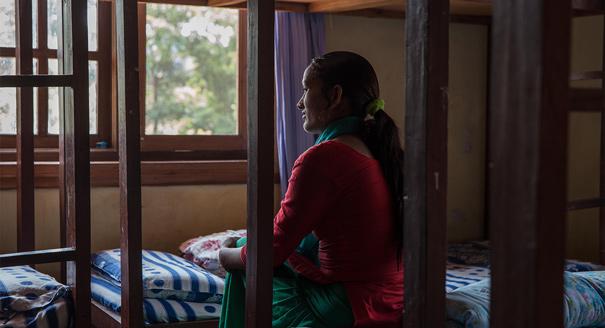
Three examples as an illustration: In Nepal, we helped one million girls and boys continue their education through radio-based learning. In Togo, we supported the creation of a universal income scheme and the appointment of women to head new municipalities. Worldwide, the EU-UN Spotlight Initiative has helped 650,000 women and girls prevent or address violence against them, and educated 880,000 men and boys on positive masculinity, non-violent conflict resolution, and parenting.
Still, to meet the growing challenges, we need to do more and better. That is the purpose of the Gender Action Plan III. It promotes leadership and meaningful participation of women, girls, and young people in political, economic, social, and cultural life, as well as in all matters related to peace and security, worldwide.
We Work to Get Human Development Back on Track
We are now making this plan a reality with the help of the new 79.5 billion euro NDICI-Global Europe instrument that will support the EU’s external action for the next seven years.
Support for education and particularly girls’ education will have a central role. Just as we support education in emergencies, the EU has worked with partner countries throughout the pandemic to minimize its impact on learning and the well-being of children, and to facilitate a safe return to school.
We already provide more than half of all global aid to education as Team Europe. But we will increase funding further, to promote gender equality through quality education at all levels. Our joint 1.7 billion euro pledge to the Global Partnership for Education in July—to transform education for girls and boys in up to 90 countries and territories—is part of this new beginning.
We are multiplying our efforts across the board, from supporting women and girls’ education and economic opportunities to improving their access to sexual and reproductive health services. By 2025, 85 percent of all the EU’s new external actions—across all sectors—will contribute to gender equality and women’s empowerment.
This is now being finalized with our partner countries based on close consultation with civil society organisations, women’s rights activists, and youth.
We need to put human development back on track and achieve the Sustainable Development Goals by 2030, leaving no woman or girl behind.
It is crucial we get it right.
This material is part of the Russia-EU: Promoting Informed Dialogue project, supported by the EU Delegation to Russia.