

Article
- +1
Li Mingjiang, Le Hong Hiep, Ngeow Chow Bing, …
{
  "authors": [
    "Ngeow Chow Bing"
  ],
  "type": "scholarSpotlight",
  "centerAffiliationAll": "",
  "centers": [
    "Carnegie Endowment for International Peace",
    "Carnegie China"
  ],
  "collections": [],
  "englishNewsletterAll": "",
  "nonEnglishNewsletterAll": "",
  "primaryCenter": "Carnegie China",
  "programAffiliation": "",
  "programs": [],
  "projects": [],
  "regions": [],
  "topics": []
}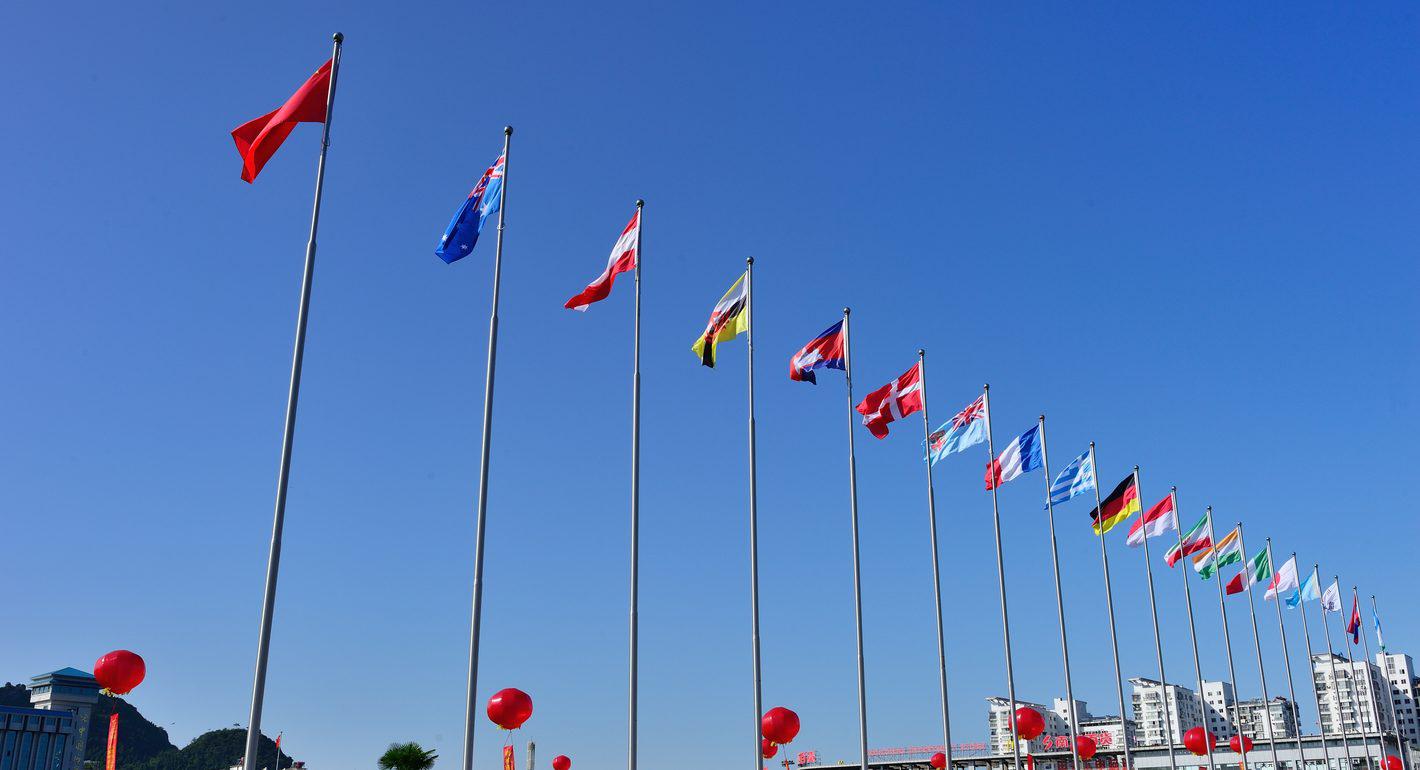
Source: Getty
China is the largest and most consequential neighboring great power to Southeast Asian countries. Many in the region believe that the economic future of Southeast Asia will depend largely on China’s own economic trajectory. China’s progress in science and technology has made a huge impression, and the products of China’s enterprises are ubiquitous in Southeast Asian markets. China’s universities have become increasingly popular destinations for aspiring Southeast Asian students, supplanting those in the West. China is an active dialogue partner to the Association of Southeast Asian Nations (ASEAN), with many areas of economic and functional cooperation benefitting both parties.
Nevertheless, China’s involvement in the intractable South China Sea dispute and its divergent view of international maritime law presents significant security challenges and risks, especially to the Southeast Asian littoral countries involved in the dispute. Under the present leadership of Xi Jinping, China has stepped up asserting its claims in the South China Sea, which have created enormous geopolitical tensions and pressures in the region, with many ramifications for the ongoing U.S.-China rivalry in the Indo-Pacific.
I have worked on various aspects of China-Southeast Asia relations—in particular China-Malaysia relations—in my academic career, from the strategic and security aspects to the softer dimensions of people-to-people exchanges, education, and soft power. It is fascinating to observe the paradoxes, ambiguities, uncertainties, and even contradictions in how countries in the region, either collectively or individually, engage with China and vice versa. China is often understood and perceived in a multifaceted way, generating both excitement and anxiety.
Often, the perspectives and views on China in the Southeast Asian region are not entirely captured or appreciated by the China expert communities in the West. One of my continuous interests has been to analyze how China knowledge capacity and “China studies” communities are formed, built, and connected, especially in the academia of Southeast Asian countries.
At Carnegie China, my research will investigate two related topics concerning regional geopolitical dynamics. First, I will examine how ASEAN can play a role in moderating U.S.-China competition. ASEAN is the crucial multilateral institution in the region, and over the decades, it has developed an inclusive regional architecture focused on engaging all relevant stakeholders. It has been able to bring together Japan, South Korea, and China in the ASEAN Plus Three framework and remains an important buffer between the United States and China. My research will investigate in what ways ASEAN could be more proactively involved in stabilizing the U.S.-China rivalry, including initiating a platform or framework of ASEAN Plus Two (China and the United States).
Second, I will research developments of China’s defense diplomacy in the region—with a particular focus on Malaysia—from the angle of military education soft power. China’s military academies of institutions of higher education have received a growing number of foreign military participants, including those from Southeast Asia. How would China’s strategic and/or tactical perspectives and doctrines be received and perceived by these participants? What implications does this form of military soft power have? I intend to explore these under-researched questions at Carnegie China.
I am excited that Carnegie China has displayed a strong interest in building its China-related work from the vantage point of Southeast Asia. This is a promising and unique region from which to observe contemporary developments concerning China’s politics, economy, society, and foreign policy. I am honored to be joining many excellent scholars and colleagues connected with Carnegie, from within and outside this region, in advancing a better understanding of China.

Nonresident Scholar, Carnegie China
Ngeow Chow Bing focuses on China’s relations with Southeast Asian countries.
Recent Work
Li Mingjiang, Le Hong Hiep, Ngeow Chow Bing, …


Selina Ho, Khin Khin Kyaw Kyee, Joseph Ching Velasco, …
Carnegie India does not take institutional positions on public policy issues; the views represented herein are those of the author(s) and do not necessarily reflect the views of Carnegie, its staff, or its trustees.