

Commentary
How is AI reshaping space security, creating governance challenges, and where does international diplomacy stand today?
Tejas Bharadwaj, Almudena Azcárate Ortega
{
  "authors": [
    "James Goldgeier"
  ],
  "type": "commentary",
  "centerAffiliationAll": "dc",
  "centers": [
    "Carnegie Endowment for International Peace"
  ],
  "collections": [
    "Debating NATO Enlargement",
    "A More Disciplined American Global Leadership"
  ],
  "englishNewsletterAll": "americanStatecraft",
  "nonEnglishNewsletterAll": "",
  "primaryCenter": "Carnegie Endowment for International Peace",
  "programAffiliation": "ASP",
  "programs": [
    "American Statecraft"
  ],
  "projects": [],
  "regions": [
    "North America",
    "United States",
    "Russia",
    "Eastern Europe",
    "Ukraine"
  ],
  "topics": [
    "NATO",
    "Defense"
  ]
}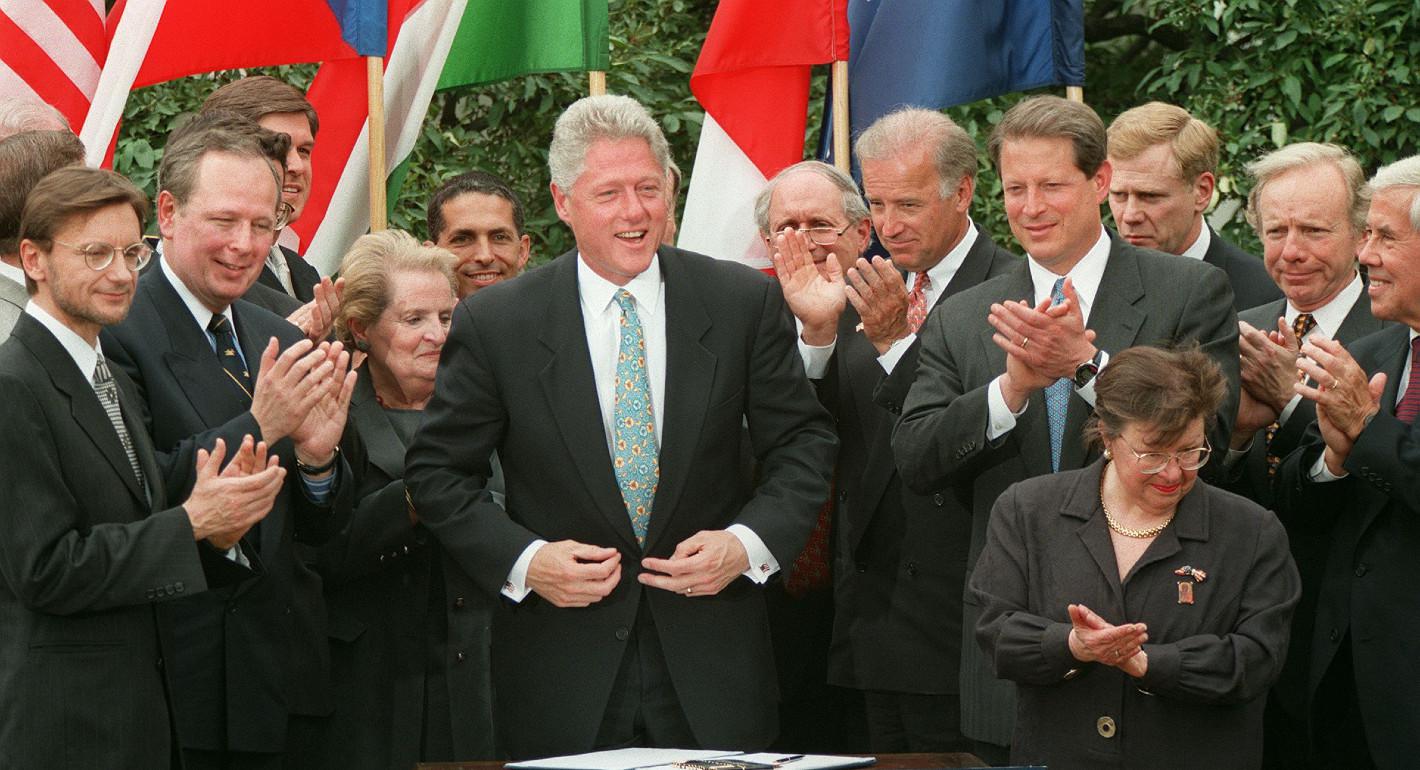
Source: Getty
But if Ukraine joins the alliance, NATO will have to engage in serious military planning in ways it did not for the Baltic states.
In this series from the American Statecraft Program, James Goldgeier and Joshua Shifrinson discuss and debate the issues surrounding NATO enlargement in a twenty-first-century exchange of letters. Read the previous entry here.
Dear Josh,
Thank you for your thoughtful response to my letter arguing that Ukrainian membership in NATO, with the Article 5 guarantee that entails, is the only way to deter Russian aggression against its neighbor in the long run.
You ask in return what NATO would need to do in order to make the guarantee “credible” to Moscow. You go on to say, “It doesn’t make sense to advocate Ukraine’s admission into NATO without answering that crucial question.”
Answering that “crucial question” on credibility has not been part of the enlargement process. As I wrote in my book on the deliberations over enlargement in the 1990s, the Pentagon’s opposition to the policy was in part due to concerns about how it could manage to create credible new security guarantees with fewer resources in an era when the focus was on a “peace dividend” stemming from lower defense budgets after the end of the Cold War. This challenge would become acute with the 2004 accession of Estonia, Latvia, and Lithuania. As former U.S. ambassador to NATO Ivo Daalder recalls, “When I came to NATO in 2009, I was told days after I got there, by my German colleague, that NATO had not developed any plans to defend the Baltic states.”
NATO has shown, at least rhetorically, a greater commitment to take the issue of credible deterrence seriously, as it has announced an upgrade to its abilities to defend eastern members in its 2022 and 2023 summit declarations. Bringing Ukraine into NATO would require beefing up existing NATO troop deployments even further along frontline states, since some of these forces would need to be inserted into Ukraine, at least on a rotating basis.
Lily Wojtowicz and I have written that in general the more difficult challenge is the reassurance of frontline allies, which would include Ukraine, rather than deterrence of the Russians. However, NATO would certainly need to develop plans for how it would deter future Russian aggression against Ukraine and defend it in the event deterrence failed. As you know, the fourth section of our recent book on NATO enlargement demonstrates that the costs of enlargement to the organization are real, and allies struggle to meet the new defense commitments they have set for themselves.
But as we have done all along with our joint work, when we ask what the costs are, we also have to ask, “Compared to what?” The so-called Israel model that is the focus of much attention today—whereby the United States and its allies would supply Ukraine over the long run with the weapons it needs to defend itself against Russia but not bring it into the alliance—would also be costly, particularly since the potential for another Russian invasion would be higher in the absence of the Article 5 guarantee. Nothing seems to deter Russian aggression as successfully as a country’s membership in NATO. If NATO does agree to Ukraine’s membership, it will have to engage in the kind of serious military planning and force posture adjustments you suggest, in ways it did not do when it took the Baltic countries into the alliance. But this is still preferable in my view to continuing to live with the uncertainty of continual Russian aggression. Fortunately, Russian President Vladimir Putin does appear to take Article 5 quite seriously, as he has demonstrated throughout the war, and thus Ukrainian membership in NATO would appear to be the best guarantee over the long term that Russia would not attempt another invasion.
You asked me about NATO’s role in the current war, and as I wrote earlier in our exchange, I think it played little role in sparking Putin’s aggression. That aggression is much more of a function of his imperialist beliefs and his sense that he had an opportunity to join Ukraine to Russia by force in 2022. Yes, Russia was unhappy about NATO enlargement, particularly the 2008 Bucharest summit declaration that Ukraine (and Georgia) will join NATO. But it was also unhappy about the Kosovo war, the American withdrawal from the Anti-Ballistic Missile Treaty, the color revolutions (which it blamed on the West), the Iraq war, and the Libya war. As Kimberly Marten has written, Russia was most angry about its loss of status after the end of the Cold War, so NATO enlargement was more symptom than cause of the problems for its relationship with the United States.
I want to use your argument about “wishful thinking” in the enlargement process to shift our debate to the issue of assurances given to the Soviet Union and then Russia by the United States and its allies at the end of the Cold War. You’ve written extensively about that issue, based on your extraordinary archival work, and I’m wondering what role you think those assurances have played over time. I’ve always believed that the most important assurances the United States gave to the leadership in Moscow was that it wouldn’t act to undermine Soviet and then Russian security after the withdrawal of the Red Army from Eastern Europe. I would argue that Washington then sought to deliver on those assurances: it signed a treaty limiting the amounts of heavy weaponry such as tanks and armored combat vehicles in Europe, withdrew huge numbers of American troops from the continent, created the Partnership for Peace that included Russia, gave Russia a place in the Implementation Force in Bosnia after the 1995 Dayton Accords were signed, and created the NATO-Russia Founding Act.
I’ve written that president Bill Clinton convinced himself that he didn’t have to make a tradeoff between integrating the Central and Eastern Europeans into NATO and maintaining a partnership with Russia, or at least with president Boris Yeltsin. And maybe you’d call that wishful thinking. He was able in the end to avoid that tradeoff during his presidency. But he did try to do things to allay Yeltsin’s concerns, because he knew NATO enlargement wasn’t easy for the Russians to accept. Nevertheless, assuaging Russia wasn’t the United States’ only—or even primary—interest. And when Yeltsin asked for a “verbal, gentlemen’s agreement . . . that no former Soviet republics would enter NATO,” Clinton responded that “Russia would be saying, ‘We have still got an empire, but it just can’t reach as far West,’” and refused to go along. I believe Clinton was right to respond that way. Do you?
Sincerely,
Jim
Read more from Debating NATO Enlargement:
James Goldgeier
James Goldgeier is a visiting scholar at Stanford University’s Center for International Security and Cooperation, a visiting fellow at the Brookings Institution, and a professor of international relations at American University.
Carnegie India does not take institutional positions on public policy issues; the views represented herein are those of the author(s) and do not necessarily reflect the views of Carnegie, its staff, or its trustees.

How is AI reshaping space security, creating governance challenges, and where does international diplomacy stand today?


Tejas Bharadwaj, Almudena Azcárate Ortega

This piece argues that India’s central challenge is not managing a single flashpoint but resolving the underlying tension between expansion and institutional coherency of the BRICS grouping.

Vrinda Sahai

The U.S.–India semiconductor cooperation story is well-stocked with top-level strategic intent. What remains unresolved, however, are some underlying challenges that will determine whether the cooperation actually functions. Three such friction points stand out.

Shruti Mittal
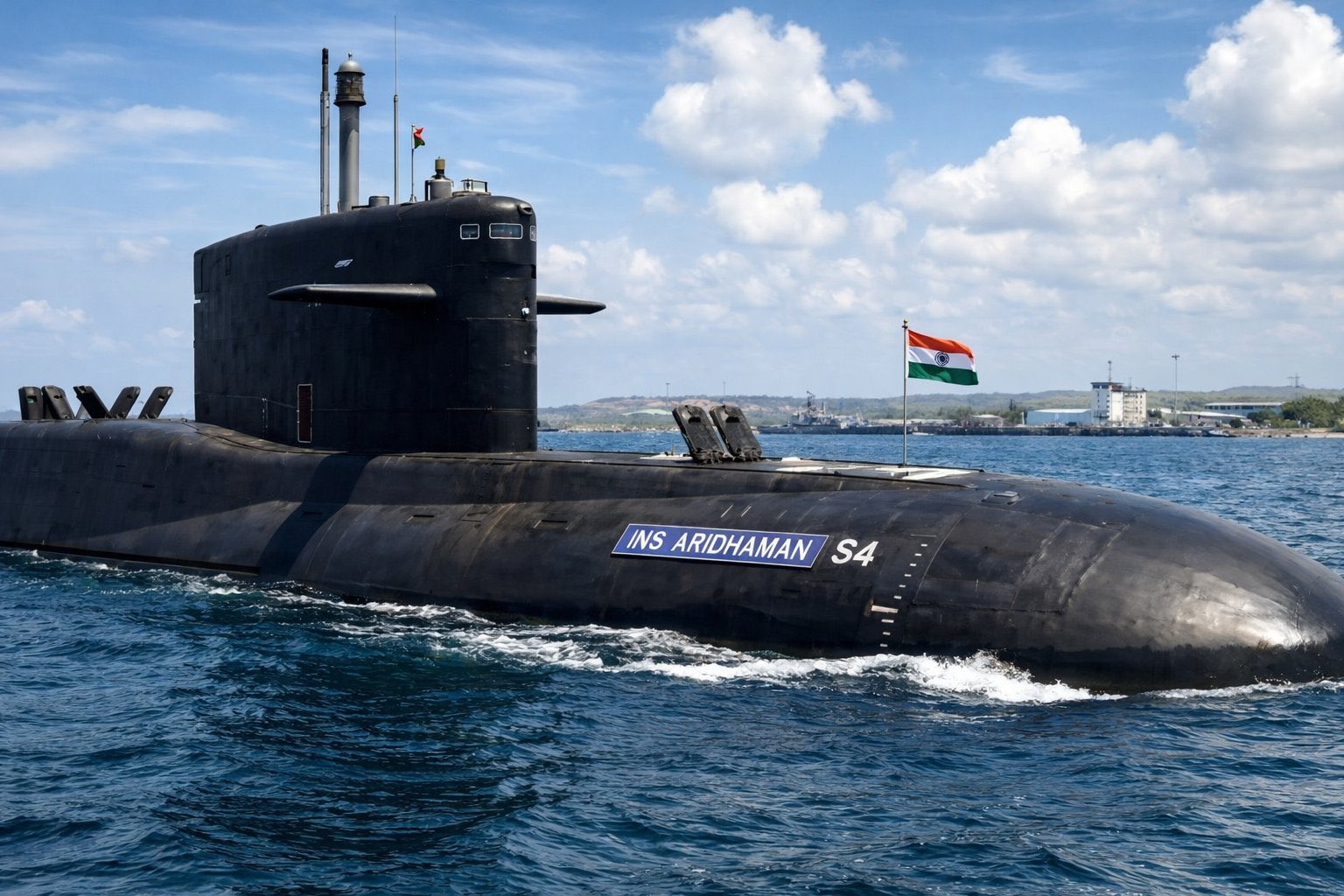
The induction of INS Aridhaman, which features several technological enhancements, now gives India the third nuclear ballistic missile submarine to ensure continuous at-sea deterrent.

Dinakar Peri
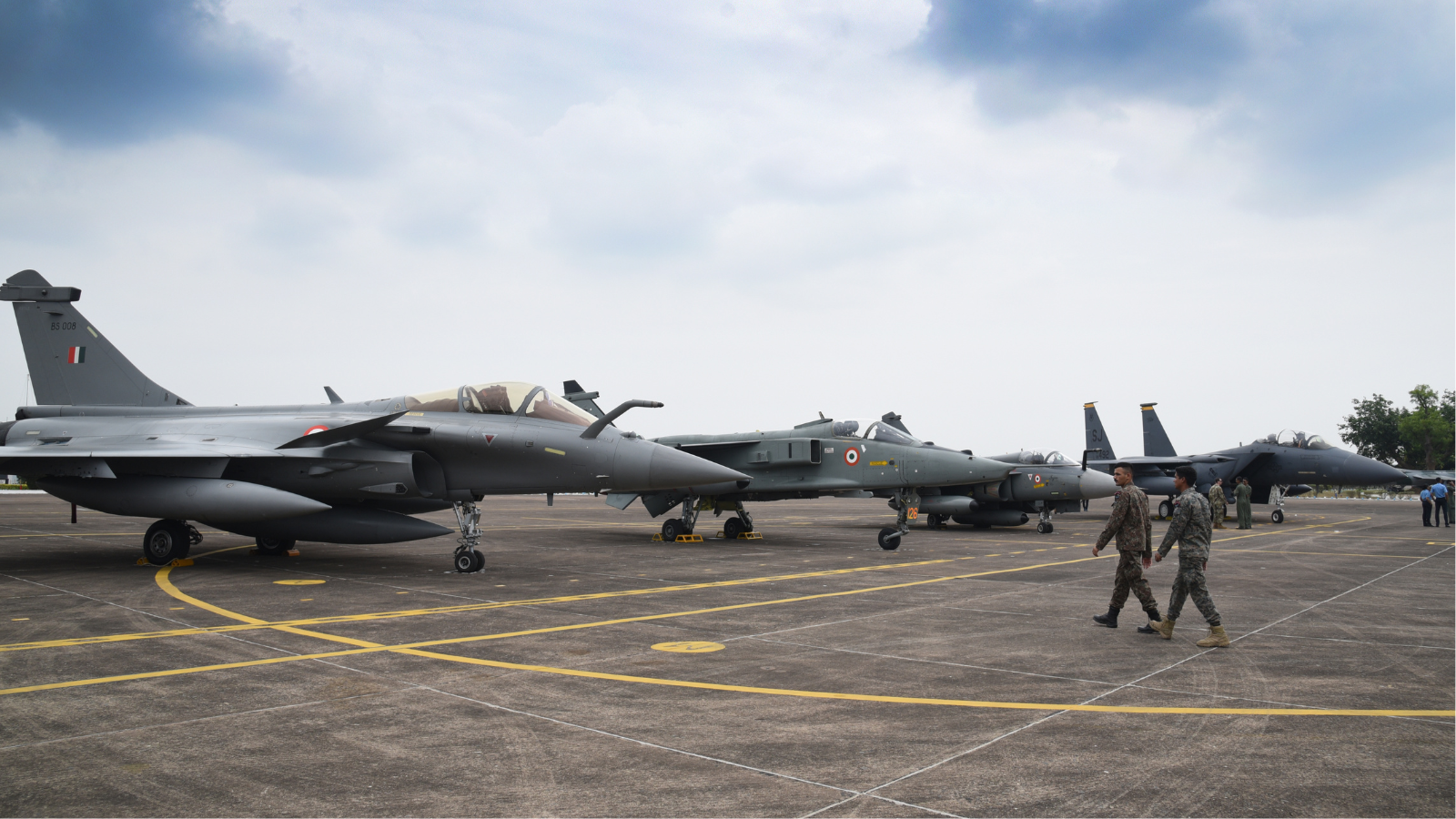
India and the United States are close to concluding a Reciprocal Defense Procurement Agreement (RDPA) that will allow firms from the two countries to sell to each other’s defense establishments more easily. While this may not remedy the specific grievances both sides may have regarding larger bilateral issues, an RDPA could restore some momentum, following the trade deal announcement.

Konark Bhandari