

Commentary
Michael Pettis
{
  "authors": [
    "Michael Pettis"
  ],
  "type": "commentary",
  "centerAffiliationAll": "",
  "centers": [
    "Carnegie Endowment for International Peace",
    "Carnegie China"
  ],
  "collections": [
    "Carnegie China Commentaries"
  ],
  "englishNewsletterAll": "",
  "nonEnglishNewsletterAll": "",
  "primaryCenter": "Carnegie China",
  "programAffiliation": "",
  "programs": [],
  "projects": [
    "China’s Reform Imperative"
  ],
  "regions": [
    "China"
  ],
  "topics": [
    "Economy"
  ]
}
Source: Getty
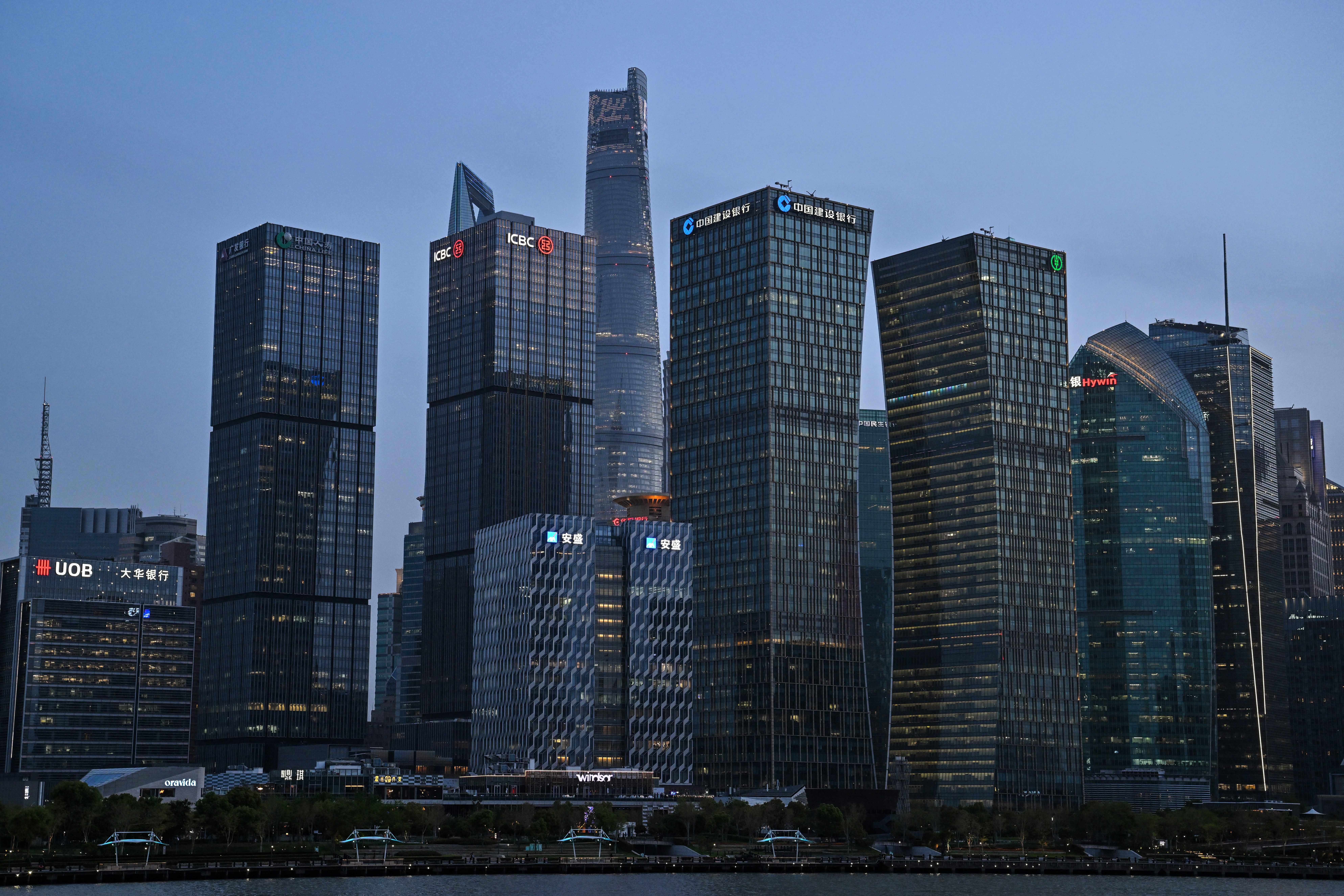
In spite of China’s extraordinarily high investment levels, domestic savings nonetheless exceed domestic investment by quite a lot, making it a large net exporter of capital.
This publication is a product of Carnegie China. For more work by Carnegie China, click here.
An article in Xinhua on July 23 says that the National Development and Reform Commission (NDRC) will actively support high-quality enterprises of various ownership structures in borrowing foreign debt. According to the article:
China is set to support prominent, creditworthy companies that promote high-quality development within the real economy by allowing them to borrow medium to long-term foreign debt. The NDRC announced this initiative Tuesday as part of the country’s strategy to further open up and enhance cross-border financing facilitation.
This strikes me as a little curious. In spite of China’s extraordinarily high investment levels, domestic savings nonetheless exceed domestic investment by quite a lot, making it a large net exporter of capital. We can see this in the huge trade surpluses the country has been running. It is worth noting that China’s current account surpluses are much lower, but there are real questions about the extent to which net outflows that belong in its capital account have shown up in the current account. Council on Foreign Relations’s Brad Setser has written extensively about this, including here and here.
Either way, this implies that China doesn’t suffer from a domestic capital shortage. Add in the fact that Chinese interest rates are much lower than U.S. (and other) interest rates, and that the US dollar (USD) has been volatile relative to the renminbi (RMB), and it’s hard to see why the regulators would want to encourage Chinese companies to borrow abroad—almost all of which is likely to be in foreign currencies.
One reason may be because the People’s Bank of China (PBoC) wants to expand its domestic money supply without putting downward currency pressure on the RMB. If Chinese companies borrow USD to convert into RMB, they create demand for RMB. As they sell the USD that they acquired through borrowing to the PBoC, whose reserves subsequently rise, the PBoC creates additional RMB as it purchases the USD. I believe this has the effect of expanding to domestic money supply without putting downward pressure on the exchange value of the RMB, something the PBoC has tried to avoid—probably because it worsens trade relationships and because it tends to increase capital flight. If that is the case, it might explain why a country that exports capital wants nonetheless to encourage its large companies to borrow abroad.
For those who worry about the risk of an external debt problem, there isn’t much cause for concern. By the end of 2023, China’s total outstanding foreign debt stood at $2.45 trillion, with medium- to long-term debt accounting for 44 percent, according to the State Administration of Foreign Exchange. Against that, the PBoC has over $3.2 trillion in reported reserves, and there are another roughly $2 trillion held by other state-controlled financial entities. China has more than enough foreign currency to manage external debt risks quite easily.

Nonresident Senior Fellow, Carnegie China
Michael Pettis is a nonresident senior fellow at the Carnegie Endowment for International Peace. An expert on China’s economy, Pettis is professor of finance at Peking University’s Guanghua School of Management, where he specializes in Chinese financial markets.
Recent Work
Michael Pettis
Michael Pettis

After the chill in ties between 2020 and 2024 that brought India–China relations to their lowest point in several decades, the two countries have engaged each other afresh. This paper argues that there are predominantly four imperatives guiding India’s approach to China, and they exist in an order of priority.

Saheb Singh Chadha

This piece argues that India’s central challenge is not managing a single flashpoint but resolving the underlying tension between expansion and institutional coherency of the BRICS grouping.

Vrinda Sahai

On March 10, 2026, India’s Union Cabinet approved amendments to Press Note 3, a regulation that mandated government approval on all foreign direct investment (FDI) from countries sharing a land border with India. This amendment raises questions primarily about whether its stated benefits will materialize and if the risks have been adequately weighed. This piece will address the same.

Konark Bhandari

This piece examines India’s response to U.S. sanctions and tariffs, specifically assessing the immediate market consequences, such as alterations in import costs, and the broader strategic implications for India’s energy security and foreign policy orientation.
Vrinda Sahai

This paper examines the evolution of India-China economic ties from 2005 to 2025. It explores the impact of global events, bilateral political ties, and domestic policies on distinct spheres of the economic relationship.

Santosh Pai