


Report
Nancy Birdsall, Rachel Menezes
Should the Multilateral Development Banks continue to lend to this group of countries or, instead, concentrate attention on poorer countries with little such access? Second, what purposes should this lending serve and under what conditions should it take place?
Source: Carnegie
|
|
Report of the Commission on the Role of the MDBs in the EMEs | |
| Commission Cochairs: José Angel Gurria and Paul Volcker | ||
| Pub Date: April 26, 2001 | ||

Transcript of the Press Conference, April 26
Transcript of the report luncheon with Paul Volcker, May 1
Does lending by the World Bank and the regional development banks to emerging markets still make sense? Skeptics argue that the banks are no longer relevant for countries with access to private capital. To examine this issue, the Carnegie Endowment for International Peace, EMP Financial Advisors, LLC, and the Inter-American Dialogue formed a commission, cochaired by former Mexican Finance Minister José Angel Gurria and former U.S. Federal reserve Chairman Paul Volcker, to assess the activities of the multilateral development banks (MDBs) in the emerging market economies.
The Commission addressed two central questions: Should the MDBs continue to lend to this group of countries or instead concentrate attention on poorer countries with little access to private capital? What purposes should this lending serve and under what conditions should it take place?
The report argues that the MDBs should continue to lend to the emerging market economies as an integral part of their ongoing role in the years ahead. At the same time, Commission members recommend changes on long-standing MDB approaches toward the emerging market economies more appropriate to today's global economy.
Former Senior Associate
Recent Work
Nancy Birdsall, Rachel Menezes
Nancy Birdsall

After the chill in ties between 2020 and 2024 that brought India–China relations to their lowest point in several decades, the two countries have engaged each other afresh. This paper argues that there are predominantly four imperatives guiding India’s approach to China, and they exist in an order of priority.

Saheb Singh Chadha

This piece argues that India’s central challenge is not managing a single flashpoint but resolving the underlying tension between expansion and institutional coherency of the BRICS grouping.

Vrinda Sahai

This piece examines India’s response to U.S. sanctions and tariffs, specifically assessing the immediate market consequences, such as alterations in import costs, and the broader strategic implications for India’s energy security and foreign policy orientation.
Vrinda Sahai

This paper examines the evolution of India-China economic ties from 2005 to 2025. It explores the impact of global events, bilateral political ties, and domestic policies on distinct spheres of the economic relationship.

Santosh Pai
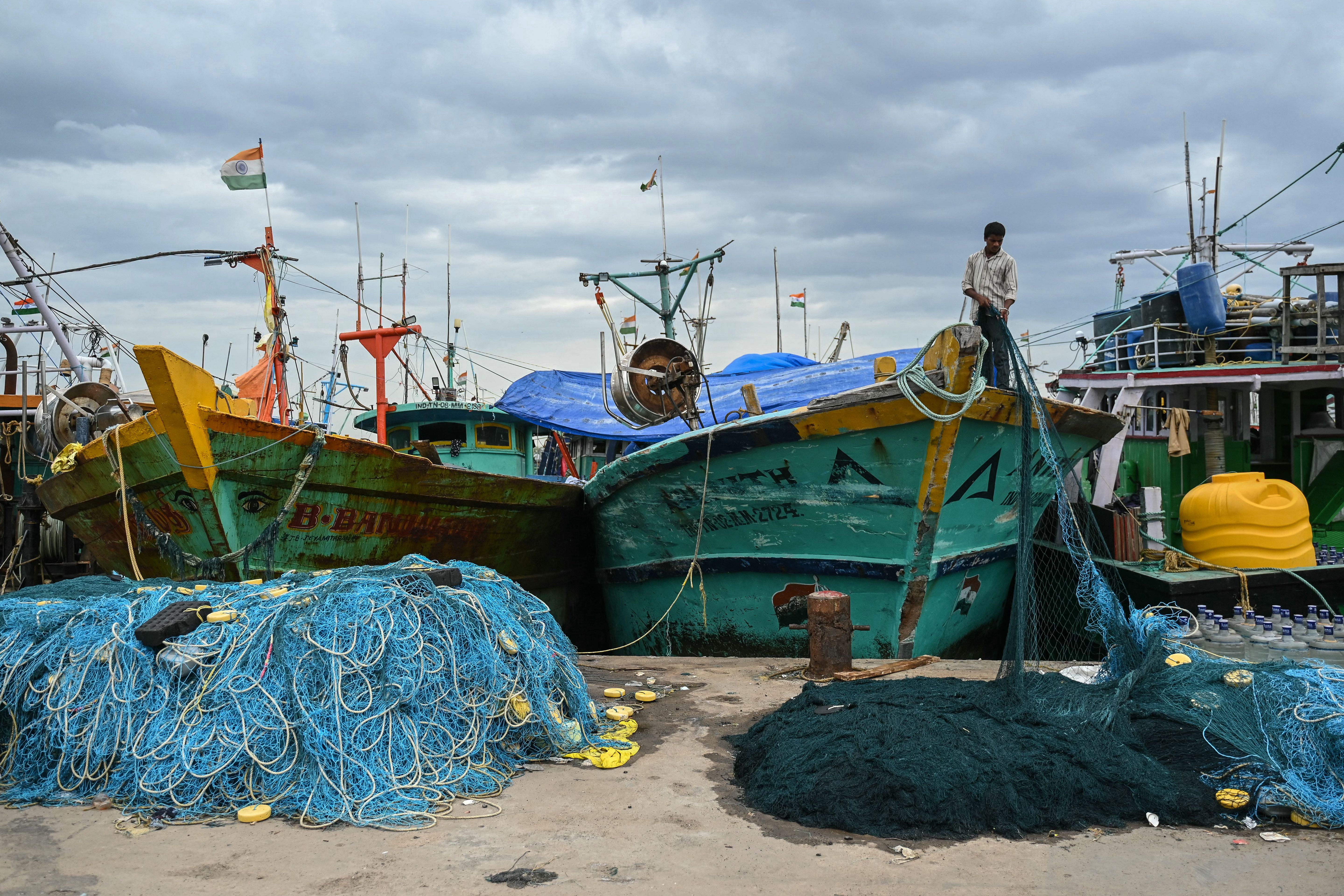
This article examines the scale and impact of Chinese IUU fishing operations globally and identifies the nature of the challenge posed by IUU fishing in the Indian Ocean Region (IOR). It also investigates why existing maritime law and international frameworks have struggled to address this growing threat.


Ajay Kumar, Charukeshi Bhatt