


Commentary
New Delhi and Seoul should focus on building flexible middle power coalitions in Asia to limit the impact of the current volatility in the relations between the United States and China.
C. Raja Mohan

REQUIRED IMAGE
The seizure and subsequent release of North Korean scud missiles bound for Yemen on the high seas is a dramatic development, but the export of missiles from North Korea to Yemen should come as no surprise. North Korea has sold Yemen Scud missiles before, and the U.S. imposed sanctions against North Korea for such commerce just this past August. Despite U.S. concerns, however, there is nothing illegal about the sale of such missiles by North Korea. Neither North Korea nor Yemen has signed any international treaties or bilateral agreements to prohibit such trade. In fact, no international treaty banning missiles sales exists and many countries, including the United States, sell both short and long range ballistic missiles. Lastly, it is not clear that selling ballistic missiles to Yemen is a threat to US security or that of states in the region.
What is clear is that the current U.S. policy towards North Korea is failing to contain the proliferation threat posed by Pyongyang. While the U.S. tries to convince South Korea, China, Japan, and Russia to pressure North Korea to stop its nuclear and missile programs, Pyongyang continues to develop a uranium enrichment program and to build and export Scud and No-dong missiles to Iran, Pakistan, Syria and others. While missiles in Yemen may not present a security threat to the US, other sales do directly threaten U.S. and broader security interests and such sales should be stopped.
To stop future missile transfer, the United States has three distinct options: direct confrontation, the use of military force or direct negotiations with the North. The first two options present a dramatic risk of war on the Korean peninsula and should only be pursued as a last resort. This leaves the difficult, but promising option of negotiations. North Korea is under a self-imposed missile test flight moratorium and has expressed interest in negotiating an end to its missile program with the United States. Talks for such a deal were underway in the last months of the Clinton administration, but the Bush administration has refused to continue negotiation. Such talks should be restarted and a comprehensive set of talks aimed at verifiably ending North Korea’s nuclear and missile programs should be undertaken.
The Bush administration has quickly discovered that its rhetoric on proliferation may not be enforceable in the real world. Instead, it will now have to work harder to stop the supply and demand of proliferation of missiles by working with both buyers and sellers to stop the trade in such systems. In addition, the Bush administration, which is spending $7 billion a year on missile defenses, should now pursue an international legal treaty to ban the transfers of ballistic missiles. Without the weight of international law or a legal norm, the U.S. will have no choice but to let more missile bearing ships go.
Additional Resources:
Updated Carnegie World Missile Chart - Updated 11 December 2002
Ballistic Missile Proliferation Status Map 2002 - taken from Deadly Arsenals
Missile Proliferation Chapter-taken from Deadly Arsenals (pdf)
North Korea Chapter- taken from Deadly Arsenals (pdf)
Click here to return to Proliferation
News
Carnegie India does not take institutional positions on public policy issues; the views represented herein are those of the author(s) and do not necessarily reflect the views of Carnegie, its staff, or its trustees.
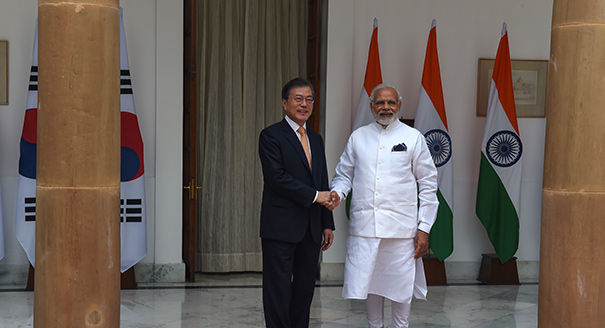
New Delhi and Seoul should focus on building flexible middle power coalitions in Asia to limit the impact of the current volatility in the relations between the United States and China.
C. Raja Mohan
This book examines how the region’s major political powers view international politics and the use of military force.
Ashley J. Tellis, Alison Szalwinski, Michael Wills
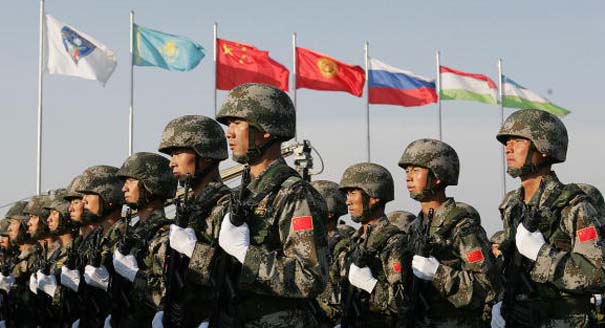
Material factors can explain why certain outcomes occurred the way they did, and strategic culture can explain how countries thought about their circumstances, their choices, and their decisions.
Ashley J. Tellis
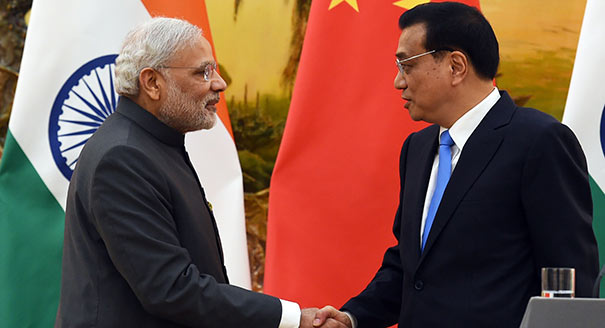
Although geography limits New Delhi’s role in East Asia, Modi is betting India can win friends and partners through active engagement.
C. Raja Mohan

As India celebrates the launch of the Vikrant, the much delayed first indigenous aircraft carrier, Delhi is not the only one in Asia focused on the virtues of airpower at sea.
C. Raja Mohan