

Commentary
New Delhi and Seoul should focus on building flexible middle power coalitions in Asia to limit the impact of the current volatility in the relations between the United States and China.
C. Raja Mohan

REQUIRED IMAGE
North Korea’s decision to restart its plutonium production reactors creates an immediate crisis for the United States and its allies in the region. This event threatens to recreate the tense standoff that nearly led to war on the Korean peninsula in 1994. This dangerous decision by North Korea seems a transparent move designed to bring the United States back to the negotiating table and resume a direct dialogue with Washington. Although the Bush administration is unlikely to see this move as an opportunity to engage the North Koreans, the United States should move quickly to negotiate with Pyongyang to secure a total ban on North Korea’s nuclear and ballistic missile capabilities.
All of North Korea’s plutonium production and extraction facilities have been frozen since 1994. North Korea does have one operational plutonium production reactor at Yongbyon, capable of producing six kilograms of weapons-grade plutonium per year when it resumes operation. In addition, when the nuclear freeze was adopted in 1994, the North Koreans were building two additional reactors which combined could produce over 190 kilograms of plutonium per year, enough for almost 50 weapons annually. North Korea already possesses 25-30 kilograms of plutonium in spent fuel stored under International Atomic Energy Agency safeguards and is believed by the CIA to possess enough additional plutonium for one or two nuclear weapons.
The announcement by North Korea that it is restarting its plutonium program is the final indication that the Bush administration’s policy towards North Korea has failed. Pyongyang has refused to yield to international pressure to end its uranium enrichment program or its missile exports, and is on the verge of restarting production of large amounts of weapons-usable plutonium for itself and for potential sale to other states. The United States cannot permit an active exporter of weapons such as North Korea to obtain a nuclear weapons production capability. Such a development would all but decimate the global effort to prevent the proliferation of nuclear weapons. As such, the United States has few options for how to proceed, with the status quo clearly unacceptable in terms of U.S. or global security.
The remaining options include turning up the pressure on North Korea at the
UN or through our allies or resorting to military means for eliminating North
Korea’s nuclear capability. Both of these options are high risk and could
lead to open combat on the Korean peninsula with the potential for mass casualties.
They should be considered only if all other options fail. The remaining option
is direct talks and negotiation. North Korea has indicated its willingness to
eliminate its entire nuclear and missile programs, but only through direct talks
with the United States. This avenue, clearly one not preferred by the Bush administration,
is the only viable alternative that holds both the prospect for success and
avoids the prospect for a military confrontation. Any negotiated agreement would
have to include unprecedented verification provisions to ensure North Korea
abides by its obligations, but ignoring the problem and the state is no longer
an option that serves U.S., or global security interests.
Additional Resources:
North Korea Chapter- taken from Deadly Arsenals (pdf)
Complete Resources on North Korea
Click here to return to Proliferation News
Carnegie India does not take institutional positions on public policy issues; the views represented herein are those of the author(s) and do not necessarily reflect the views of Carnegie, its staff, or its trustees.
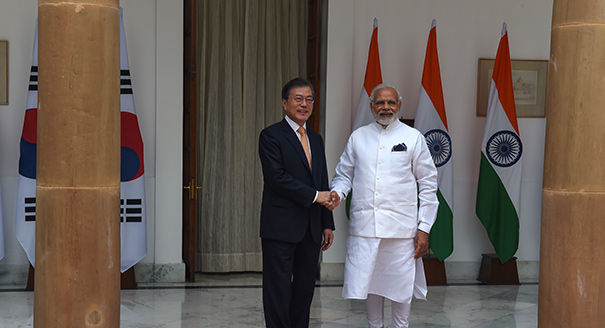
New Delhi and Seoul should focus on building flexible middle power coalitions in Asia to limit the impact of the current volatility in the relations between the United States and China.
C. Raja Mohan
This book examines how the region’s major political powers view international politics and the use of military force.
Ashley J. Tellis, Alison Szalwinski, Michael Wills
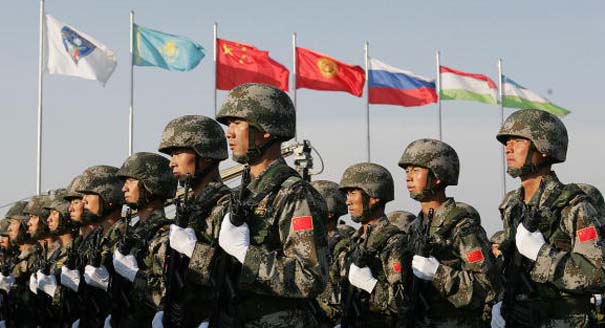
Material factors can explain why certain outcomes occurred the way they did, and strategic culture can explain how countries thought about their circumstances, their choices, and their decisions.
Ashley J. Tellis
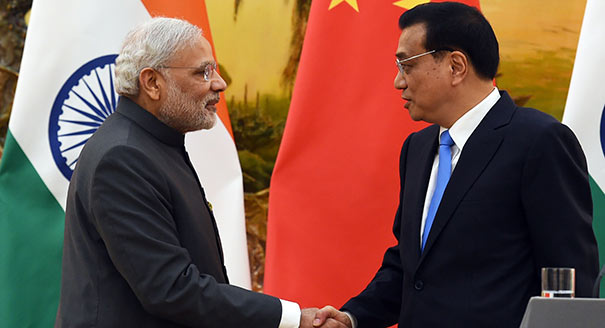
Although geography limits New Delhi’s role in East Asia, Modi is betting India can win friends and partners through active engagement.
C. Raja Mohan
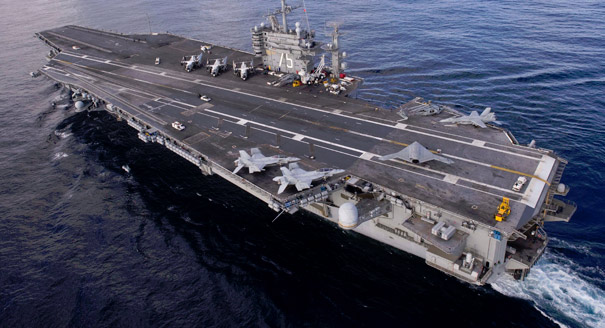
As India celebrates the launch of the Vikrant, the much delayed first indigenous aircraft carrier, Delhi is not the only one in Asia focused on the virtues of airpower at sea.
C. Raja Mohan