

Commentary
New Delhi and Seoul should focus on building flexible middle power coalitions in Asia to limit the impact of the current volatility in the relations between the United States and China.
C. Raja Mohan

REQUIRED IMAGE
How much confidence can anyone have about intelligence estimates regarding North Korea's nuclear program, in light of the row over Iraq's Weapons of Mass Destruction? Unfortunately, the answer is not good. North Korea is widely considered by intelligence officers as the hardest target to crack in terms of reliable information, and there are political pressures at work within the Bush administration that raise the spectre that intelligence may also be used selectively to advance certain policy positions.
How much confidence can anyone have about intelligence estimates regarding North Korea's nuclear program, in light of the row over Iraq's Weapons of Mass Destruction? Unfortunately, the answer is not good. North Korea is widely considered by intelligence officers as the hardest target to crack in terms of reliable information, and there are political pressures at work within the Bush administration that raise the spectre that intelligence may also be used selectively to advance certain policy positions.
The country has one operating nuclear reactor in the city of Yongbyon that can produce enough plutonium for approximately one nuclear weapon per year. In addition, North Korea has demonstrated the ability to produce and purify plutonium, having produced at least small amounts in the 1980s and early 1990s. Lastly, North Korea is known to have possessed some 8,000 fuel rods used to power its reactor in the early 1990s, and which are thought to have contained between 25-30kg of plutonium, enough for 5 or 6 nuclear weapons. Beyond that, however, things are less certain.
The two important issues from a security standpoint are whether North Korea had nuclear weapons before the start of the current nuclear crisis in October 2002, and whether the country has been able to produce nuclear weapons since. As for previous nuclear production, there is some evidence that the communist state produced enough plutonium at Yongbyon to produce one or two nuclear weapons. The reactor was shut down in 1989 for over 2 months, time enough for North Korea to remove the plutonium-containing fuel from the facility and extract enough plutonium for a weapon. No outside inspectors were on site at the time, so no independent facts are known for sure. North Korea acknowledged shutting the reactor down, but claimed that only a small number of fuel elements were removed, and that only 100g of plutonium were purified. More than 4kg of plutonium would be needed to produce a nuclear weapon.
Samples from the material produced by North Korea suggest it has not provided a complete picture of its activities before the start of nuclear inspections in 1992. But investigations do not prove definitively one way or the other that Pyongyang was able to produce enough material for a nuclear device.
Current crisisAs for the current nuclear stand-off, there has been a great deal of confusion regarding what North Korea has been able to accomplish since nuclear inspectors were expelled from the country in December 2002. US intelligence officials have confirmed that they have observed - via spy satellite - movement between the facility holding the 8,000 plutonium-laden fuel rods and the facility where the plutonium would be extracted. To confirm that such extraction is taking place, however, intelligence services would need physical evidence, either from reliable human or electronic eavesdropping, or through the detection of tell-tale gasses that are released when nuclear material from a reactor undergoes reprocessing or extraction.
The chemical processing of spent fuel from a reactor releases Krypton-85 gas, which is hard to contain and mask. The United States is thought to deploy Krypton-85 detectors in South Korea and in the waters off North Korea, as well as on airborne platforms such as spy planes. If Iraq helped show the world that intelligence is an art and not a hard science, then North Korea should reinforce the point in spades. While press reports suggest that Krypton has recently been detected by US officials, no public confirmation of this has been made. Moreover, even if such a gas were detected, it would not give experts any hard information about how many of the 8,000 fuel elements had been processed, or how much plutonium had been extracted. North Korea has added to this confusion - or perhaps tried to take advantage of it - by stating on several occasions that it has already begun reprocessing its spent fuel. There is even the possibility that the release of Krypton gas could be deliberate, and part of a deception effort by North Korea to convince the world that it has crossed the nuclear threshold.
If Iraq helped show the world that intelligence is an art and not a hard science, then North Korea should reinforce the point in spades. North Korea is a black hole for intelligence, and rarely does anything reliable come out of the hermit kingdom. Given recent revelations about the handling of intelligence in Iraq, careful readers of developments in North Korea will want to parse every word at least once if not more.
Carnegie India does not take institutional positions on public policy issues; the views represented herein are those of the author(s) and do not necessarily reflect the views of Carnegie, its staff, or its trustees.
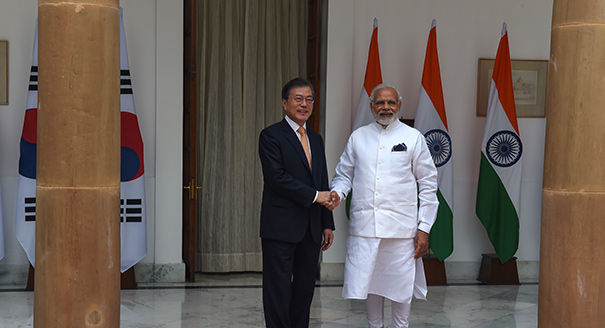
New Delhi and Seoul should focus on building flexible middle power coalitions in Asia to limit the impact of the current volatility in the relations between the United States and China.
C. Raja Mohan
This book examines how the region’s major political powers view international politics and the use of military force.
Ashley J. Tellis, Alison Szalwinski, Michael Wills
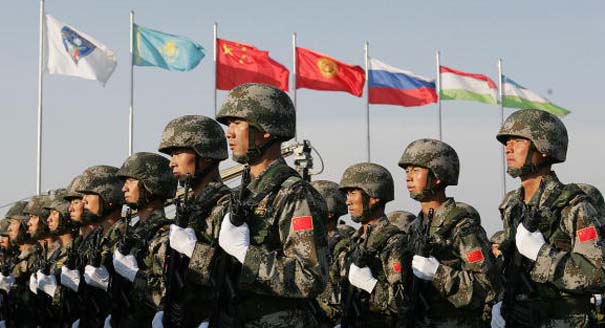
Material factors can explain why certain outcomes occurred the way they did, and strategic culture can explain how countries thought about their circumstances, their choices, and their decisions.
Ashley J. Tellis
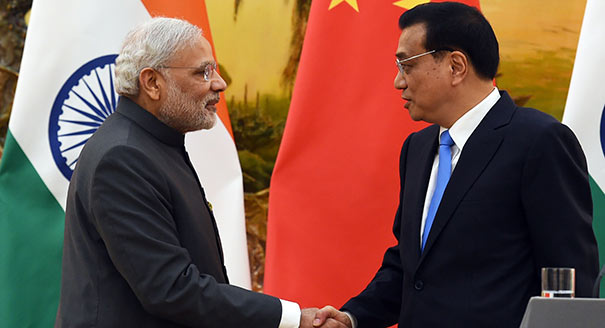
Although geography limits New Delhi’s role in East Asia, Modi is betting India can win friends and partners through active engagement.
C. Raja Mohan

As India celebrates the launch of the Vikrant, the much delayed first indigenous aircraft carrier, Delhi is not the only one in Asia focused on the virtues of airpower at sea.
C. Raja Mohan