

In any defense establishment, change is an ongoing process. However, despite the best of intentions, existing bureaucracies, bound by habit and years of socialization, have their limits in implementing transformative change.
Anit Mukherjee

See what these leading experts have to say on such key questions as, are the United States and China on a collision course? And, what are the economic and strategic implications of China's transformation?
Source: Foreign Policy, January/February 2005

The report is based on the Carnegie conference, "China's Peaceful Rise?” held in the fall of 2004. Click here for speaker biographies, videos, and transcripts of that event.
The Once and Future China by Jonathan Spence
Clash of the Titans by Zbigniew Brzezinski and John Mearsheimer
Why is China Growing So Slowly by Martin Wolf
A Grand Chessboard by Ashley Tellis
Lifting All Boats by Homi Kharas
Dangerous Denials by Minxin Pei
Click on the link above for full text of this report.
Jonathan Spence
Zbigniew Brzezinski
Dr. Zbigniew Brzezinski served as national security adviser to President Jimmy Carter from 1977-1981. He is the author of several acclaimed books on foreign policy, most recently, Strategic Visions: America and the Crisis of Global Power.
John Mearsheimer
Martin Wolf
Former Senior Fellow
Ashley J. Tellis was a senior fellow at the Carnegie Endowment for International Peace.
Homi Kharas
Former Adjunct Senior Associate, Asia Program
Pei is Tom and Margot Pritzker ‘72 Professor of Government and the director of the Keck Center for International and Strategic Studies at Claremont McKenna College.
In any defense establishment, change is an ongoing process. However, despite the best of intentions, existing bureaucracies, bound by habit and years of socialization, have their limits in implementing transformative change.
Anit Mukherjee

After the chill in ties between 2020 and 2024 that brought India–China relations to their lowest point in several decades, the two countries have engaged each other afresh. This paper argues that there are predominantly four imperatives guiding India’s approach to China, and they exist in an order of priority.
Saheb Singh Chadha
This piece argues that India’s central challenge is not managing a single flashpoint but resolving the underlying tension between expansion and institutional coherency of the BRICS grouping.
Vrinda Sahai
On March 10, 2026, India’s Union Cabinet approved amendments to Press Note 3, a regulation that mandated government approval on all foreign direct investment (FDI) from countries sharing a land border with India. This amendment raises questions primarily about whether its stated benefits will materialize and if the risks have been adequately weighed. This piece will address the same.
Konark Bhandari
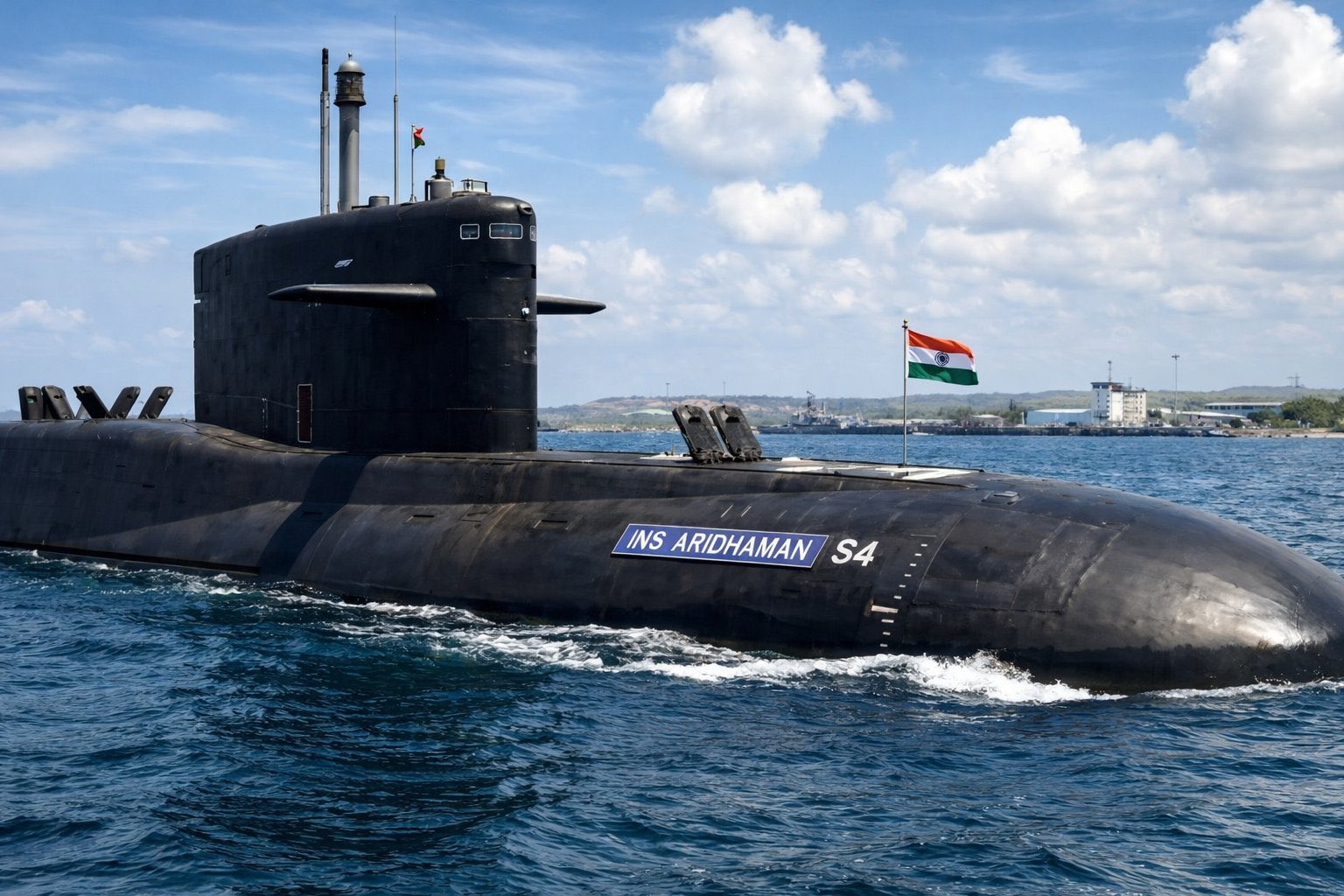
The induction of INS Aridhaman, which features several technological enhancements, now gives India the third nuclear ballistic missile submarine to ensure continuous at-sea deterrent.
Dinakar Peri