

Commentary
Asia’s two largest nuclear powers have never threatened each other with nuclear weapons. How much will the recent deadly border clashes between China and India change the security landscape?
Toby Dalton, Tong Zhao, Rukmani Gupta

REQUIRED IMAGE
23 top non-proliferation experts and former government officials have endorsed an agenda to strengthen the NPT. The group agrees that the NPT's future success depends on "universal compliance with tighter rules to prevent the spread of nuclear weapons, more effective regional security strategies, and renewed progress toward fulfillment of... disarmament obligations."
With the Non-Proliferation Treaty (NPT) Review Conference less than four weeks away, 23 top non-proliferation experts and former government officials have endorsed an agenda to strengthen the NPT.
The group of former cabinet members, ambassadors and experts agrees that the NPT's future success depends on "universal compliance with tighter rules to prevent the spread of nuclear weapons, more effective regional security strategies, and renewed progress toward fulfillment of... disarmament obligations."
We provide the text of the joint statement signed by former Secretary of State Madeleine K. Albright, former Secretary of Defense William J. Perry, former Secretary of Defense Robert D. McNamara, former Chairman of the House Foreign Affairs Committee Lee Hamilton, President of the Carnegie Endowment Jessica T. Mathews, and others. Rep. John Spratt (D-SC) and Rep. Edward J. Markey (D-MA) will introduce a resolution modeled on the joint statement:
Thirty-five years ago, the nuclear Nonproliferation Treaty (NPT) set into place one of the most important international security bargains of all time: states without nuclear weapons pledged not to acquire them, while nuclear-armed states committed to eventually give them up. At the same time, the NPT allowed for the peaceful use of nuclear technology by non-nuclear-weapon states under strict and verifiable control.
Over the years, the NPT security framework has led several states to abandon their nuclear weapons ambitions and has made it far more difficult for other non-nuclear-weapon states to acquire the material and technology needed to build such weapons or to avoid detection of a covert nuclear weapons program. The NPT process also has encouraged action on several nuclear arms control initiatives and led the nuclear-weapon states to pledge not to use nuclear weapons against non-nuclear-weapon NPT members, thereby reducing incentives for others to seek nuclear arms for prestige or defense.
Today’s security environment requires an even more comprehensive and robust global nonproliferation strategy. The NPT’s future success depends on universal compliance with tighter rules to prevent the spread of nuclear weapons, more effective regional security strategies, and renewed progress toward fulfillment of the nuclear-weapon states’ NPT disarmament obligations.
We call upon all states-parties to recommit themselves to the legal and political obligations established by the treaty and successive NPT Review Conferences, as well as agree on a specific and balanced program of action to strengthen treaty implementation and compliance.
Since the 2000 Review Conference, the nuclear threat has evolved in dangerous ways and the global nonproliferation system faces difficult challenges. We have seen new and more deadly forms of terrorism, wars, nuclear black markets, states cheating on the NPT, and even one, North Korea, announcing its withdrawal from the treaty. Perhaps today’s greatest threat stems from the existing global stockpiles of highly enriched uranium and plutonium, the fissile materials that are the fuel of nuclear bombs. These materials remain far too accessible to terrorists as a result of inadequate security and accounting at nuclear facilities throughout the former Soviet republics and in dozens of other countries.
Another significant concern is that additional countries could acquire the capacity to produce fissile materials and manufacture nuclear weapons under the guise of “peaceful” nuclear endeavors. North Korea may already have manufactured a small nuclear weapons arsenal. Iran may soon have the capacity to produce fissile material for weapons and may do so if current European diplomatic efforts falter. As the NPT has been interpreted, countries can acquire technologies that bring them to the very brink of a nuclear weapons capability without explicitly violating the agreement, and can then leave the treaty without penalty unless the United Nations Security Council takes action.
Fifteen years after the end of the Cold War, the majority of countries also feel that the five original nuclear-weapon states do not intend to pursue their NPT-related nuclear disarmament commitments. That growing conviction—reinforced by lackluster progress on disarmament—erodes the willingness among certain states in the non-nuclear-weapon majority to fulfill their own treaty obligations, much less to agree to strengthen the regime.
For all these reasons, there are rising doubts about the sustainability of the nonproliferation regime. Nations with ample technological ability to develop nuclear weapons may be reconsidering their political decisions not to do so.
As the United Nation’s recent High-Level Panel Report A More Secure World concludes: “We are approaching a point at which the erosion of the nonproliferation regime could become irreversible and result in a cascade of proliferation.”
The global nuclear threat cannot be reduced without stronger international leadership and cooperation.
Consequently, the United States and other countries should pursue a comprehensive and balanced approach beginning with the 2005 NPT Review Conference. They should:
The May 2005 Review Conference is a crucial forum for parties to measure progress—or lack of progress—in implementing their mutual NPT obligations and commitments. It is also an essential opportunity for the parties to demonstrate their political will to make further tangible progress to meet all of the treaty’s objectives. The success of the conference should be judged by the ability of the parties to agree on specific, additional steps that will strengthen the treaty regime. The security of the international community demands no less.
>Sec. Madeleine K. Albright
Alexei G. Arbatov (Russia)
Amb. George Bunn
Amb. Ralph Earle II
Robert J. Einhorn
Amb. Robert L. Gallucci
Amb. James E. Goodby
Rose Gottemoeller
Amb. Thomas Graham, Jr.
Amb. Robert Grey, Jr.
Hon. Lee H. Hamilton
Hon. John D. Holum
Hon. Spurgeon M. Keeny, Jr.
Jessica Mathews
Sec. Robert S. McNamara
Sec. William J. Perry
Lt. Gen. Robert E. Pursley (USAF Ret.)
Sen. Douglas Roche (Canada)
Amb. Henrik Salander (Sweden)
Hon. Lawrence Scheinman
Amb. Wendy R. Sherm
Related Links:
Formatted PDF of the Campaign Statement, Arms Control and Carnegie Endowment for International Peace, 5 April 2005
Biographies of Each Statement Signer, Arms Control and Carnegie Endowment for International Peace, 5 April 2005
Joshua Williams
Carnegie Endowment for International Peace
Carnegie India does not take institutional positions on public policy issues; the views represented herein are those of the author(s) and do not necessarily reflect the views of Carnegie, its staff, or its trustees.

Asia’s two largest nuclear powers have never threatened each other with nuclear weapons. How much will the recent deadly border clashes between China and India change the security landscape?


Toby Dalton, Tong Zhao, Rukmani Gupta
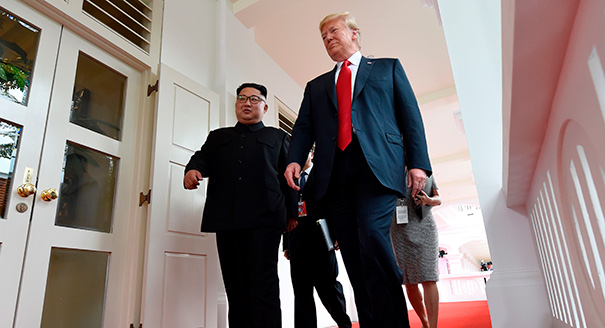
In the course of one morning in Singapore, U.S. President Donald Trump and the North Korean leader Kim Jong-un have begun to loosen a deeply entrenched and hostile relationship.
C. Raja Mohan
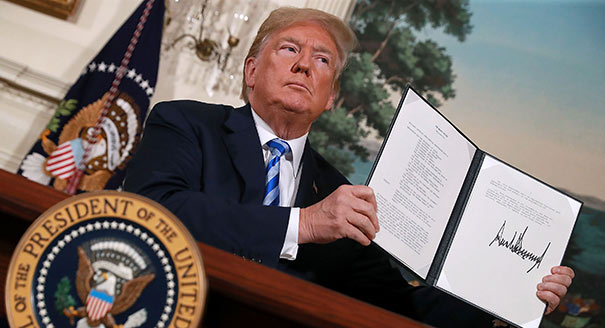
U.S. President Donald Trump’s decision to pull out of the Iran nuclear deal appears to have put regime change at the very center of the new American power play against Tehran.
C. Raja Mohan
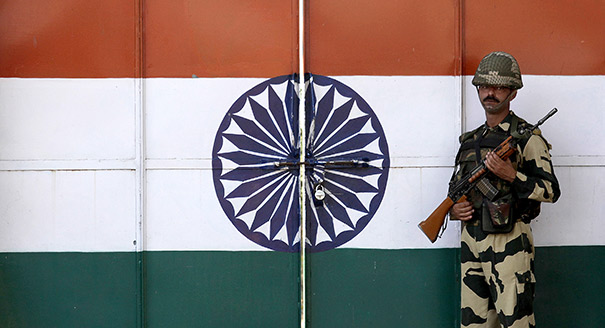
The South Asian stalemate is likely to endure even as South and North Korea appear poised to turn the page.
C. Raja Mohan

While the Trump administration’s efforts to get tough on Pakistan face challenges and potential dangers, the change in stance signals a new political will to pursue previously untried measures which offer some hope of success.
C. Raja Mohan