

Article
Dr. Albert Keidel

For a rapidly growing economy like China's, with major income and consumption increases in all regions, inequality can serve to provide incentives for labor to move voluntarily to locations and occupations where it is more productive and hence better able to earn a higher standard of living.
Source: December

The paper's innovations aggregate China's 31 provincial-level jurisdictions into 7 major regions and then compare trends in rural income and consumption over a 20-year period. This approach is an improvement over the two most common alternatives. One standard approach compares trends for all 31 provincial level entities. But this leads to results that are difficult to interpret for policy purposes because it puts city-states like Shanghai and Beijing on the same status as heavily rural provinces, and in at least one case, Hebei Province, a province that has been stripped of its major urban areas (Beijing and Tianjin). The second standard approach dates from the late 1980s and aggregates China into three belts, coastal, central and western. While useful, these groupings fail to identify differences in patterns and trends for important sub-regions, like China's south coast.
The paper's initial conclusions are that the pattern of regional disparities in rural income and consumption have remained intact over 20 years (1985-2005) and have in fact worsened. However, increases in per-capita income and consumption in all regions have been so rapid that disparities are of secondary importance. The paper stresses that rather than comparing average income or wealth by region, the most important perspective for policy makers should reflect differences in the incidence of poverty between various sections of the country. This is especially so if a more accurate PPP (purchasing power parity) measure for China is used for identifying poverty levels by the World Bank dollar-a-day poverty standard.
The paper argues that for a rapidly growing economy like China's, with major income and consumption increases in all regions, inequality can serve to provide incentives for labor to move voluntarily to locations and occupations where it is more productive and hence better able to earn a higher standard of living. The paper uses census data to show that this is precisely the direction that nationwide migration is taking.

Former Senior Associate, China Program
Keidel served as acting director and deputy director for the Office of East Asian Nations at the U.S. Department of the Treasury. Before joining Treasury in 2001, he covered economic trends, system reforms, poverty, and country risk as a senior economist in the World Bank office in Beijing.
Recent Work
Dr. Albert Keidel
Dr. Albert Keidel
Carnegie India does not take institutional positions on public policy issues; the views represented herein are those of the author(s) and do not necessarily reflect the views of Carnegie, its staff, or its trustees.

On March 10, 2026, India’s Union Cabinet approved amendments to Press Note 3, a regulation that mandated government approval on all foreign direct investment (FDI) from countries sharing a land border with India. This amendment raises questions primarily about whether its stated benefits will materialize and if the risks have been adequately weighed. This piece will address the same.

Konark Bhandari

This piece examines India’s response to U.S. sanctions and tariffs, specifically assessing the immediate market consequences, such as alterations in import costs, and the broader strategic implications for India’s energy security and foreign policy orientation.

Vrinda Sahai

This paper examines the evolution of India-China economic ties from 2005 to 2025. It explores the impact of global events, bilateral political ties, and domestic policies on distinct spheres of the economic relationship.

Santosh Pai

This article examines the scale and impact of Chinese IUU fishing operations globally and identifies the nature of the challenge posed by IUU fishing in the Indian Ocean Region (IOR). It also investigates why existing maritime law and international frameworks have struggled to address this growing threat.


Ajay Kumar, Charukeshi Bhatt
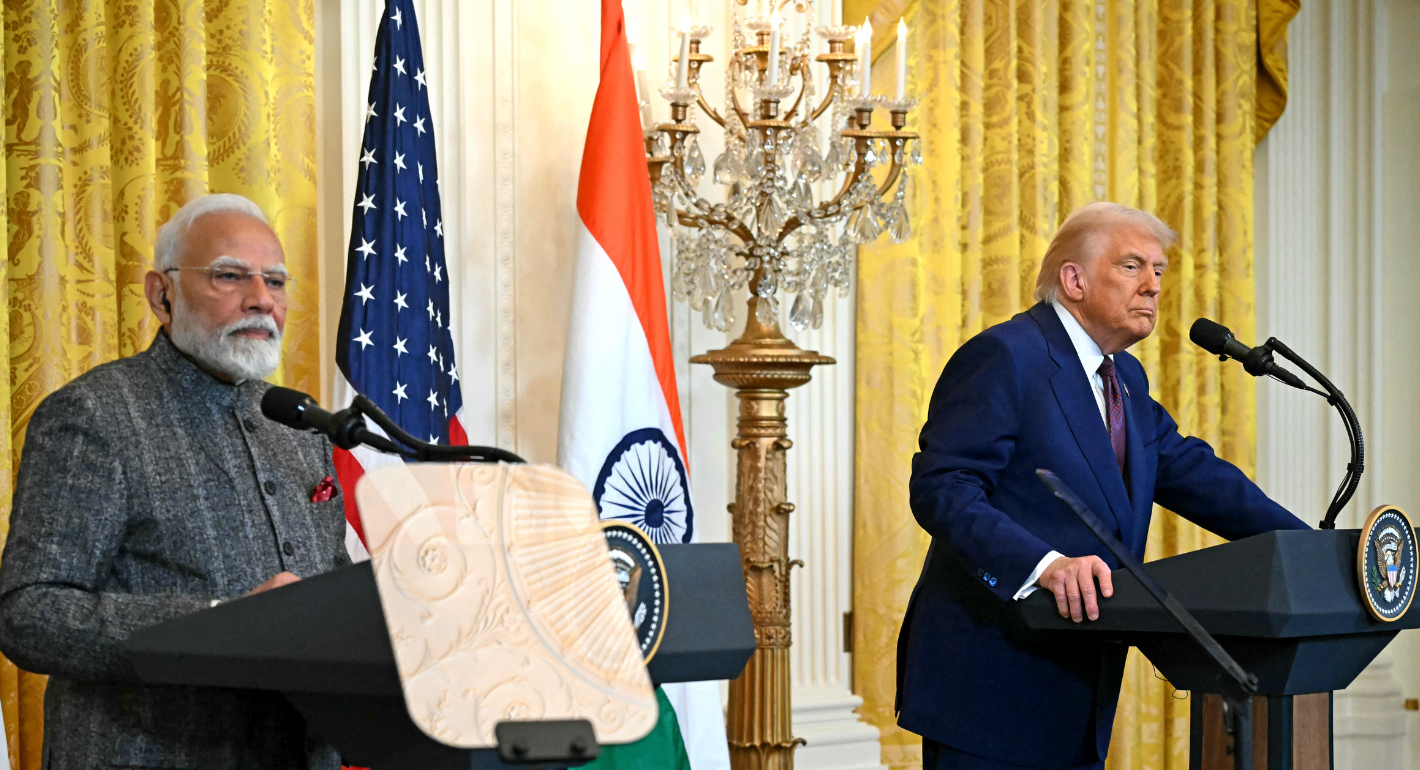
The India-U.S. relationship currently appears buffeted between three “Ts”—TRUST, Tariffs, and Trump.

Arun K. Singh