• Research
  • About
  • Experts
Carnegie India logoCarnegie lettermark logo
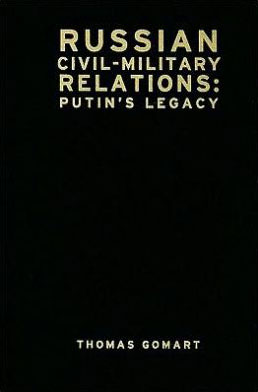
Russian Civil-Military Relations: Putin's Legacy
Book

Russian Civil-Military Relations: Putin's Legacy

Russian Civil-Military Relations provides crucial analysis of the nature and evolution of the balance between civilian and military institutions. These relations will continue to influence regime development, security policy, and societal attitudes that build from Putin’s Russia, to Medvedev’s administration, and into the future.

Link Copied
By Thomas Gomart
Published on Jun 30, 2008

Additional Links

Table of ContentsForewordIntroductionPaperback - $19.95Hardback - $49.95

Source: Washington

As Russia reasserts itself on the international stage, the relationship between its civilian and military spheres remains one of the determining factors in the organization of political power. Thomas Gomart’s Russian Civil-Military Relations: Putin’s Legacy looks beyond traditional dualism between the Kremlin and the military, introducing the role of the security services in Russian power distribution. With the support of the siloviki and justification through the fight against “international terrorism,” Putin worked throughout his administration to reestablish presidential control over the military. As Russia transitions to Dmitry Medvedev’s presidency, it is important to review the Putin presidency, which has given many of the country’s institutions their shape, but also reach back further into postcommunist and Soviet history for an understanding of the realities of today.

Russian Civil-Military Relations provides crucial analysis of the nature and evolution of the balance between civilian and military institutions. These relations will continue to influence regime development, security policy, and societal attitudes that build from Putin’s Russia, to Medvedev’s administration, and into the future.


About the Author
Thomas Gomart is director of the Russia/NIS Center at the French Institute for International Relations (IFRI) in Paris and lectures on international affairs and geopolitics at the Special Military School of Saint-Cyr Coëtquidan. He has been Lavoisier Fellow at the Moscow State Institute for International Relations, Visiting Fellow at the Institute for Security Studies, Paris, and Marie Curie Fellow at Department of War Studies, King’s College, London.

Advance Praise

“This perceptive and well-informed study highlights the continuity of the Russian (civilian and military) security community’s distrust of the outside world, fueled by NATO enlargement. Communism may be dead in Russia, but the obsession with ‘threats’ continues, rallying the population and keeping security elites in power. This makes Russia an uncomfortable world player to live with. A must read.”
—Beatrice Heuser, professor and chair of International Relations, School of Politics and International Relations, University of Reading, UK

“It is my pleasure to recommend this book by Thomas Gomart to all those who are interested in the transformation of Russia and which remains an important factor not only for Russia’s direct neighbors, but to the international system more broadly. The Russian army, which for decades opposed the West, merits sustained attention. As the old saying goes, it is never as strong as it wants to look, but is never as feeble as it at times appears.”
—From the foreword by Dmitri Trenin, deputy director of the Carnegie Moscow Center and senior associate at the Carnegie Endowment for International Peace

About the Author

Thomas Gomart

Thomas Gomart
CaucasusRussiaForeign Policy

Carnegie India does not take institutional positions on public policy issues; the views represented herein are those of the author(s) and do not necessarily reflect the views of Carnegie, its staff, or its trustees.

More Work from Carnegie India

  • Commentary
    The Impact of U.S. Sanctions and Tariffs on India’s Russian Oil Imports

    This piece examines India’s response to U.S. sanctions and tariffs, specifically assessing the immediate market consequences, such as alterations in import costs, and the broader strategic implications for India’s energy security and foreign policy orientation.

      Vrinda Sahai

  • Commentary
    NISAR Soars While India-U.S. Tariff Tensions Simmer

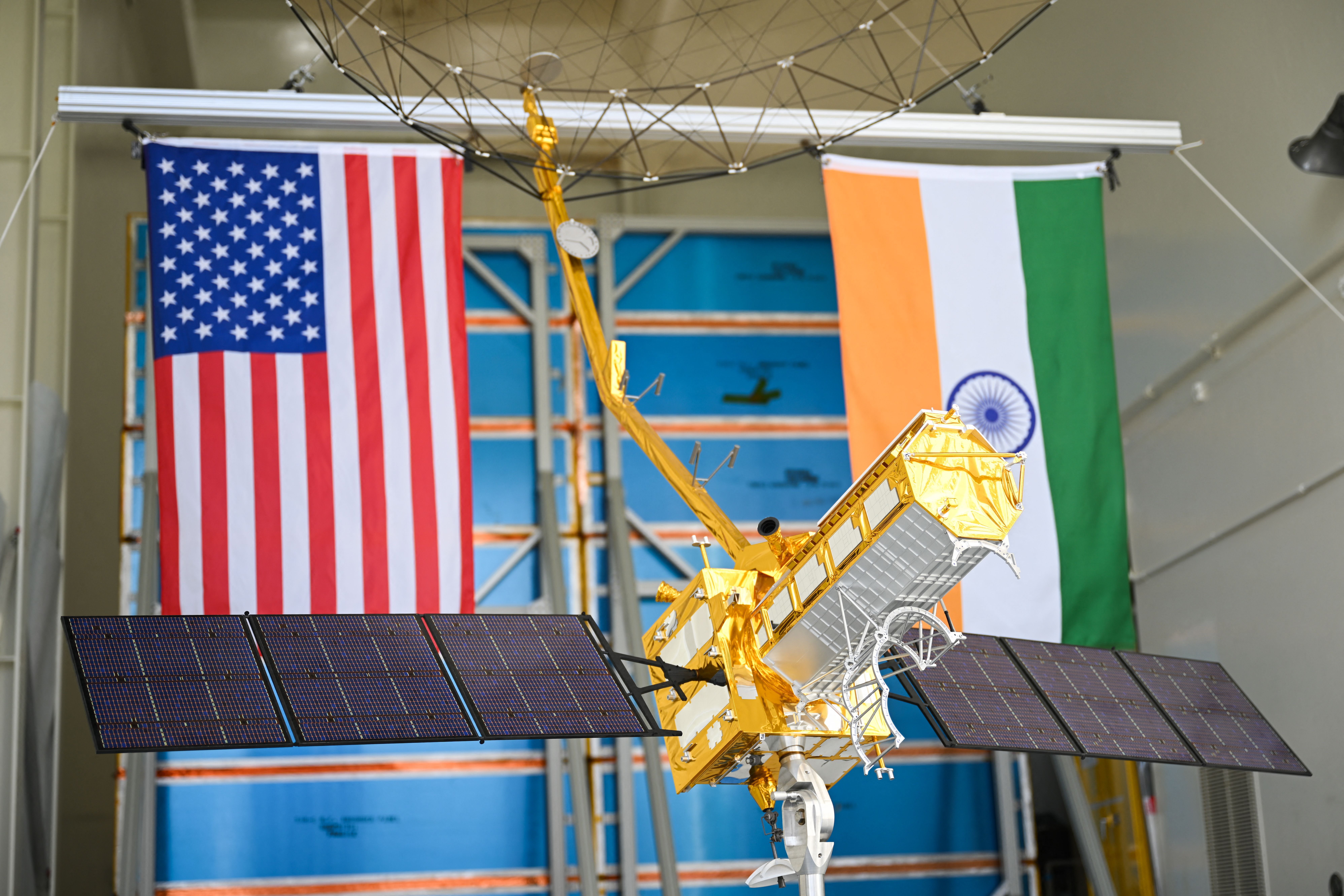
    On July 30, 2025, the United States announced 25 percent tariffs on Indian goods. While diplomatic tensions simmered on the trade front, a cosmic calm prevailed at the Sriharikota launch range. Officials from NASA and ISRO were preparing to launch an engineering marvel into space—the NASA-ISRO Synthetic Aperture Radar (NISAR), marking a significant milestone in the India-U.S. bilateral partnership.

      Tejas Bharadwaj

  • Commentary
    Indian Airstrikes in Pakistan: May 7, 2025

    On May 7, 2025, between 1:05 and 1:30 a.m. (IST), airstrikes carried out by the Indian Air Force hit nine locations inside Pakistan and Pakistan occupied Kashmir (PoK). It was codenamed Operation Sindoor.

      Rudra Chaudhuri

  • Research
    Views From Taipei: Essays by Young Indian Scholars on China

    This compendium brings together three essays by scholars who participated in Carnegie India's Security Studies Dialogue in 2024, each examining a different aspect of China’s policies. Drawing on their expertise and research, the authors offer fresh perspectives on key geopolitical challenges.

      • +1

      Vijay Gokhale, Suyash Desai, Amit Kumar, …

  • Commentary
    The India-U.S. TRUST Initiative: Advancing Semiconductor Supply Chain Cooperation

    As part of the TRUST initiative, leaders of the two countries committed to building trusted and resilient supply chains, including for semiconductors and critical minerals. India and the United States have made steady progress in this area over the years. This essay explores the takeaways from discussions on semiconductor supply chains that took place at Carnegie India’s 9th Global Technology Summit.

      Konark Bhandari

Get more news and analysis from
Carnegie India
Carnegie India logo, white
Unit C-4, 5, 6, EdenparkShaheed Jeet Singh MargNew Delhi – 110016, IndiaPhone: 011-40078687
  • Research
  • About
  • Experts
  • Projects
  • Events
  • Contact
  • Careers
  • Privacy
  • For Media
Get more news and analysis from
Carnegie India
© 2026 Carnegie Endowment for International Peace. All rights reserved.