

Commentary
Asia’s two largest nuclear powers have never threatened each other with nuclear weapons. How much will the recent deadly border clashes between China and India change the security landscape?
Toby Dalton, Tong Zhao, Rukmani Gupta
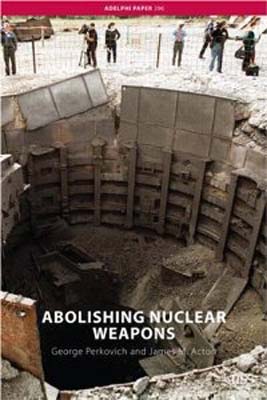
In this new Adelphi Paper published by the International Institute for Strategic Studies (IISS), George Perkovich and James M. Acton examine the challenges that exist to abolishing nuclear weapons completely, and suggest what can be done now to start overcoming them.
Source: Adelphi Paper
IMGXYZ1420IMGZYXNuclear disarmament is firmly back on the international agenda. But almost all current thinking on the subject is focused on the process of reducing the number of weapons from thousands to hundreds. In this new Adelphi Paper published by the International Institute for Strategic Studies (IISS), George Perkovich and James M. Acton examine the challenges that exist to abolishing nuclear weapons completely, and suggest what can be done now to start overcoming them.
The paper argues that the difficulties of ‘getting to zero’ must not preclude many steps being taken in that direction. It thus begins by examining steps that nuclear-armed states could take in cooperation with others to move towards a world in which the task of prohibiting nuclear weapons could be realistically envisaged.
The remainder of the paper focuses on the more distant prospect of prohibiting nuclear weapons, beginning with the challenge of verifying the transition from low numbers to zero. It moves on to examine how the civilian nuclear industry could be managed in a nuclear-weapons-free world so as to prevent rearmament. The paper then considers what political–security conditions would be required to make a nuclear-weapons ban enforceable and explores how enforcement might work in practice. Finally, it addresses the latent capability to produce nuclear weapons that would inevitably exist after abolition, and asks whether this is a barrier to disarmament, or whether it can be managed to meet the security needs of a world newly free of the bomb.
Click here for further information on ordering copies of this paper.

Japan Chair for a World Without Nuclear Weapons, Senior Fellow
George Perkovich is the Japan Chair for a World Without Nuclear Weapons and a senior fellow in the Carnegie Endowment for International Peace’s Nuclear Policy Program. He works primarily on nuclear deterrence, nonproliferation, and disarmament issues.

Jessica T. Mathews Chair, Co-director, Nuclear Policy Program
Acton holds the Jessica T. Mathews Chair and is co-director of the Nuclear Policy Program at the Carnegie Endowment for International Peace.
Carnegie India does not take institutional positions on public policy issues; the views represented herein are those of the author(s) and do not necessarily reflect the views of Carnegie, its staff, or its trustees.

Asia’s two largest nuclear powers have never threatened each other with nuclear weapons. How much will the recent deadly border clashes between China and India change the security landscape?


Toby Dalton, Tong Zhao, Rukmani Gupta
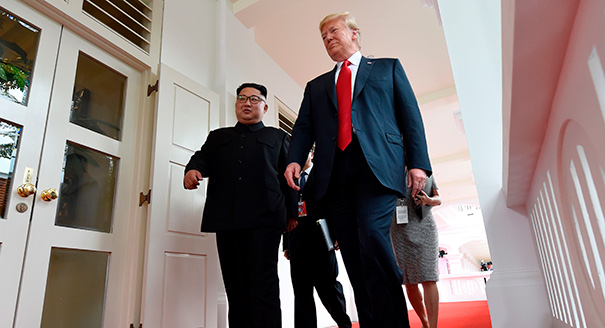
In the course of one morning in Singapore, U.S. President Donald Trump and the North Korean leader Kim Jong-un have begun to loosen a deeply entrenched and hostile relationship.
C. Raja Mohan
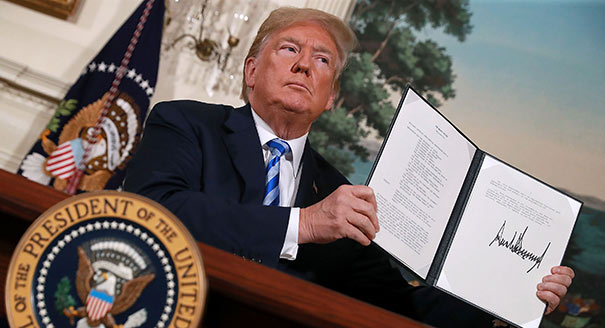
U.S. President Donald Trump’s decision to pull out of the Iran nuclear deal appears to have put regime change at the very center of the new American power play against Tehran.
C. Raja Mohan
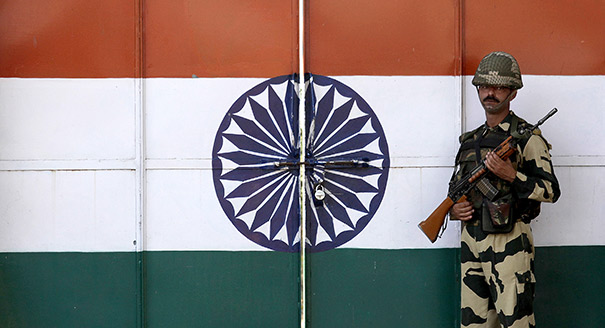
The South Asian stalemate is likely to endure even as South and North Korea appear poised to turn the page.
C. Raja Mohan
While the Trump administration’s efforts to get tough on Pakistan face challenges and potential dangers, the change in stance signals a new political will to pursue previously untried measures which offer some hope of success.
C. Raja Mohan