

Paper
Sven Behrendt
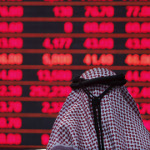
Source: Getty
Though sovereign wealth funds, valued at $2.4 trillion globally, played a stabilizing role during the crisis, their widely varying governance standards may pose geopolitical risks in the future.
As the world economy emerges from the rubble of the financial crisis, sovereign wealth funds (SWFs) have consolidated their position as relevant players in global financial markets and beyond. Though 2007 projections that estimated that the value of SWF assets would reach $12 trillion in 2015 grossly overestimated their growth trajectory, SWFs command substantial financial power. In late 2009, the asset value of the SWFs in the International Forum of Sovereign Wealth Funds (IFSWF) reached $2.4 trillion. In addition, SWFs have increasingly turned to asset classes beyond debt securities, with China’s China Investment Corporation predictably focusing on commodity assets and Arab SWFs taking concentrated stakes in European industrial assets, for example. The staying power of SWFs as an investor class and their increasingly diversified investment strategies will keep them on the radar of financial analysts and corporate leaders in mature economies. But they might also be subject to the reemergence of political complications.
Political Unease
Policy makers in the United States and Europe in particular have been watching SWFs move from the periphery to the center of global financial markets with considerable unease, if not outright confusion. On the one hand, the stabilizing role that some SWFs played during the global financial crisis—providing liquidity to Western financial institutions in the early days of the crisis, and to their own economies later—indicate their global importance as financial buffers. On the other hand, they are emerging as significant geopolitical actors, indicating a shift in the global balance of financial, and associated political, power. Backed by sovereigns from emerging economies with their own ideas about how globalization should be shaped in the twenty-first century, the investment rationale of SWFs in the mid to long term may be driven increasingly by political considerations.
Size of Sovereign Wealth Funds in the IFSWF as of End 2009
| Country | Fund | Volume (US$ bn) |
|---|---|---|
| Norway | Government Pension Fund | 399.3 |
| UAE | Abu Dhabi Investment Authority | *395.0 |
| China | China Investment Corporation | 297.5 |
| Kuwait | Kuwait Investment Authority | *295.0 |
| Singapore | Gov. of Singapore Investment Corporation Pte. Ltd. | 247.5 |
| Singapore | Temasek Holdings Pte. Ltd. | 119.0 |
| Korea | Korea Investment Corporation | 92.6 |
| Russia | National Wealth Fund | 91.9 |
| Russia | Reserve Fund | 76.4 |
| Qatar | Qatar Investment Authority | *70.0 |
| Libya | Libyan Investment Authority | 65.0 |
| Australia | Australian Future Fund | 58.3 |
| United States | Alaska Permanent Fund | 33.7 |
| Ireland | National Pension Reserve Fund | 23.8 |
| Chile | Economic and Social Stabilization Fund | 20.2 |
| Azerbaijan | State Oil Fund | 13.3 |
| Canada | Alberta Heritage Savings Trust Fund | 13.3 |
| Iran | Oil Stabilization Fund | 13.0 |
| New Zealand | Superannuation Fund | 9.8 |
| Botswana | Pula Fund | 6.9 |
| Timor-Leste | Petroleum Fund of Timor-Leste | 4.9 |
| Trinidad & Tobago | Heritage and Stabilization Fund | 2.9 |
| Chile | Pension Reserve Fund | 2.5 |
| Bahrain | Future Generations Reserve Fund | NA |
| Equatorial Guinea | Fund for Future Generations | NA |
| Mexico | Oil Revenues Stabilization Fund | NA |
| Total | 2,351.8 | |
| *Note : Estimates provided by the Institute of International Finance (2009). | ||
| Source: Author’s compilation from annual reports, latest web-based information provided by SWFs and owners of SWFs as of December 2009. | ||
The Santiago Principles
To counter protectionist sentiments and to quell the fears of predominantly Western governments, a group of SWFs developed the Santiago Principles—24 principles that commit 26 signatories to voluntary transparency, good governance, and accountability standards—in 2008. The Principles gave many SWFs an incentive to engage more proactively with the rest of the world and disclose their raisons d’êtres as well as different aspects of their investment philosophies.
Compliance across SWFs has been highly uneven. Some are close to full compliance, while a substantial group does not even comply with 50 percent of the Santiago Principles.
It is one thing to sign voluntary principles, however, and quite another to actually implement them. The “Santiago Compliance Index”1 uses publicly available materials to assess each signatory’s compliance to each of the 24 principles. The preliminary results are sobering, revealing highly uneven compliance across SWFs. Some SWFs are close to full compliance, while a substantial group does not even comply with 50 percent of the principles.

Explaining Compliance
What might explain the uneven levels of compliance? Intuition suggests that the governance, accountability, and transparency commitments of SWFs (i.e., their Santiago compliance) are likely to be in line with the overall political governance standards of the countries that own them. Indeed, an SWF’s compliance to the Principles is strongly correlated with its government’s performance on the World Bank’s Worldwide Governance Indicators and Transparency International’s Transparency Index. However, and perhaps most interestingly, an SWF’s compliance is most strongly correlated with the Economist Intelligence Unit’s Democracy Index, which looks at a country’s electoral processes, pluralism, civil liberties, government functioning, political participation, and political culture.

In fact, three Santiago-Compliance/Democracy-Index clusters can be identified: First, the highly compliant SWFs, which display a compliance ratio of 80 percent or more, and are mostly from democratic countries. These include the Superannuation Fund from New Zealand, the Government Pension Fund from Norway, the Australian Future Fund, and the Irish National Pension Reserve Fund.
The midfield is largely populated by relatively compliant SWFs from countries with lower democracy ratings, such as Singapore’s GIC and Temasek, China’s Investment Corporation, Chile’s Economic and Social Stabilization Fund and its Pension Reserve Fund, Russia’s National Wealth and Reserve Funds, the Korea Investment Corporation and the smaller funds from Timor Leste, Trinidad and Tobago, and Azerbaijan, as well as the sub-national funds from Alberta/Canada and Alaska/U.S.
Any meaningful progress on the compliance of SWFs in emerging economies, particularly in the Arab world, is likely to be closely associated with broader democratic reforms.
The group of under-compliant funds is mainly comprised of large SWFs from several Gulf sheikhdoms and Libya.
Obvious outliers include the SWFs from Botswana, Mexico, Iran, and Equatorial Guinea, which make only limited or no data publically available.
Policy Consequences
The striking correlation between a country’s democracy standards and the transparency, good governance, and accountability standards of its SWFs suggests that any meaningful progress on compliance in emerging economies, particularly in the Arab world, is likely to be closely associated with broader democratic reforms. Of course there is significant uncertainty as to whether such reforms will happen anytime soon. Absent a genuine strategic choice from SWF holders, implementation of the Santiago Principles may be slow.
This state of affairs, in turn, will continue to confront Western economies with difficult trade-offs, forcing them to weigh the important contributions SWFs make to public and private balance sheets against the non-trivial economic and political challenges they pose. As Secretary of State Hillary Clinton once pointedly remarked while reflecting on China’s simultaneous positions as one of the world’s most important creditors and one of the United States’ competitors for global influence, “How do you get tough on your banker?”
Sven Behrendt is a Visiting Scholar at the Carnegie Middle East Center.
1 Developed by the author.

Former Visiting Scholar, Middle East Center
Behrendt is an expert in global issues, international negotiations, conflict resolution, and corporate strategy. He previously served at the World Economic Forum in various management positions.
Recent Work
Sven Behrendt
Sven Behrendt
Carnegie India does not take institutional positions on public policy issues; the views represented herein are those of the author(s) and do not necessarily reflect the views of Carnegie, its staff, or its trustees.

On March 10, 2026, India’s Union Cabinet approved amendments to Press Note 3, a regulation that mandated government approval on all foreign direct investment (FDI) from countries sharing a land border with India. This amendment raises questions primarily about whether its stated benefits will materialize and if the risks have been adequately weighed. This piece will address the same.

Konark Bhandari

This piece examines India’s response to U.S. sanctions and tariffs, specifically assessing the immediate market consequences, such as alterations in import costs, and the broader strategic implications for India’s energy security and foreign policy orientation.

Vrinda Sahai

This paper examines the evolution of India-China economic ties from 2005 to 2025. It explores the impact of global events, bilateral political ties, and domestic policies on distinct spheres of the economic relationship.

Santosh Pai
The India-U.S. relationship currently appears buffeted between three “Ts”—TRUST, Tariffs, and Trump.
Arun K. Singh
This article argues that the geopolitical circumstances have never been more conducive, not merely for the early conclusion of the free trade agreement (FTA) between India and the EU, but also for crafting a substantive and comprehensive strategic partnership.
Mohan Kumar