

Article
Deborah Gordon, Stephen D. Ziman

Source: Getty
The transformation of America's cars—and trucks—presents a unique opportunity to cut oil use and mitigate climate change without requiring economy-wide action, at least not in the near term.
President Obama got it right—the failure of last year’s climate bill does not mean the death of climate policy. Good things often come in threes and finding breakthroughs that transform vehicles will mitigate climate change, reduce air pollution, and cut oil dependency, all at once.
Cars, not coal, need to be the priority in addressing climate change. That’s not to say coal—with its inherent environmental, health, and safety risks—is off the hook. It’s just not on the front burner.
Scientists now realize that air pollution and climate change must be treated as related challenges, not two distinct problems. The United Nations Environment Programme recently released new research that pins the short-term cause of growing climate disruption on ground-level ozone and black carbon, both of which result largely from oil-fueled vehicle engines. NASA’s climatologists separately concluded that cutting on-road transportation emissions of ozone-forming gases and black carbon would be unequivocally good over the short and long term—for both the climate and public health. This offers an environmental trifecta that is win-win-win.
We don’t need to look any farther than our own garages to see where the largest shares of climate disruption, smog, and oil use are coming from. Cars and trucks are 94 percent dependent on oil that, when burned, emit high levels of direct and indirect warming gases.
Cars are causing the climate to change before our eyes. The current decade is the warmest on record worldwide. The floods, fires, melting ice caps, feverish heat, and onslaught of winter blizzards witnessed in 2010 are signs of troubling climate change already underway. And, despite climate skeptics who doubt the cause and effect of a warming planet and frigid weather, polls show that the vast majority of Americans—three in four—continue to trust the scientists who say that global warming is real.
And as if climate concerns weren’t enough to combat, the democracy-seeking unrest brewing in Libya, Iran, and other oil-rich nations is stirring America’s energy fears. Fortunately for policymakers, it turns out that the two major concerns over climate and oil are related. They both have cars in common and two billion motor vehicles are forecasted to proliferate around the globe within this decade.
Cars—and trucks—present a unique opportunity to solve two vexing problems at once. Cutting oil use and mitigating climate change does not require economy-wide action, at least not in the near term, because the solution lies mostly with on-road transportation.
The key is to transform motor vehicles, cleaning up current ones and electrifying those that are yet to be built. These goals work in tandem. Electrification not only eliminates the tailpipe’s airborne, noxious, climate-forcing pollutants, it also requires a far more energy-efficient vehicle design. So along the road to plugging in, we can also commercialize conventional cars that burn 50 percent less oil and reinvent mobility, from cars to trucks and beyond. Using less oil means relying less on crude from unstable oil nations which is an energy coup these days.
Model simulations run by NASA scientists indicate that huge reductions in climate forcing from electrified transportation may be possible, making this technological shift an extremely worthwhile pursuit. The potential to improve the climate, alleviate local pollution, and wean cars off oil justifies increasing investments in battery and advanced vehicle research. This is exactly what the president is proposing by significantly boosting funds for the very agency—the Department of Energy—that was created in the midst of back-to-back oil crises in 1977.
If we stay on our current path, the climate problems attributed to our cars and trucks will continue to heat up and ample, affordable oil supplies to fuel America’s gas-guzzling fleet may no longer be guaranteed. This perfect storm has been a long time coming. The cars of the 2010s must innovate far beyond those that rolled off the first assembly line a century ago, simultaneously mitigating global warming, slashing air pollution, and seriously cutting oil consumption.
This is an all-or-nothing proposition. Now that we have a clear target, the real mission begins. Gentlemen, start your…motors.

Former Director and Senior Fellow, Energy and Climate Program
Gordon was director of Carnegie’s Energy and Climate Program, where her research focuses on oil and climate change issues in North America and globally.
Recent Work
Deborah Gordon, Stephen D. Ziman
Deborah Gordon, Smriti Kumble, David Livingston
Carnegie India does not take institutional positions on public policy issues; the views represented herein are those of the author(s) and do not necessarily reflect the views of Carnegie, its staff, or its trustees.

The U.S.–India semiconductor cooperation story is well-stocked with top-level strategic intent. What remains unresolved, however, are some underlying challenges that will determine whether the cooperation actually functions. Three such friction points stand out.

Shruti Mittal

India and the United States are close to concluding a Reciprocal Defense Procurement Agreement (RDPA) that will allow firms from the two countries to sell to each other’s defense establishments more easily. While this may not remedy the specific grievances both sides may have regarding larger bilateral issues, an RDPA could restore some momentum, following the trade deal announcement.

Konark Bhandari

On the last day of the India AI Impact Summit, India signed Pax Silica, a U.S.-led declaration seemingly focused on semiconductors. While India’s accession to the same was not entirely unforeseen, becoming a signatory nation this quickly was not on the cards either.
Konark Bhandari

This piece examines India’s response to U.S. sanctions and tariffs, specifically assessing the immediate market consequences, such as alterations in import costs, and the broader strategic implications for India’s energy security and foreign policy orientation.

Vrinda Sahai
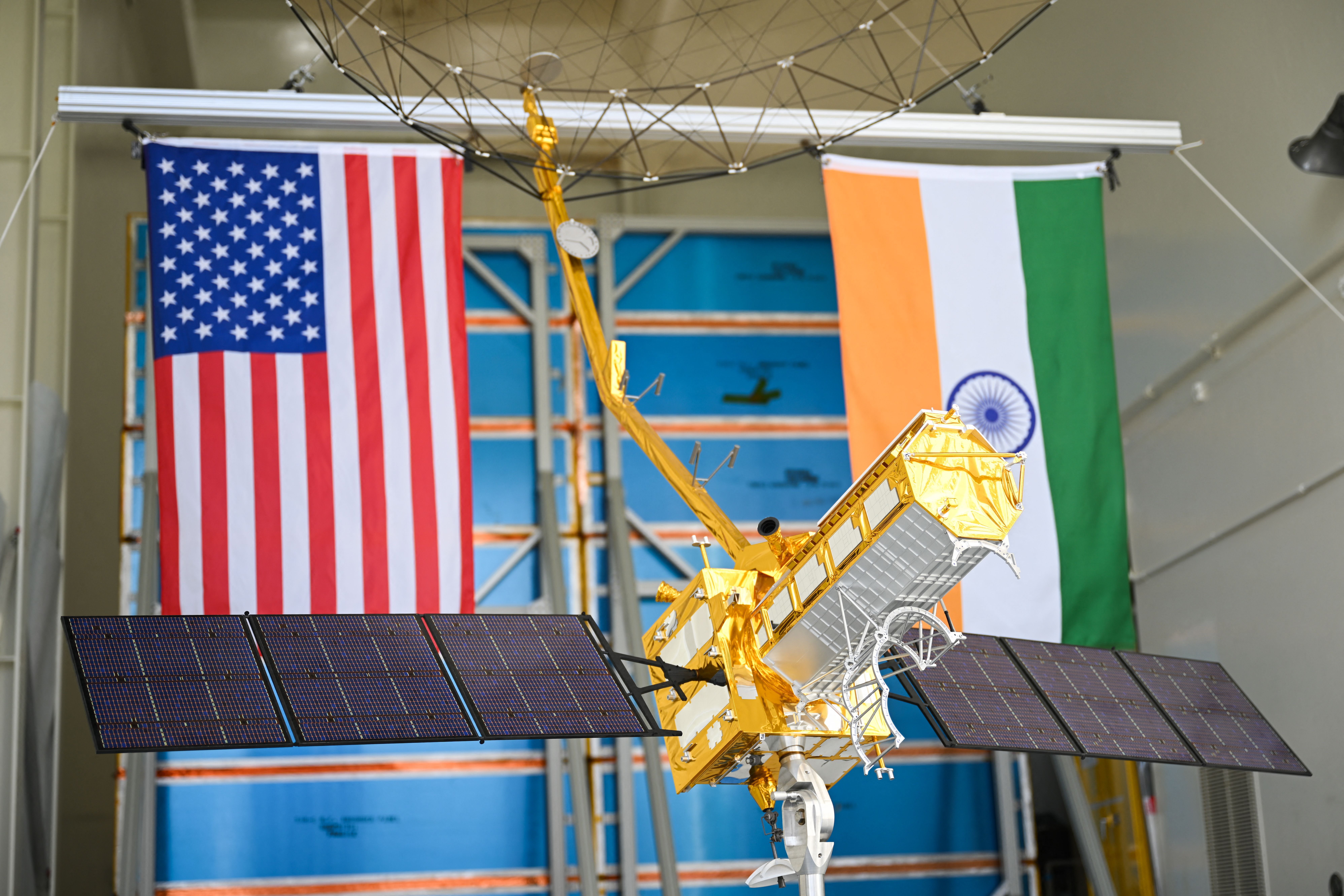
On July 30, 2025, the United States announced 25 percent tariffs on Indian goods. While diplomatic tensions simmered on the trade front, a cosmic calm prevailed at the Sriharikota launch range. Officials from NASA and ISRO were preparing to launch an engineering marvel into space—the NASA-ISRO Synthetic Aperture Radar (NISAR), marking a significant milestone in the India-U.S. bilateral partnership.

Tejas Bharadwaj