

Report
- +9
Richard Youngs, Erik Jones, Dan Baer, …

Source: Getty
If Europe is to strengthen its global influence, it must first deepen partnerships across its neighborhood.
One of the many dimensions of a “strategic Europe” relates to the European Union’s geographical coverage. With the world order changing fast, the challenge for the EU is to strike an appropriate balance in the geographical distribution of its strategic efforts. A particular imperative is that the focus on rising powers must not neglect the EU’s immediate neighborhood, where the Union can still have its strongest impact.
The EU spent the first decade of the twenty-first century worrying about its global presence and rising powers. This was necessary and overdue and much progress is still needed here. But the Union took its eye off the ball in its own immediate neighborhood. Most obviously, it chose not to heed the warnings of growing instability in Arab states, but it also failed to seize the extent of Ukraine’s drift, of Turkey’s self-confidence, and of recidivist powers in the Balkans returning.
The EU must build outward from a strong focus on its neighbourhood and not deal with it reactively merely to douse intermittent crises or as an inconvenient distraction from the market opportunities of rising powers. The sobering and unavoidable irony of a self-styled post-modern power is that its geostrategic footprint is ultimately shaped by geography. The EU needs the right balance between the near and the far, between influence in its neighborhood and global presence. This balance should be as such: in Asia, the EU should seek politically-backed economic power; in its neighborhood, economically-backed political power.
The Arab Spring undoubtedly corrected Europe’s neglect of the Middle East and North Africa. Many aspects of the EU reaction to the Arab revolts show an apparently strong commitment to supporting modernizing change in the region. The EU has promised additional resources, more generous market access, better labor mobility, transition-related technical assistance, conditionality-based rewards for democratic reform, and broader based civic dialogues. Certainly, the surprise factor of the popular protests across the Middle East has sufficed to shake off the seduction of hyperrealism.
It remains to be seen how far these early signs of commitment are carried through to constitute a real geostrategic priority. So far, member states have not invested significant amounts of new money themselves to back the Arab Spring; trade access remains a promise rather than a reality; restrictions of migration registers a highly negative symbolic tone among Arab reformers; and in some Arab states a European preference for stability and managed reform clearly persists.
The military engagement in Libya demonstrated a real commitment to the neighborhood. Some member states have concluded that this is where the EU can count geostrategically, even if it means reducing commitments to Afghanistan and other more distant theatres. But the Libya conflict also exposed serious limitations to the breadth and depth of engagement. Although the Qaddafi regime has now been ousted, there were recurring mutterings from the beginning of the campaign over the limits to European military engagement. Governments flew far fewer sortie in Libya than in Kosovo over a decade ago and yet they complained of overstretch. Britain and France were forced to use planes slated for decommissioning. Member states could not even agree on a common EU mission to evacuate European citizens—resisting the idea of helping each other. In some ways—especially Germany versus Anglo-French—the divisions over Libya were more serious than those over Iraq: the latter were about how to react to a peculiar moment of U.S. unilateralism, whereas splits over Libya revolved around the whole principle of active engagement in a very close, major crisis. Ironically, a northern country that opted out of EU defense, Denmark, flew the most sorties per pilot in Libya, killed Qaddafi’s son, and even sought additional bombs to carry on its campaign, having used up its own stocks. Other states who talk endlessly about the need for EU cooperation did not do nearly as much.
The Balkans suffered even more conspicuous neglect during the last decade. As several states in the region approach the latter stages of their preaccession preparations, it may be that the EU stands ready to complete its stabilization-cum-anchoring role. But the road has been unnecessarily long and rocky. Balkans experts charge the EU with offering membership a decade ago and then leaving the region on autopilot and assuming that the same model used for Eastern Europe would work the same magic in an area that was obviously subject to far more complex and violent dynamics. The EU has backed off from encouraging constitutional reform in Bosnia. The scale of its Common Security and Defence Policy (CDSP) missions in Bosnia, Kosovo, and Macedonia has been limited. The lack of a common EU position on Kosovo’s independence reveals how some states have prioritized domestic sensitivities (with recognizing the territory) over the Balkans’ strategic importance. Post-conflict institution-building aid across the region has gradually dwindled. Even at the very last hurdles, France has delayed Croatia’s accession unnecessarily. It would be ironic if the Arab Spring further turned the EU’s strategic efforts away from the Balkans, when the region continues to be such a necessary part of a secure neighborhood.
The danger of undue neglect is a more pressing danger now in the states to the EU’s east. Thus is the case most dramatically with Ukraine. German officials now completely rule out any favourable consideration of Ukraine’s accession. The focus on membership, they say, is diverting the EU from hard-headed pursuit of interests. The European Commission has just granted Ukraine an additional €17 million for civil society reform projects. But such initiatives do little to mask the feeling that the EU has turned its back on the country. Even the supposedly pro-Russian Yanukovych government, in power since 2009, appears more interested in cooperating with the EU than the EU is in building a genuinely strategic partnership with Ukraine. The EU seems content to have Ukraine as a kind of neutral buffer between it and Russia, rather than a partner with whom the deepest degree of integration possible would be of geopolitical value. The EU’s own reset with Russia seems to embody the more general EU swing away from “neighborhood power” toward “great power engagement.”
Much analysis has focused on the flurry of recent EU activity in Asia: the free trade agreements either signed or being finalized; the five strategic partnerships offered in the region; and the courting of liquidity-rich governments whose help is needed to cover European deficits. The focus on Asia is extremely welcome and needs to be deepened further into a genuinely geo-strategic policy. But the EU must work to ensure the right balance between the opportunities offered by the rising powers and the need to invest resources and diplomatic priority into stabilizing its own neighborhood.
Crucially, a more “strategic Europe” would break free from a paternalistic attitude that focuses on sporadic crisis-management approach to states in the EU’s neighborhood. Rather, it would map out a vision based on deepened partnerships across the neighborhood as instruments to help the EU build its global presence. The EU and the countries to its east and south will need to establish a common cause in confronting future challenges together. The near and far need not be mutually exclusive priorities for a strategic Europe; the challenge is to build from a strong neighborhood out toward the broader changes to global order.
Richard Youngs is the director of FRIDE, Madrid and associate professor at the University of Warwick.
To reinvigorate debate over European foreign policy and Europe’s role in the world, Carnegie Europe is publishing a series of essays from leading policymakers, diplomats, experts, and journalists on Strategic Europe over the coming weeks. A new essay will appear every day.

Senior Fellow, Democracy, Conflict, and Governance Program
Richard Youngs is a senior fellow in the Democracy, Conflict, and Governance Program, based at Carnegie Europe. He works on EU foreign policy and on issues of international democracy.
Recent Work


Richard Youngs, Erik Jones, Dan Baer, …

Richard Youngs, Thomas Carothers
Carnegie India does not take institutional positions on public policy issues; the views represented herein are those of the author(s) and do not necessarily reflect the views of Carnegie, its staff, or its trustees.
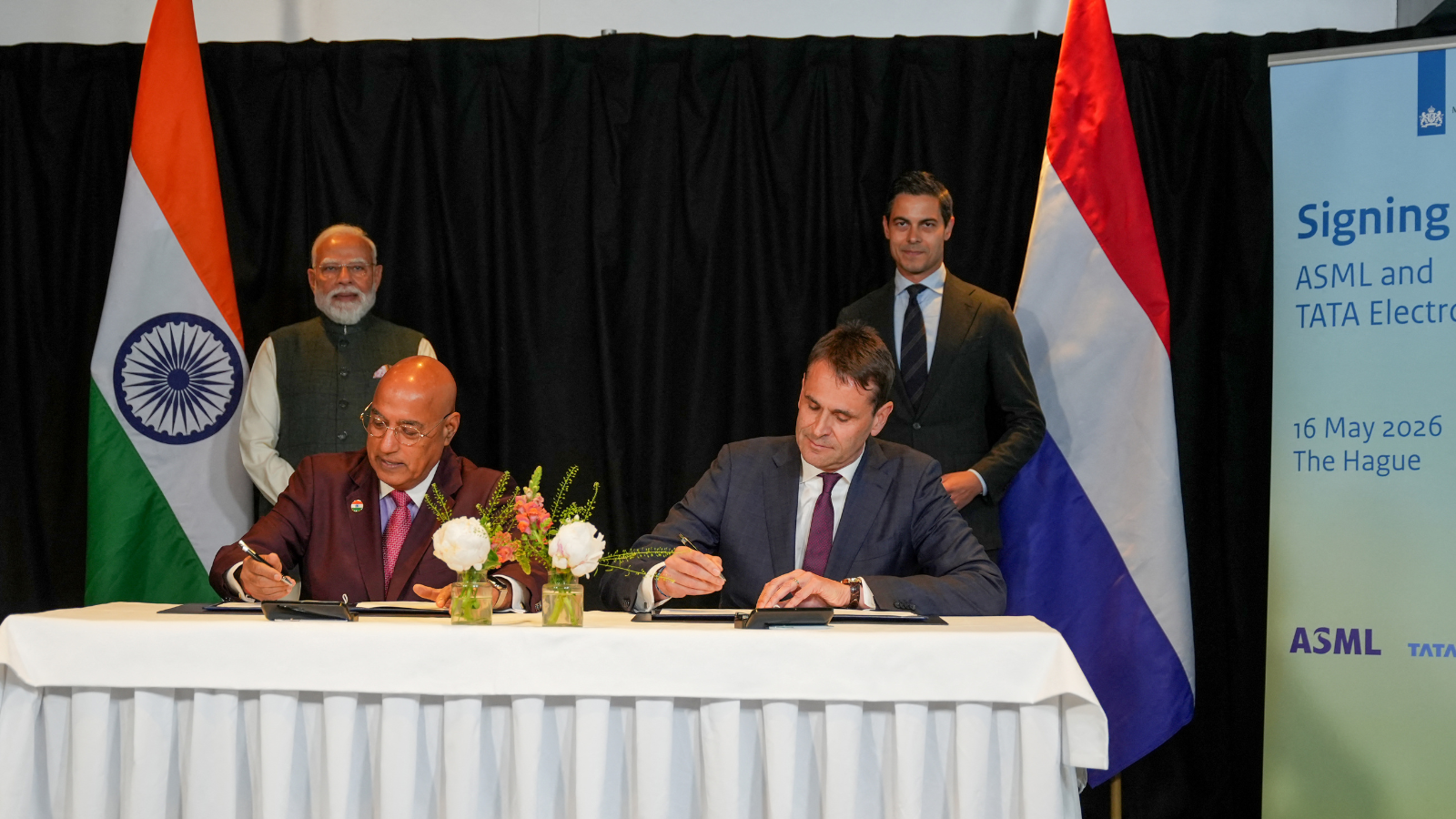
The ASML MoU with Tata Electronics is an indicator of how far the Indian semiconductor ecosystem has come. This ecosystem has been years in the making and represents real commercial logic.

Konark Bhandari

The India–EU Free Trade Agreement (FTA) is shaping up to be one of the most consequential trade negotiations, both economically and strategically. But, what’s in the agreement, what’s missing, and what will determine its success in the years ahead

Vrinda Sahai, Nicolas Köhler-Suzuki
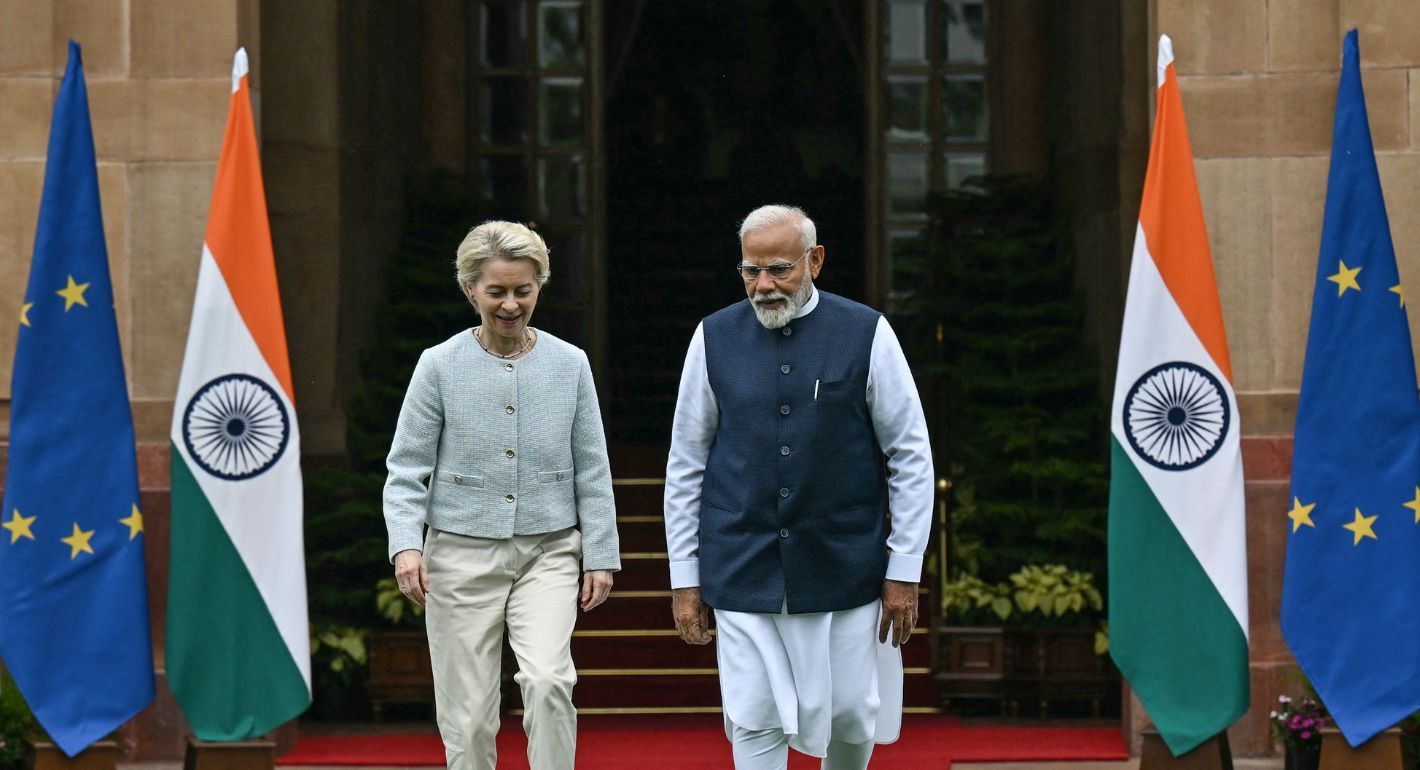
This article argues that the geopolitical circumstances have never been more conducive, not merely for the early conclusion of the free trade agreement (FTA) between India and the EU, but also for crafting a substantive and comprehensive strategic partnership.
Mohan Kumar
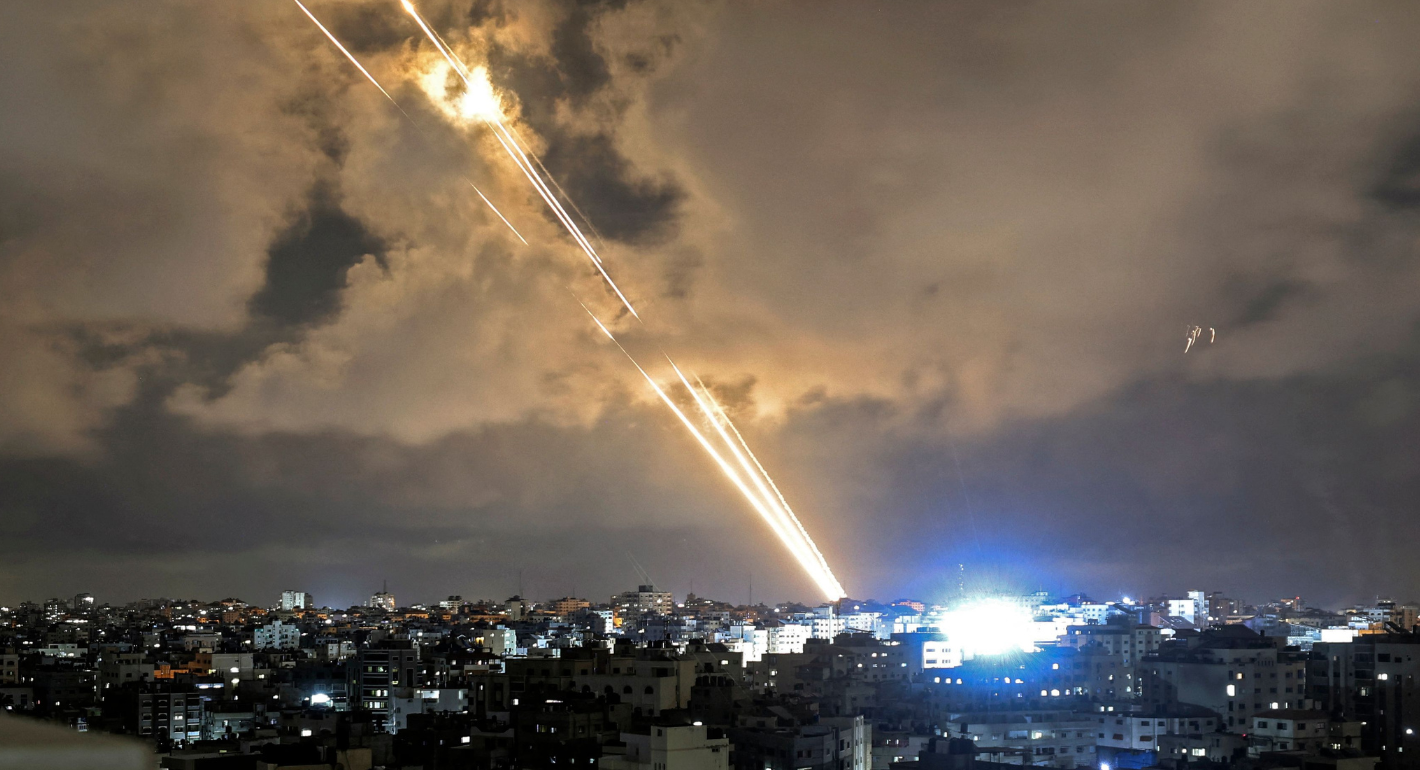
An Israeli response to Iran’s October 1 attack is imminent. The key question is of its intensity and potential fallout, both within Iran, in terms of nuclear security policy changes, and across the broader region. The coming days are likely to reshape West Asia irreversibly.

Gaddam Dharmendra

Experts weigh in on whether the United States is too hostile toward China.

Stephen Wertheim, Evan S. Medeiros, Vijay Gokhale