

Paper
Douglas H. Paal
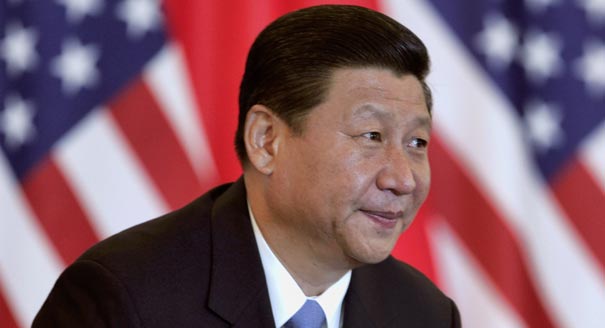
Source: Getty
Chinese Vice President Xi Jinping's upcoming visit to the United States will be an opportunity to represent America’s issues frankly and privately. However, it is important to leave partisan politics out of the visit.
China’s Vice President Xi Jinping will visit the United States next week on a trip intended to keep relations between the two largest economies and often mistrustful partners within constructive channels. The visit is also meant to familiarize the figure likely to head China for the next five to ten years with his American counterparts, should they be reelected. Finally, in light of troubled economic times, Xi’s party will sign contracts and make modest policy adjustments to benefit some American farmers and businesses and symbolize good intentions. It will be an opportunity to lay out many issues forthrightly, but to leave partisan politics out.
Xi’s visit was conceived amid the tumultuous events of 2010, when China overreacted to incidents in the South and East China Seas and on the Korean Peninsula. The Obama administration, seeking to induce Beijing into more constructive interactions among other objectives, proposed a sequence of visits, starting with the January 2011 state visit by President Hu Jintao, a trip to China by Vice President Joe Biden in August, and culminating in Xi’s impending visit. The idea, put crudely, was to keep leadership skin in the game of high politics, thereby providing adult supervision for two massive and suspicious bureaucracies.
So far, the plan seems to be working well. Despite the anti-China tone of much of the media coverage of Obama’s extensive trip through the Pacific last year, subsequent adjustment of American military deployments to the region, and even a conspiracy-generating episode at the U.S. consulate in Chengdu this week, Xi and his top officials are putting on a game face. A week before departing for Washington, Xi called Biden, according to the Chinese foreign ministry website, and said, “I look forward to conducting extensive and in-depth discussions with the U.S. side on bilateral issues and other major issues to consolidate the consensus.” Continuing, Xi said, “We hope we can convey a positive message that China and the United States will stick to the principle of showing mutual support to people in the same boat and strengthen cooperation.”The reference to the “same boat” is from a famous Chinese poem that was used to signify the spirit of the Strategic and Economic Dialogue (S&ED) when it first met under Secretary of State Hillary Clinton and Secretary of the Treasury Timothy Geithner in 2009. The S&ED will meet again this spring to continue the work of resolving concrete issues in U.S.-China relations.
The formal portion of Xi’s visit will be his meetings in Washington. Xi will have a plenary meeting on February 14 with Biden and representatives of several agencies, where presumably the two sides will render their standard talking points on the main issues between the countries. After that, there will be a more intimate meeting between the two vice presidents, where more sensitive points are likely to be made. Trade, Taiwan, Tibet, and human rights are certain to be among them. U.S. officials are acutely aware that Xi is still an heir apparent and not yet in a position to deal as if he is already China’s leader. At the same time, they owe him and their fellow Americans frank discussion of the real issues he will face once he is elevated.
President Obama will receive Xi in the Oval Office, where the main objective should be to establish a personal chemistry and basis for direct communication. Xi is said to be less formal in his exchanges than President Hu, though many say he has a hard inner core that belies his softer appearance. If Obama is reelected, it is likely to be these two men who pick up the phones when things go wrong or help is needed. Personal trust and clarity will be at a premium. The protocol treatment given Xi will be measured minutely. Ritual ranks high on the Chinese scale, and they will count the minutes spent with Obama.
The Congressional leadership of both parties will engage Xi the following day and presumably emphasize issues of key concern to them behind closed doors. He is likely to encounter knots of labor and Tibetan protestors, and perhaps others, but at a distance.
An accompanying party of Chinese business leaders and commercial officials will meet with the leaders of ten large American businesses and some contracts are anticipated. A key issue is expanding the limited number of American films permitted to be imported into China each year, driving many of those not approved into the market for pirated films. Concluding the Washington portion of his trip, Xi will make a policy speech at a large luncheon hosted by civilian American associations with extensive China business and other ties.
From the beginning of the planning process, Chinese officials have shown an interest in Xi engaging in people-to-people activities that convey personal warmth. With that in mind, Xi will fly to Muscatine, Iowa, where he made a home stay during a visit as a provincial official in 1985. He will dine with Governor Terry Branstad, whom he also met in 1985. Purchases of Iowa soybeans are expected to be announced.
The last stops will be events in Los Angeles, where Mayor Antonio Villaraigosa has been courting Chinese interest in investing in the city’s infrastructure. Again, some symbolically important contracts are expected before Xi departs for Ireland and Turkey.
Media figures, especially the White House press corps, are interested in how Xi’s visit will play in the American election campaign. Mitt Romney energetically criticizes China and Obama’s policy, and Obama and his West Wing team are equally eager not to let Romney outscore him in being tough. This helps account for two scratchy messages from the Obama administration: the foreign policy message of working through difficult issues constructively and the more contentious political message that Obama is being tough and confronting his Chinese counterparts.
If the Obama team wants to turn Xi into a more mistrustful counterpart and corner him into taking tough stances when he is actually in authority next year, pressing him now (while he is still the presumptive leader being watched by all Chinese for how he behaves) will be just the right formula. Instead, this would be a good time for Obama and Romney to represent America’s issues frankly and privately, but give partisan politics a time out.

Distinguished Fellow, Asia Program
Paal previously served as vice chairman of JPMorgan Chase International and as unofficial U.S. representative to Taiwan as director of the American Institute in Taiwan.
Recent Work
Douglas H. Paal


Douglas H. Paal, Tong Zhao, Chen Qi, …
Carnegie India does not take institutional positions on public policy issues; the views represented herein are those of the author(s) and do not necessarily reflect the views of Carnegie, its staff, or its trustees.

On the last day of the India AI Impact Summit, India signed Pax Silica, a U.S.-led declaration seemingly focused on semiconductors. While India’s accession to the same was not entirely unforeseen, becoming a signatory nation this quickly was not on the cards either.

Konark Bhandari

This piece examines India’s response to U.S. sanctions and tariffs, specifically assessing the immediate market consequences, such as alterations in import costs, and the broader strategic implications for India’s energy security and foreign policy orientation.
Vrinda Sahai

This paper examines the evolution of India-China economic ties from 2005 to 2025. It explores the impact of global events, bilateral political ties, and domestic policies on distinct spheres of the economic relationship.

Santosh Pai
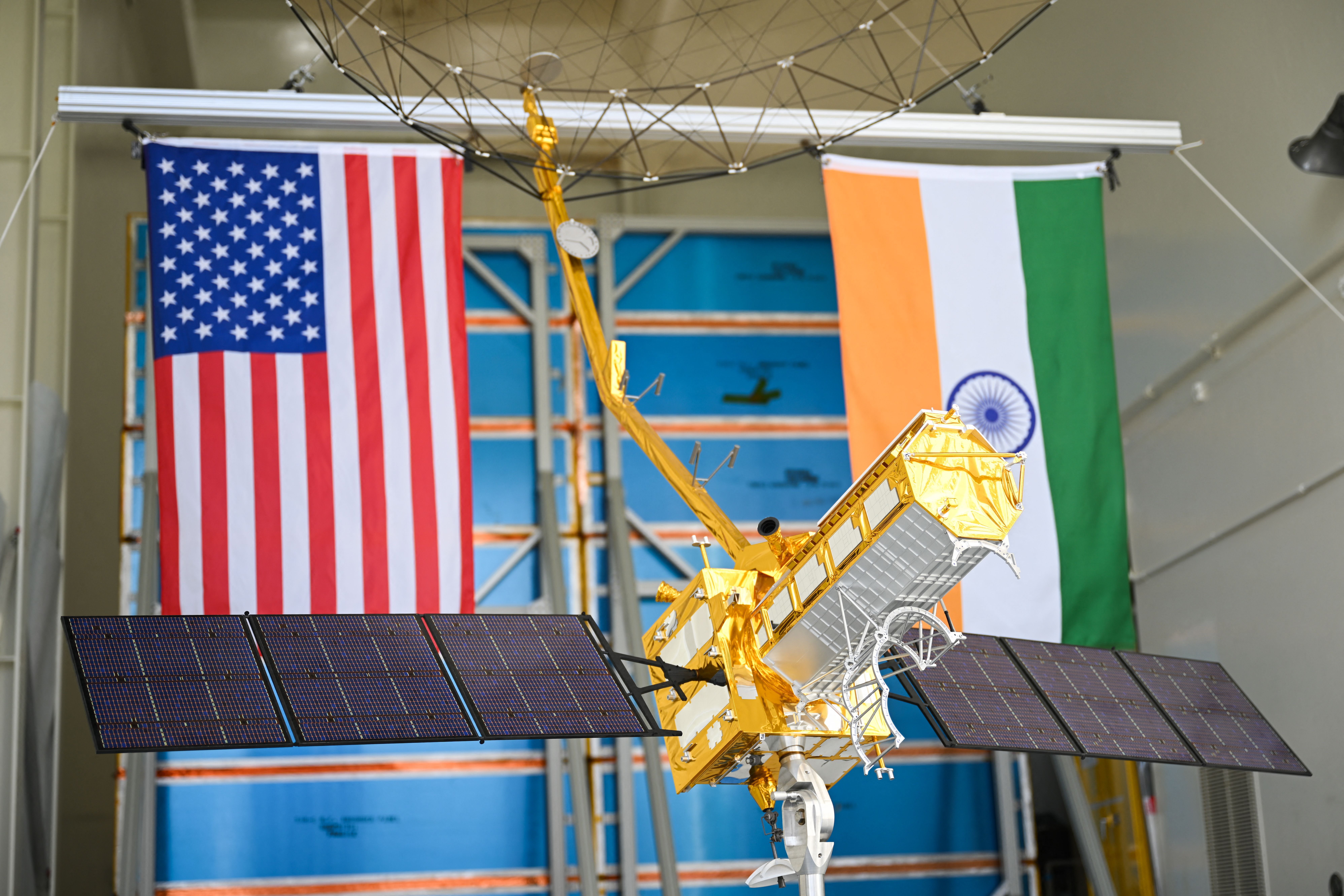
On July 30, 2025, the United States announced 25 percent tariffs on Indian goods. While diplomatic tensions simmered on the trade front, a cosmic calm prevailed at the Sriharikota launch range. Officials from NASA and ISRO were preparing to launch an engineering marvel into space—the NASA-ISRO Synthetic Aperture Radar (NISAR), marking a significant milestone in the India-U.S. bilateral partnership.

Tejas Bharadwaj
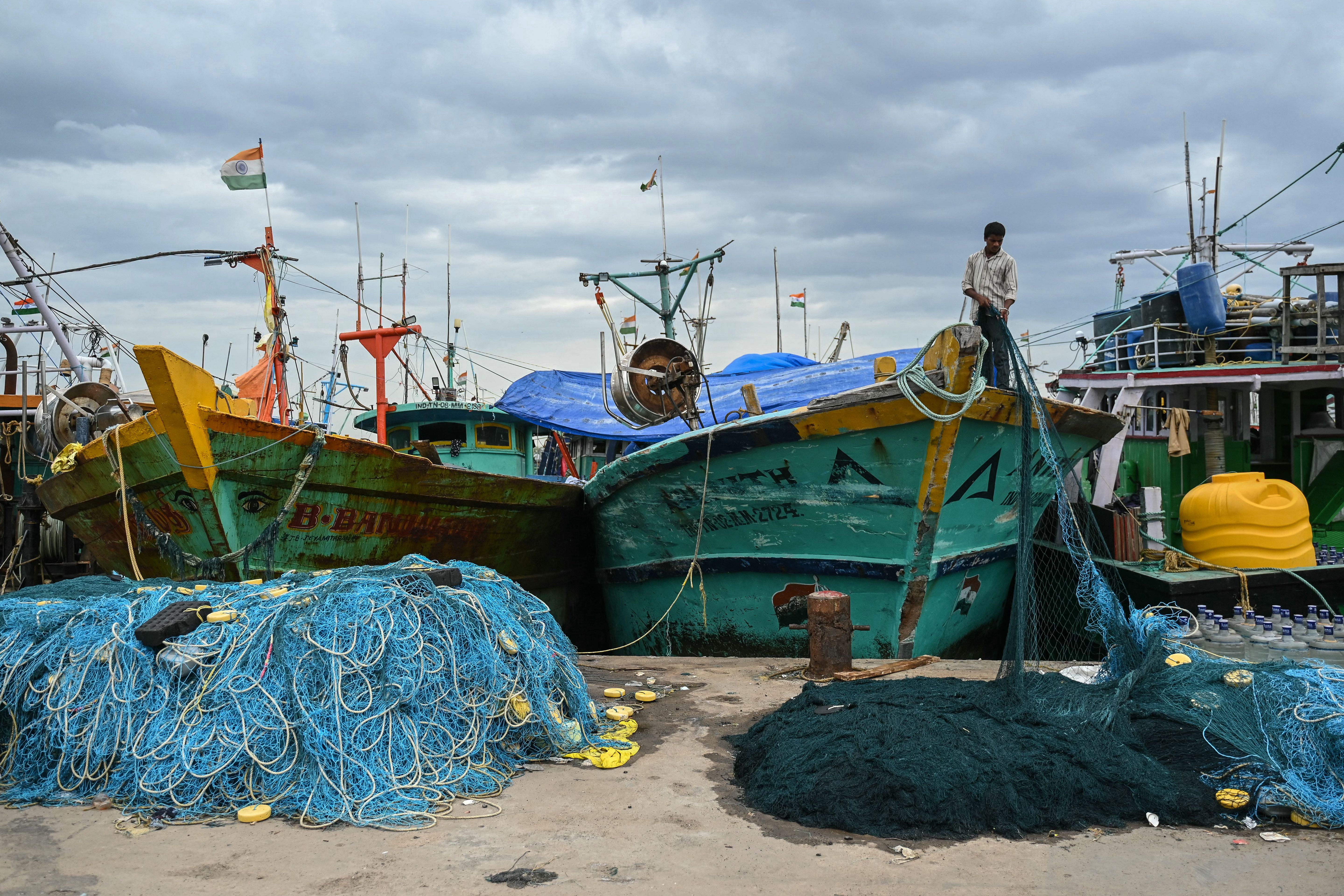
This article examines the scale and impact of Chinese IUU fishing operations globally and identifies the nature of the challenge posed by IUU fishing in the Indian Ocean Region (IOR). It also investigates why existing maritime law and international frameworks have struggled to address this growing threat.


Ajay Kumar, Charukeshi Bhatt