

In The Media
Lilia Shevtsova
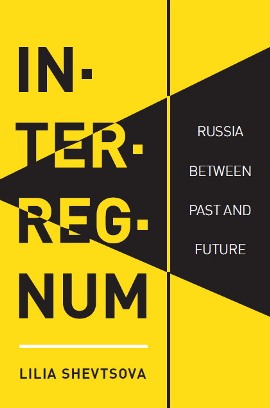
After the end of the political protests of 2011–2012, Russia has found itself in a troubled break between two eras. This is a time of conservatism, which, in its Russian incarnation, has morphed into a gloomy, almost medieval archaism.
Source: Carnegie Moscow Center
Lilia Shevtsova’s new book is a collection of essays about modern Russia and the processes that are related to it.After the end of the political protests of 2011–2012, Russia has found itself in the troubled time. This time can be described as “time out of time,” a break between two eras. One era has already ended, while the other has not yet begun. Living during this time is hard, and it is also hard to reflect on it and to find any signs of renewal. This is a time of conservatism; in its Russian incarnation that conservatism has morphed into a gloomy, almost medieval archaism.
In her new book, Shevtsova gives the reader some sense of this time without a trajectory, describing the major trends of Russian reality, its hot-button issues, as well as the challenges Russian society is facing.

Former Senior Associate, Russian Domestic Politics and Political Institutions Program, Moscow Center
Shevtsova chaired the Russian Domestic Politics and Political Institutions Program at the Carnegie Moscow Center, dividing her time between Carnegie’s offices in Washington, DC, and Moscow. She had been with Carnegie since 1995.
Recent Work
Lilia Shevtsova
Lilia Shevtsova
Carnegie India does not take institutional positions on public policy issues; the views represented herein are those of the author(s) and do not necessarily reflect the views of Carnegie, its staff, or its trustees.

This piece argues that India’s central challenge is not managing a single flashpoint but resolving the underlying tension between expansion and institutional coherency of the BRICS grouping.

Vrinda Sahai
As India’s economy recovers from the coronavirus pandemic, Indian businesses need efficient financial structures to regain their ground. Key reforms to India’s Insolvency and Bankruptcy Code could fill these gaps.

Anirudh Burman

Access to cross-border data is an integral piece of the law enforcement puzzle. India is well placed to lead the discussions on international data agreements subject to undertaking necessary surveillance reforms.

Smriti Parsheera, Prateek Jha
After the coronavirus pandemic wanes, how will China’s reorientation of the Belt and Road Initiative to address global health concerns influence its relationships with South Asian countries?

Deep Pal, Rahul Bhatia
Early in the outbreak, government researchers forecast several high-risk scenarios that were downplayed or ignored in public messaging.
Gautam I. Menon