

• Research
  • About
  • Experts
Carnegie India logoCarnegie lettermark logo
Technology
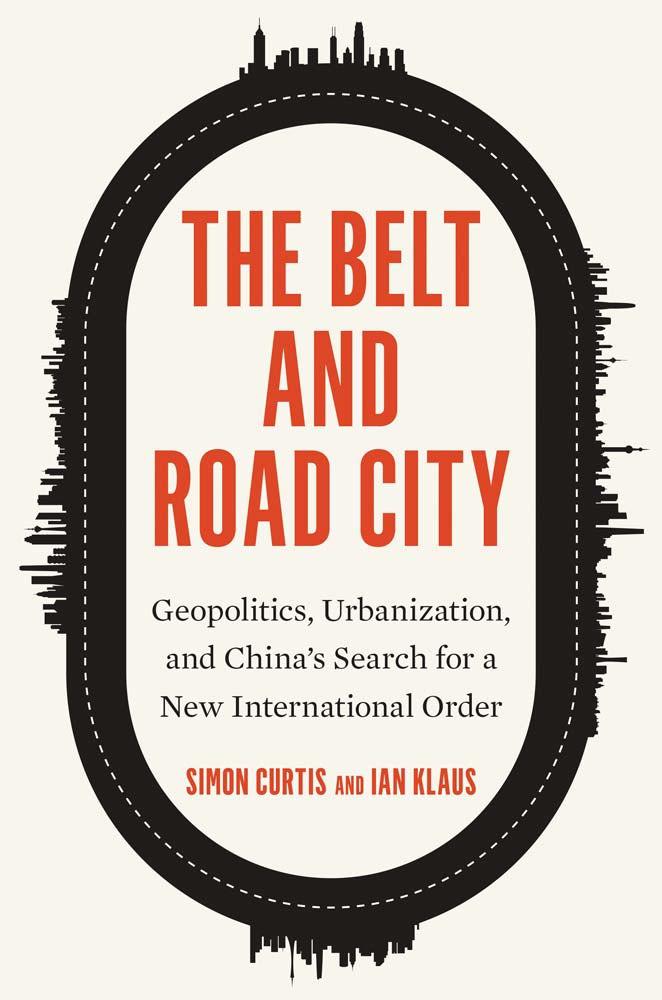
The Belt and Road City: Geopolitics, Urbanization, and China’s Search for a New International Order
Book

The Belt and Road City: Geopolitics, Urbanization, and China’s Search for a New International Order

An exploration of how China’s Belt and Road Initiative seeks to reshape international order and how it has catalyzed a new era of infrastructural geopolitics.

Link Copied
By Simon Curtis and Ian Klaus
Published on Apr 2, 2024

Additional Links

Hardback - $35.00Kindle - $26.49

Source: Yale University Press

An exploration of how China’s Belt and Road Initiative seeks to reshape international order and how it has catalyzed a new era of infrastructural geopolitics
 
Over the past decade China has put infrastructural and urban development at the heart of a strategy aimed at nothing less than the transformation of international order. The Belt and Road Initiative, which seeks to revitalize and reconnect the ancient Silk Roads that linked much of the world before the rise of the West, is an attempt to place China at the center of this new international order, one shaped by Chinese power, norms, and values. It seeks to do so, in part, by shaping our shared urban future.
 
Simon Curtis and Ian Klaus explore how China’s specific investments in urban development—cities, roads, railways, ports, digital and energy connectivity—are directly linked to its foreign policy goals. Curtis and Klaus examine the implications of these developments as they evolve across the vast Afro-Eurasian region.
 
The distinctive model of international order and urban life emerging with the rise of Chinese power and influence offers a potential rival to the one that has accompanied the rise and zenith of Western power, marking a new age of infrastructural geopolitics and Great Power competition.

Advance Praise

“An important and invaluable resource that offers insights and detail not only about China’s Belt and Road Initiative but about the future of global geopolitics, the new world order, and the future of the city. Curtis and Klaus are crystal clear about the opportunities and challenges that lie behind these—and how crucial it is to understand what is going on in parts of the world that often receive scant attention during a time of profound change.”
—Peter Frankopan, author of The Silk Roads: A New History of the World

“The Belt and Road City is a must-read for urbanists and foreign policy specialists alike. Compellingly and with a breadth of viewpoints that literally span continents, Curtis and Klaus call on us to set aside ‘grand masterplan’ visions of the BRI, whilst not ditching the momentous impact that some of these Chinese-influenced developments have on urban lives and forms the world over.”
—Michele Acuto, University of Melbourne

“The Belt and Road City is a timely book as China’s Belt and Road Initiative (BRI) enters its second decade. By bringing theoretical insights from both international relations and urban studies to bear on the BRI, this book reveals the BRI’s infrastructural and urban impacts across Afro-Eurasia that elude much of the current scholarship. The book deserves to be read by all who want to be informed of the BRI’s powerful role in reshaping the existing international order and global urban landscape.”
—Xiangming Chen, Trinity College, Connecticut, and Fudan University, Shanghai

Authors

Simon Curtis

Simon Curtis is associate professor in international relations at the University of Surrey and senior fellow at the Chicago Council on Global Affairs.

Simon Curtis
Ian Klaus
Founding Director, Carnegie California
Ian Klaus
Southern, Eastern, and Western AfricaSouth AsiaEast AsiaChinaSoutheast AsiaEconomyTradeForeign Policy

Carnegie India does not take institutional positions on public policy issues; the views represented herein are those of the author(s) and do not necessarily reflect the views of Carnegie, its staff, or its trustees.

More Work from Carnegie India

  • Commentary
    The Impact of U.S. Sanctions and Tariffs on India’s Russian Oil Imports

    This piece examines India’s response to U.S. sanctions and tariffs, specifically assessing the immediate market consequences, such as alterations in import costs, and the broader strategic implications for India’s energy security and foreign policy orientation.

      Vrinda Sahai

  • Paper
    India-China Economic Ties: Determinants and Possibilities

    This paper examines the evolution of India-China economic ties from 2005 to 2025. It explores the impact of global events, bilateral political ties, and domestic policies on distinct spheres of the economic relationship.

      Santosh Pai

  • Commentary
    NISAR Soars While India-U.S. Tariff Tensions Simmer

    On July 30, 2025, the United States announced 25 percent tariffs on Indian goods. While diplomatic tensions simmered on the trade front, a cosmic calm prevailed at the Sriharikota launch range. Officials from NASA and ISRO were preparing to launch an engineering marvel into space—the NASA-ISRO Synthetic Aperture Radar (NISAR), marking a significant milestone in the India-U.S. bilateral partnership.

      Tejas Bharadwaj

  • Article
    Hidden Tides: IUU Fishing and Regional Security Dynamics for India

    This article examines the scale and impact of Chinese IUU fishing operations globally and identifies the nature of the challenge posed by IUU fishing in the Indian Ocean Region (IOR). It also investigates why existing maritime law and international frameworks have struggled to address this growing threat.

      Ajay Kumar, Charukeshi Bhatt

  • Commentary
    TRUST and Tariffs

    The India-U.S. relationship currently appears buffeted between three “Ts”—TRUST, Tariffs, and Trump.

      Arun K. Singh

Get more news and analysis from
Carnegie India
Carnegie India logo, white
Unit C-4, 5, 6, EdenparkShaheed Jeet Singh MargNew Delhi – 110016, IndiaPhone: 011-40078687
  • Research
  • About
  • Experts
  • Projects
  • Events
  • Contact
  • Careers
  • Privacy
  • For Media
Get more news and analysis from
Carnegie India
© 2026 Carnegie Endowment for International Peace. All rights reserved.









