Introduction
Lebanon was once celebrated as the green jewel of the Middle East, with cedar-covered mountains, fertile valleys, and a coastline where citrus blossoms perfumed the spring air. Present-day Lebanon offers a jarring contrast. The country’s environmental story is not one of slow decline but of abrupt collapse, which has resulted from decades of neglect, patronage politics, and short-term fixes. A culture of resilience has become both a survival skill and a silent curse.
The past five years have been a stress test like no other. The country’s financial meltdown in 2019 gutted public institutions and eventually erased over 90 percent of the currency’s value. Banks froze people’s accounts, and state services unraveled. The national electricity grid all but disappeared; water networks functioned intermittently; waste collection rose and receded in tandem with political disputes. In the resulting void, citizens improvised with diesel generators, tanker trucks, and informal waste dumps—temporary lifelines that deepened pollution, inequality, and environmental harm. This adaptability, admirable as it is, has allowed those in power to defer responsibility, knowing that citizens will find ways to cope. Adaptation has substituted reform, and urgent environmental priorities have been postponed until they erupt into crisis. Now, air pollution from generators, coastal erosion, shrinking green cover, and mounting waste are no longer background issues. They define daily life.
These local issues are being amplified by climate change. Water scarcity intensifies as snowpack declines and rainfall patterns shift. Coastal erosion eats away at cities and farmland. Desertification advances across the Bekaa Valley and the country’s north, while biodiversity loss accelerates and unregulated construction and mining devour hillsides. Rural farmers face degraded soils and water shortages, while poorer urban districts choke on exhaust fumes. Environmental decline and economic hardship now reinforce each other in a tightening spiral.
Amid this collapse, something unexpected has emerged: a bottom-up environmental transition. Solar panels gleam on rooftops from Akkar to Tyre. Local activists have blocked destructive megaprojects. Farmers are experimenting with climate-resilient crops. Women-led cooperatives are managing water filtration and waste.
Climate finance has emerged as a critical lever for reform. As finance expert Lamia Moubayed said, “Access to financing and establishing markets for sustainable solutions are key interventions,” a vision reflected in initiatives such as the Lebanon Green Investment Fund (LGIF). Yet the challenge remains how to channel that finance to the grassroots level—where climate resilience is practiced daily but seldom funded.
Lebanon’s crisis-driven energy and environmental transition has generated innovative, community-led responses, but the persistence of top-down donor frameworks and weak regulatory oversight risks recentralizing power and deepening financial exclusion. Treating Lebanon as a living laboratory for climate justice in fragile contexts, the article explores how, in the ruins of a failing state, people are building a decentralized environmental order from the ground up and how easily this progress could be reversed if climate finance recentralizes in donor or political institutions.
Key Environmental Challenges
The environmental challenges facing Lebanon are deeply intertwined with socioeconomic inequality, forming the core of the country’s climate justice crisis. These challenges illustrate how institutional failure and political neglect compound climate vulnerability, disproportionately affecting the most marginalized populations.
Air Pollution and Public Health
With the national electricity grid’s collapse—driven by fuel shortages, the insolvency of the state utility Electricité du Liban, and deteriorating maintenance—people in Lebanon have come to rely on diesel generators. Studies by atmospheric chemist and Member of Parliament Najat Saliba, as well as research conducted at the American University of Beirut, have established a clear link between prolonged exposure to generator exhaust and increased incidence of respiratory and cardiovascular disease. But this burden is not shared equally. Poorer, densely populated neighborhoods, such as Karantina, Bourj Hammoud, Nabaa, Tariq el-Jdideh, and Bab al-Tabbaneh, are often located closest to generator clusters or are unable to afford the cleaner, more expensive private subscriptions. They bear the heaviest brunt of the pollution and toxic emissions.
Water Scarcity and Pollution
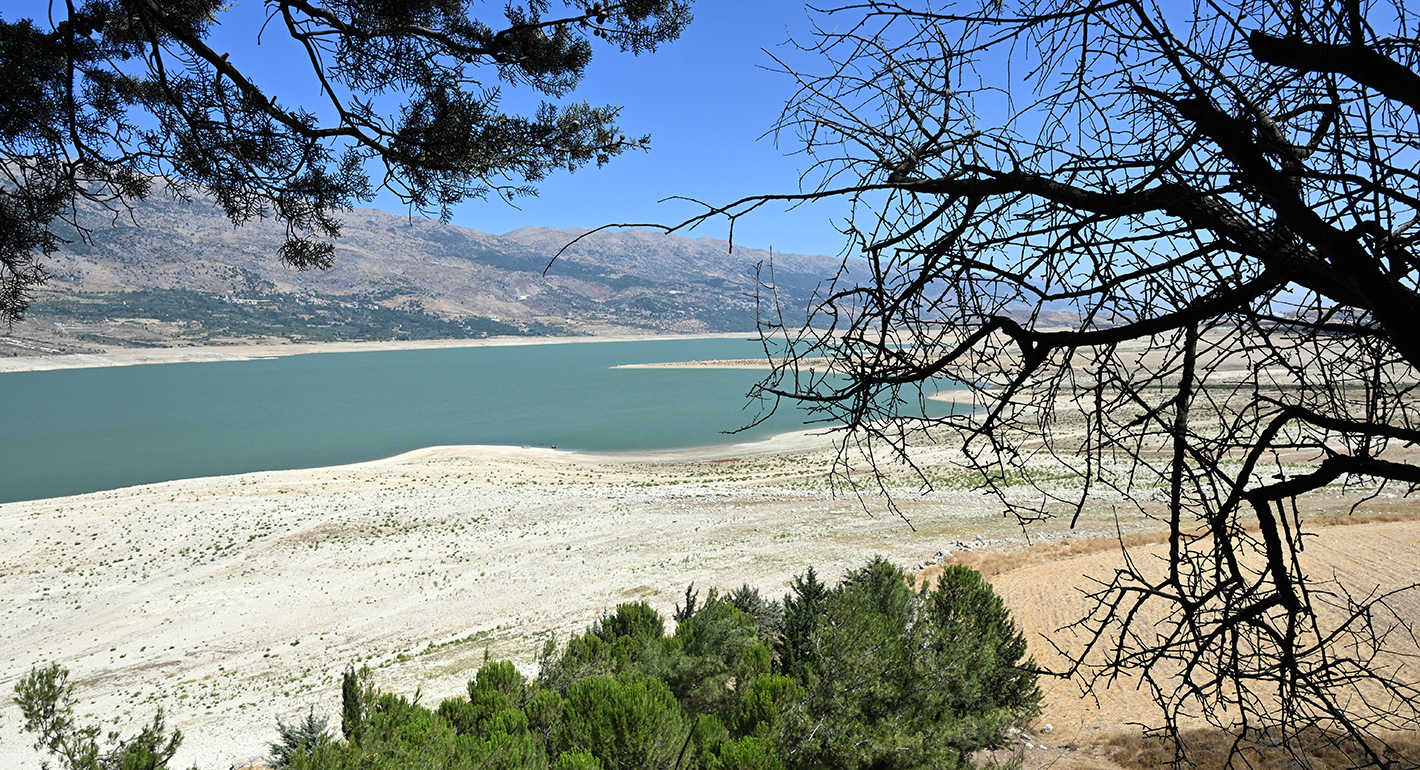
Lebanon’s once abundant water resources are under severe strain from two converging forces: climate change and chronic mismanagement. Climate change disrupts precipitation patterns, leading to reduced snowpack—the country’s natural water reservoir—and increased drought frequency. This scarcity is exacerbated by unregulated pumping and groundwater extraction, in which private individuals and operators drill wells and install pumping systems with little effective oversight, often with the tacit tolerance of local authorities. These operations lower aquifers and invite saltwater intrusion along the coast. Crucially, the remaining water is heavily contaminated. Untreated sewage, industrial waste, and agricultural runoff pollute rivers and the Mediterranean Sea. In urban centers such as Tripoli and Sidon, and throughout the Bekaa, clean water has become a commodity, purchased at costs that often exceed a household’s food budget.
Desertification and Land Degradation
The integrity of Lebanon’s land is being undermined by decades of unsustainable practices, accelerating the effects of climate change. Deforestation—driven by illegal logging and the economic necessity of using wood for fuel—combined with unregulated quarrying and overgrazing, has stripped hillsides bare. This degradation has led to increased soil erosion and pushed regions such as the Bekaa and Akkar toward advancing desert conditions.
In the south, soil contamination resulting from recent armed hostilities—including residue from bombardments, unexploded ordnance, and damage to agricultural infrastructure—has further rendered farmland unusable. This land degradation undermines food security and accelerates rural poverty, representing a slow violence unfolding in plain sight. Lebanon now imports up to 80 percent of its food, a dependency that intensified after the economic collapse. The loss of fertile land not only threatens the livelihoods of small farmers but also increases Lebanon’s dependence on imported food, making the entire population more vulnerable to global market shocks and climate-driven supply chain disruptions.
Coastal Erosion and Marine Loss
Lebanon’s 225-kilometer coastline, a vital economic and cultural asset, is eroding steadily under the combined pressure of rising sea levels and reckless, unregulated construction. The destruction of natural coastal defenses, such as sand dunes and wetlands, has left coastal communities highly exposed to storm surges and sea-level rise—the front line of climate vulnerability. Furthermore, the marine environment has suffered catastrophic pollution from untreated sewage and industrial discharge, compounded by historical disasters, such as the 2006 Jiyeh oil spill, whose tar residues still mark the shore nearly two decades later.
Although small-scale fisheries account for less than 1 percent of national GDP, coastal and marine activities—including fisheries, tourism, and related services—support thousands of livelihoods and contribute an estimated 8–10 percent of economic output in pre-crisis years. Marine loss threatens the fishing industry, tourism, and the overall biodiversity of the Mediterranean.
Institutional Fragility and Policy Gaps
The root cause of Lebanon’s compounded environmental crises is institutional fragility. Environmental governance remains fragmented across multiple ministries and heavily reliant on donor projects. Laws exist but lack enforcement mechanisms; strategies are drafted, then shelved. The Ministry of Environment, chronically under-resourced, depends on external funding even for basic monitoring, while public participation in decisionmaking is minimal, leaving communities voiceless.
The new Climate Policy Package 2025, while a positive step, underscores this tension. As Minister of Environment Tamara El Zein stated, “Reflecting the Ministerial Declaration . . . we want a state that adopts more sustainable recovery plans.” Yet the challenge remains translating this top-down vision into decentralized action that empowers the grassroots initiatives driving the country’s environmental recovery.
There are, however, early indications of how this alignment could work. In the renewable energy sector, frameworks developed by the Lebanese Center for Energy Conservation—including net metering guidelines, technical standards, and installer certification—have enabled the rapid expansion of decentralized solar solutions led by households, small firms, and community actors. Net metering regulations adopted by the Ministry of Energy and Water in coordination with The Lebanese Center for Energy Conservation (LCEC), for example, allows solar producers to offset their electricity consumption by feeding excess electricity into the grid, providing a regulatory basis for rooftop photovoltaic adoption. Earlier initiatives, such as the National Energy Efficiency and Renewable Energy Action (NEEREA) financing mechanism, implemented through the Central Bank and supported technically by the LCEC, also helped build the market for small-scale solar installations by offering subsidized loans for renewable energy systems. Rather than substituting for local initiative, this regulatory scaffolding provided legitimacy and coordination, allowing grassroots energy solutions to scale.
Despite governance gaps, citizens have filled the void. Former environment minister Yassin captured this shift when he remarked that there was an opportunity to improve the country’s environmental policies and tackle festering waste management crisis “if we manage this sector and put it back in the hands of local authorities that do not seek profit.”
Energy Transition by Necessity: The Role of Microfinance and CSOs
With the grid’s collapse, Lebanon witnessed a surge in solar installations between 2020 and 2023. What began as desperation evolved into a decentralized energy movement, funded through remittances, microloans provided by civil society organizations (CSOs), and community pooling. Households and small businesses installed rooftop systems to reduce dependence on private diesel generators while in some areas community actors and NGOs supported shared solar solutions for schools, water stations and local infrastructure. This transition, born of necessity rather than policy, reveals both empowerment and exclusion. Those with means, installed solar panels and gained autonomy from groups running the diesel generators, while poorer households have been left behind.
The collapse of the traditional banking sector after 2019 disrupted the formal financing channels that had previously supported renewable energy. International institutions, including the World Bank, subsequently supported microfinance institutions (MFIs) to help maintain lending for households and small businesses despite the banking crisis. Yet these mechanisms were limited in scale and could not fully compensate for the broader collapse of the financial system. As a result, CSOs and microfinance institutions (MFIs) became the de facto financial intermediaries for this green transition, effectively bypassing the state and redefining energy justice from the ground up. This shift highlights a crucial element of climate justice: when the state fails to provide access, the community will find a way to create it, often through innovative, trust-based financial models.
Microloans differ from bank lending in both design and intent. They do not require formal collateral or banking access and are delivered through community-based institutions, enabling finance to flow even after banks and public finance collapse.
Responses and Adaptive Solutions
Lebanon’s environmental recovery is being written in rooftops, courtyards, and cooperatives rather than ministries. Across sectors, necessity has driven innovation as citizens, civil society, and small businesses respond to the retreat of the state with improvised but resilient solutions. These responses are decentralized, community financed, and largely unregulated, revealing both the strength and fragility of bottom-up adaptation.
At the local level, communities have devised practical responses to collapsed water and waste systems. In parts of Akkar and the Bekaa, residents installed solar-powered wells and filtration kiosks to replace failing public supply. In parallel, women-led cooperatives and community associations have supported environmental initiatives ranging from recycling and agricultural sustainability to small scale water management projects in rural regions. NGOs such as Arcenciel operate community recycling centers that sell safe water at cost, reduce plastic use, and create local jobs.
Knowledge production has likewise shifted downward. Youth and researchers now track pollution themselves, building sensors, testing rivers, and mapping quarries. In Mount Lebanon, community-generated air-quality data prompted municipalities to relocate diesel generators, showing how locally produced evidence can translate into concrete environmental outcomes.
Grassroots mobilization has reshaped environmental decisionmaking. Citizen coalitions have challenged top-down projects that threatened ecosystems, most notably in the Bisri Valley campaign. The campaign united farmers, environmental groups, and local residents and succeeded in halting the World Bank–funded Greater Beirut Water Supply Project, which would have flooded fertile agricultural land.
The private sector has played an uneven but significant role in Lebanon’s adaptive landscape. Small firms design modular solar systems, offer maintenance contracts, and experiment with battery sharing, while larger companies integrate renewables into operations or fund community projects. Fragmented and unregulated, the private sector ranges from informal installers to large-scale developers, yet it has become a defining feature of Lebanon’s climate adaptation—revealing how commerce and civic need can align when governance fails.
The Solar Market: Necessity, Innovation, and Microfinance
The most visible example of Lebanon’s adaptive solutions is its unplanned energy transition. The collapse of the national grid forced a spontaneous shift to solar power, as rooftop systems multiplied across neighborhoods and families pooled remittances often supported by international donors who provided small grants or cost-sharing schemes for rooftop solar installations. Technicians learned by doing, importing panels through improvised channels and wiring systems at the neighborhood level. “We became the grid,” a small solar supplier in Sidon said in an interview. A technician in Zahle echoed this sentiment: “We didn’t wait for the state. People brought their own light, one rooftop at a time.” These voices capture the spirit of Lebanon’s solar expansion—decentralized, self-taught, and community financed.
The country’s solar market also illustrates how necessity can drive innovation when paired with alternative financial tools. The solar boom was driven primarily by small- and medium-sized enterprises that quickly adapted to the decentralized and liquidity-constrained market. These firms became the primary technical partners for civil society organizations (CSOs) and microfinance institutions (MFIs), designing modular systems suitable for residential and small commercial use and structuring them around informal, trust-based financing rather than conventional bank credit
In the absence of functioning banks, microfinance tools played a critical enabling role. Solar providers rapidly developed innovative financial and technical models, such as battery-sharing schemes and pay-as-you-go maintenance contracts, to meet the needs of a cash-strapped population. Enabled by microloans and CSO-facilitated financing, these models allowed households to access energy without upfront capital, transforming solar power from a long-term investment into a survival infrastructure.
However, Lebanon’s rapid, finance-enabled solar expansion has come at a cost. Poor oversight has led to a fragmented market flooded with low-quality equipment and a complete absence of e-waste management systems. While microfinance and CSO partnerships have expanded access, this unregulated growth and the lack of standards and consumer protection have created a long-term environmental and economic risk, particularly the premature failure of solar equipment, rising maintenance costs, and the accumulation of unmanaged solar waste, underscoring the need for adaptive regulation that protects consumers without stifling innovation.
The Wind Sector: Centralized Ambition in a Decentralized Reality
While solar energy is the quintessential decentralized solution, Lebanon’s wind sector represents a more traditional, large-scale, and centralized approach to renewable energy.
Regions such as Akkar, known for its high wind speeds, have long been targeted for utility-scale wind farms. The Hawa Akkar, Sustainable Akkar, and Lebanon Wind Power projects, for example, used public-private partnership models that included twenty-year build-operate agreements, in which private developers finance, build, and operate infrastructure for a fixed period before transferring it to the state.
The slow progress of these projects, despite their technical viability, highlights the enduring power of institutional fragility. The wind sector’s reliance on large-scale government contracts, land acquisition, and grid connection has made it vulnerable to the political paralysis that has plagued Lebanon. The contrast is stark: while decentralized solar capacity expanded rapidly through microfinance-enabled household systems, centralized wind projects struggled to advance, demonstrating that governance failure—not technology—is the primary bottleneck for large-scale solutions.
Local Solutions to the Water Crisis
The private sector has also stepped in to address the water crisis, moving beyond simple water trucking to localized technological solutions. Private Lebanese companies are now designing and installing small solar-powered water treatment and filtration units for municipalities and cooperatives. These solutions bypass state-run water establishments, which have struggled to provide continuous service, delivering communities more direct and reliable sources of potable water.
Furthermore, the private sector is driving innovation in water reuse, particularly in agriculture, where Lebanon’s first national water-reuse standards—developed in collaboration with the Lebanese Standards Institution, the International Water Management Institute, and the Lebanese Agricultural Research Institute—are being deployed by companies supplying treated-wastewater systems to farms. This demonstrates that when a clear local need exists, the private sector can provide technical access in partnership with CSOs and community networks.
In short, the private sector’s role is one of opportunistic partnership. It provides the technical means, while CSOs provide the financial and social trust necessary to deploy those means. This symbiotic relationship is the engine of Lebanon’s current climate adaptation, but it remains vulnerable to the regulatory and political risks inherent in a failed state.
Case Studies: Grassroots Climate Justice in Action
The collapse of Lebanon’s banking sector in 2019 created a financial vacuum that paradoxically has driven the country’s green energy transition. While overall energy consumption declined sharply after 2019 due to economic contraction, the share of renewable energy—particularly solar—rose during the same period, reflecting rapid adoption at the household and municipal levels. When the Lebanese central bank’s so-called green loan scheme collapsed alongside the currency, as the financial crisis froze liquidity and halted subsidized lending programs, formal finance withdrew from the renewable energy space. In its place emerged a new, decentralized financial architecture led by CSOs, MFIs, and local cooperatives. Out of this crisis grew an unexpected experiment in democratizing access to climate resources and redefining how credit, trust, and repayment function.
The Microfinance Model for Solar Justice
The microfinance model for solar justice represents a political redefinition of value in a collapsed economy. With traditional banks insolvent and public utilities paralyzed in Lebanon, CSOs and MFIs stepped in to fill the vacuum. Their innovation was simple but transformative: replacing financial collateral with social capital.
Before the crisis, a household or small business might spend hundreds of dollars a month on diesel to power generators. After 2019, CSOs and MFIs increasingly provided microloans for individuals to purchase or co-own solar systems, including panels, inverters, and basic storage units. Unlike bank credit, these microloans did not require formal collateral or access to frozen bank accounts; they were typically small, flexible, and delivered through community-based institutions.
This decentralized community-based solar financing model used that same prior diesel expenditure as the benchmark for creditworthiness—the so-called cost-of-diesel repayment formula. Borrowers repaid the loan in monthly installments for the solar system that were lower than their former fuel bills. Because the savings were immediate and tangible, repayment rates remained high without legal enforcement. The motivation of repayment incentives was practical, not contractual, as one CSO director explained: households prioritized repayment because reliable electricity had immediate and tangible value.
For lenders, this structure drastically reduced default risk. For borrowers, it provided dignity—replacing dependency on informal generator “mafias” with self-generated power. The loan became self-liquidating, and the borrower, once a consumer of pollution, became a producer of clean energy.
Access, Inclusion, and the Power of Social Capital
The strength of this system lies in how it reconfigured access. Traditional banking demanded collateral, a stable income, and trust in institutions—all of which vanished after 2019. CSOs rebuilt trust through proximity: community presence substituted for formal paperwork.
Their loan portfolios prioritized women-led enterprises, youth entrepreneurs, and small farmers—groups historically excluded from credit. Because repayments were tied to preexisting diesel expenses, loans became cash flow neutral from day one. Interviewees described how a farmer in the Bekaa could finance solar irrigation using the same money once spent on generator fuel; a seamstress in Tyre could power her workshop without fear of daily outages. The green transition thus became not a luxury for the affluent but a survival mechanism for the many households and small businesses. This substitution of social trust for collateral transformed climate finance from a technocratic tool into a community-based financial arrangement with significant implications for access, inclusion, and local economic resilience.
Women as Energy Entrepreneurs
In many rural and peri-urban areas, women are the primary managers of household energy and water use. The microloans for solar systems gave them control over a vital household asset. These loans were accessible to women excluded from both government programs and commercial finance. Some women went further, turning these solar systems into income-generating assets by running solar-powered bakeries, small cold-storage units for produce, or tailoring workshops. Initiatives in Lebanon have shown how reliable electricity can enable women to expand home-based businesses and participate more actively in local economies. These women are no longer passive recipients of aid but active participants in local economies. Control over a household solar system translates into control over productive time. The solar panel on the roof is more than hardware, it is an access to reliable energy; it is a badge of agency and productive labor management.
Youth Employment and Technical Capacity
The solar boom also generated a new form of green employment. Young people—often unemployed and alienated from the patronage-based job market—found in the renewable energy sector a rare opportunity for both livelihood and purpose. CSOs, small firms, and initiatives under the Prospects Partnership—a multi-agency program led by the Netherlands and implemented by the International Labour Organization, the UN Refugee Agency, UNICEF, the International Finance Corporation, and the World Bank to expand youth access to skills and decent work in Lebanon and the wider region—began training young people as solar installers, maintenance technicians, and battery-sharing operators.
This collaboration between local actors and international agencies built technical capacity where formal vocational systems had failed. It produced a decentralized labor force that is both skilled and socially embedded, capable of servicing remote communities and innovating on the ground.
Through their technical expertise, these youth became indispensable to community survival. Their work blurred the line between labor and leadership, redefining citizenship as contribution rather than allegiance. In a country where job creation has long been entangled with political loyalty, the green energy sector offers a different model: one where knowledge, not patronage, is the currency of inclusion.
Rural Water Cooperatives and the Politics of Scarcity
Water scarcity, driven by both climate change and chronic mismanagement, has become one of Lebanon’s most critical environmental and social flashpoints. Once blessed with abundant mountain springs and generous rainfall, the country now faces long dry seasons and unreliable supply. Changing precipitation patterns, declining snowpack, and rising summer temperatures, documented by the World Bank have made it nearly impossible for many communities to access water year-round.
The collapse of public utilities deepened this crisis. In many rural areas, the official water establishments—the state entities legally responsible for extraction and distribution—ceased to function effectively, not primarily because of armed conflict but because of a combination of chronic underinvestment, electricity shortages, financial insolvency, and institutional paralysis. According to the World Bank and UNICEF, water utilities across Lebanon have been unable to operate pumping stations consistently because of fuel scarcity, power cuts, and the erosion of operational budgets.
As centralized networks failed, an informal water economy emerged. Private truck operators—known locally as citerne mafias—began selling water at exorbitant prices, often drawn from unregulated wells or polluted sources. Their dominance turned water from a public right into a market commodity. Families in rural districts and peri-urban zones now spend more each month on trucked water than on food. The system thrives on scarcity, and with no regulatory oversight, it has become both an economic burden and a public health risk.
Against this backdrop, grassroots water cooperatives began to emerge, often with the support of local CSOs and international NGOs. These initiatives installed solar-powered pumping systems and small filtration kiosks, managed collectively by residents. Fees are set transparently, covering only maintenance and electricity costs, and decisions are made through open community meetings. In several villages, youth-led committees manage daily operations, ensuring equitable distribution and prompt maintenance. This model reintroduces legitimacy where the state’s authority has evaporated. It also transforms water from a source of dependency into a platform for civic participation and gender inclusion. Young people, once marginalized in local politics, now sit at the center of resource governance.
The greatest threat to these cooperatives is legal. Lebanon’s existing water law grants extraction and distribution monopolies to the regional water establishments under the authority of the Ministry of Energy and Water. While these entities are largely inactive, their legal mandate remains intact. As a result, community cooperatives operate in a gray zone—tolerated in practice but vulnerable in principle. This ambiguity discourages investment in durable infrastructure, as the state could reclaim ownership or impose restrictions at any moment. It also exposes the contradiction at the heart of Lebanon’s climate governance: even as communities innovate from below, centralized frameworks continue to suppress or co-opt local agency.
Lessons for Climate Justice in Fragile States
Lebanon’s experience offers critical lessons for climate justice in fragile states, demonstrating that the primary challenge is not technological or financial. The challenge is governance, trust, and the pathways through which finance is delivered. The lessons learned from the bottom-up transition must inform the top-down policy that seeks to regulate it. The critical question is whether top-down policy can support these systems without recentralizing power or undermining local agency.
The Policy Paradox: The LGIF and the Centralization Risk
The Lebanese government’s response to the climate crisis has been marked by a policy paradox. On one hand, the launch of the Climate Policy Package 2025 (including NDC 3.0 and the National Adaptation Plan) and the establishment of the LGIF signal an official commitment to climate action. As El Zein stated, the goal is to adopt “more sustainable recovery plans.” The LGIF is envisioned as a centralized platform designed to mobilize international climate finance by combining concessional donor funding with private-sector capital to support larger mitigation and adaptation investments. It primarily operates through financial intermediaries rather than directly funding community-level initiatives.
However, the LGIF’s operational design remains unclear, particularly regarding how funds will be channeled through financial intermediaries and disbursed to projects. While the facility is a necessary mechanism to attract large-scale international climate finance, it is inherently a centralized structure. In a country defined by a total collapse of public trust in centralized institutions, this poses a significant risk of recentralizing power and marginalizing the grassroots actors that have sustained climate adaptation and innovation in times of crisis.
The concern is therefore not that the LGIF currently operates through commercial banks, but that if its funds were channeled through them—even for fiduciary or administrative purposes—it would likely be met with public distrust and bypass the MFIs and CSOs that have proven most effective, because bank-led lending frameworks typically prioritize larger, formally bankable projects over community-based microfinance initiatives. In this context, Lebanon’s banking sector remains inaccessible and widely distrusted, making it a challenging a conduit for climate finance. The LGIF must therefore be designed not simply to move capital but to leverage trust—a resource the state does not possess, but community-based institutions do. This requires mandating partnerships with MFIs and CSOs, enabling capital to flow outside the banking sector, and embedding transparency and local accountability into the facility’s structure.
Toward a Climate Justice Fund
Despite its promise, the decentralized microloan-based solar financing model transition is not entirely equitable. The poorest households—those with no disposable income and no diaspora support—remain excluded. The model’s success depends on an existing expenditure stream that the truly indigent simply do not have. In a context where adoption requires liquidity or informal credit, uptake has been more feasible for middle-income and remittance-supported families, leaving poorer rural communities at risk of exclusion and reinforcing geographic inequality. Assessments by the World Bank and the UNDP document deepening poverty and Lebanon’s high dependence on remittances after 2019, even as renewable energy use, particularly rooftop solar, expanded. Remittances reinforce uneven development, as communities with relatives abroad access funds faster. The very mechanism that democratized finance thus risks entrenching disparity if left unregulated.
This paradox of exclusion exposes a critical policy vacuum: who finances the transition for those without even the minimal liquidity to participate? Without deliberate correction, Lebanon’s green transition could replicate the inequities of its financial collapse—empowering the adaptive but abandoning the destitute.
To bridge this gap, it is essential to create a dedicated climate justice fund, separate from the LGIF), a national platform designed to mobilize large-scale green investment through formal financial institutions and from donor-led credit lines. This proposed fund could combine grants, highly subsidized loans, and in-kind support to reach the energy poor. Administered through CSOs and municipalities, it would extend the microfinance model’s reach without undermining its community-based logic. Grant components could target critical public good functions—solar power for schools, clinics, and water stations—while subsidized microloans could sustain household adoption. The goal is not charity but equitable participation, ensuring that every household, regardless of income, can access clean and affordable power.
If poorly designed, however, such a fund would risk reproducing the very power asymmetries it seeks to correct, as donor priorities, reporting requirements, and centralized intermediaries can recentralize decision making and sideline the community actors whose improvisation has sustained Lebanon’s climate transition.
A New Social Contract of Energy
The grassroots financial model for renewable energy in Lebanon reveals a profound political insight: when formal institutions collapse, communities can recreate legitimacy through service delivery. The network of CSOs, MFIs, and local entrepreneurs has inadvertently drafted a new social contract—one grounded in reciprocity rather than authority.
The microfinance model demonstrates that climate justice is not only about technology or carbon metrics; it is about who controls the means of resilience. Every repaid microloan and every rooftop panel is a quiet vote of confidence in community over state and in solidarity over speculation.
Yet sustainability demands that this new order be recognized and regulated. Without an enabling framework—such as technical standards, consumer protection, and waste management—Lebanon’s decentralized energy market may undermine itself. The task ahead is to evolve from improvisation to institution, ensuring that what began as survival matures into a coherent model of just transition.
Regulating Hope: A Framework for Decentralized Governance
Moving from crisis-driven adaptation to a sustainable and just energy transition requires a governance framework that is adaptive, decentralized, and enabling. Rather than replacing bottom-up systems, regulation should reinforce them by setting standards, safeguarding quality, and formalizing accountability without dismantling local agency.
This implies decentralizing climate finance delivery through trusted intermediaries; focusing regulation on minimum technical standards, safety, and e-waste management rather than market control; and formally integrating citizen-generated data into national monitoring systems. Together, these measures would convert resilience from an emergency response into a durable governance principle, aligning state oversight with the realities of a fragile institutional context.