

Article
Eric Green
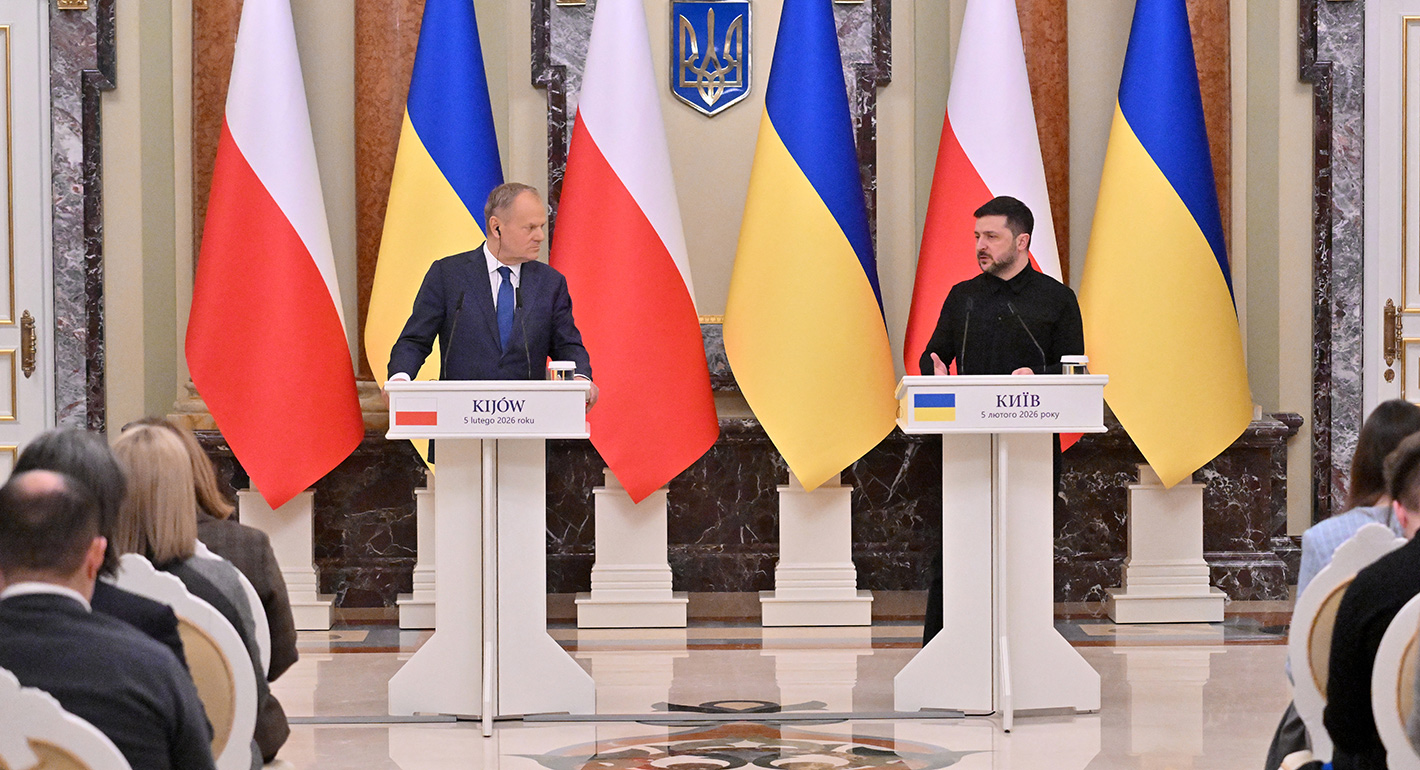
Source: Getty
The full-scale invasion cemented Ukraine’s determination to sever its ties with Russia; reimagining the Poland-Ukraine partnership can accelerate Kyiv’s westward alignment and improve the security of both countries.
“The new millennium, which has just begun, demands that Ukrainians and Poles rid themselves of their sorrowful memories.”—Pope John Paul II, 2003
Since Poland escaped the Soviet Union’s orbit in 1989 and Ukraine gained independence two years later, political leaders in Warsaw and Kyiv have attempted, often fitfully, to translate the potential offered by the two countries’ proximity and shared interests into a strategic partnership capable of weathering geopolitical tumult and internal politics. Generations of academics and civic leaders—including Pope John Paul II—have urged Poland and Ukraine to transcend their past to advance a common agenda, bilaterally and on the international stage, one reflecting their shared geopolitical objectives, cultural affinities, and economic interests. The most salient bond linking them is a history of subjugation by and rebellion against Russia. The mass suffering their populations endured in the twentieth century is beyond imagining: the starvation of the Ukrainian Holodomor, forced collectivization, the Soviet purges against ethnic Ukrainians and Poles, the German and Soviet invasions, and the Nazi Holocaust. This history remains the foundation stone as well as a source of bilateral irritation in the strategic culture of both countries.
Beyond a shared history of resistance, many Ukrainians share close cultural, linguistic, and familial linkages with Poles. Economically, the two countries compete in agricultural markets but are also complementary, with Ukraine specializing in raw material production (metals, grains, and cereals) while Poland exports energy and finished manufactured goods. Both countries have burgeoning, synergistic technology sectors, with Poland excelling in financial technology while Ukraine is now among the world leaders in military innovation. Ukraine’s eventual entry into the EU would also accentuate the eastward movement of the union’s center of gravity, with it and Poland the fifth- and sixth-largest members in terms of population and second- and seventh-largest in terms of territory.
Russia’s full-scale invasion of Ukraine in 2022 was a moment of existential peril but also a chance for Kyiv and Warsaw to transcend many of the blockages that have hobbled their relationship. The record has been mixed since. In the early months, Poland emerged as Ukraine’s staunchest supporter, hosting the logistics backbone for flows of military assistance and extending generous humanitarian aid and diplomatic backing for Ukraine’s EU aspirations. Over time, however, tensions re-emerged over migration, economic relations, and historical issues, with Poland focusing on the Volhynia massacres of 1943–1945, which the Polish parliament has characterized as “genocide.” In all cases, these frictions were amplified in Poland by politicians seeking electoral advantage and aggressive misinformation campaigns orchestrated by Russia.
Strategically, Poland remains in lockstep with Ukraine. Alignment on combating Russia, however, often appears to be the lowest common denominator rather than the foundation for a comprehensive partnership, as evidenced by the persistence of irritants and growing disillusionment in public opinion surveys in both countries. Some interpret the growing discord as an unavoidable consequence of “war fatigue” and unresolved historical issues. Is there an alternate path? How can Poland and Ukraine correct course and achieve the full potential of their relationship? First, political and thought leaders in both countries should refute narratives of division (often fanned by Moscow) and forthrightly acknowledge the fact that their countries have far more to gain if they both succeed and that each can play a major role in the other’s success. Second, history has valuable lessons to inform their relationship, including the contributions of Jerzy Giedroyc, the publisher of the famed émigré journal Kultura, and the example of how Finland and Sweden overcame a difficult past to develop a unique partnership, also forged to mitigate the threat from Russia.
In the initial weeks of the full-scale invasion, Poland stood out as the country most eager and able to help Ukraine morally, materially, and diplomatically. By stepping forward during one of Europe’s biggest crises since the Second World War, it also had the opportunity to emerge as a leader not only of NATO’s eastern flank but of Europe.
As millions of fleeing Ukrainians headed west into Poland, concerns that they would be shunted into refugee dormitories or even tent cities were quickly dispelled as Poles in all parts of the country welcomed displaced families into their homes, volunteered to help them resettle, and integrated their children in schools. Over 75 percent of Polish citizens provided assistance to Ukrainian refugees and one-in-ten opened their home to host them. Nearly 1 million Ukrainians remain in Poland while millions more continued to other countries. According to UN data, over 253,000 Ukrainian children are enrolled in Polish schools, 74 percent of whom arrived since 2022. Within weeks of the invasion, the Polish parliament passed a law granting special status to Ukrainian migrants, including expedited residency permission, full access to health care and education, and the right to work. Ukrainian migrants had been a fixture in Poland, particularly since the launch of Russia’s war in 2014. Higher wages, proximity, and linguistic similarities made Poland an attractive destination for many Ukrainians seeking seasonal or longer-term employment. The war-induced migration spike in 2022, however, was unique and Poland’s whole-of-society response has been lauded as a model for the community-based welcoming of refugees.
Poland was also the first country to send weapons to Ukraine, even as Russian forces were advancing on Kyiv. In subsequent days, Warsaw, Kyiv and Washington set up a logistics pipeline that surged weapons into the Rzeszow-Jasionka airport in southeastern Poland and then across the border into Ukraine by trucks and trains. While defense officials do not disclose the exact details of how arms shipments get into Ukraine, it is estimated that over 90 percent of the supplies did so via Poland. In the first three months of the war, Poland supplied nearly $2 billion in military assistance. Since, it has been the top supplier of tanks as well as a major supplier of infantry fighting vehicles, fighter aircraft, missile launchers, and ammunition. The Polish government also provided the bulk of Starlink terminals, which have been essential for drone warfare. As of October 31, 2025, it was estimated that Poland had allocated $6.25 billion in assistance to Ukraine, including $1 billion financial, $560 million humanitarian, and $4.64 billion military.
In the early months of the war, Poland emerged as a diplomatic leader, establishing itself as the staunchest advocate of institutionalizing Ukraine’s position in the European family.
In the early months of the war, Poland emerged as a diplomatic leader, establishing itself as the staunchest advocate of institutionalizing Ukraine’s position in the European family, leading efforts for the EU to grant it candidate status during the first weeks of the war and encouraging the union to adopt the harshest possible sanctions against Russia. Warsaw strongly supported the establishment of “solidarity lanes,” for which the EU lifted restrictions on Ukraine exporting its products overland through EU countries to international markets as well as those on Ukrainian truck drivers operating in the EU. Since the program began, Ukraine has been able to export 170 million tons of goods (largely grains and metal products), helping to offset the blockade on its Black Sea ports.
President Andrzej Duda’s statesmanship in the response to the war provided an immediate boost in Poland’s diplomatic status in the Western alliance. He hosted scores of world leaders and often acted as a de facto surrogate of President Volodymyr Zelensky, who did not leave Ukraine during the early months of the war. Warsaw’s prescience about Moscow’s aggressive intentions before the invasion also raised its diplomatic credibility. Its previous warnings having been greeted skeptically in other European capitals, the scale and brutality of Russia’s actions vindicated it.
Poland’s strong solidarity with Ukraine during the early phase of the war also validated the wisdom of the Giedroyc Doctrine, a strategy formulated in the 1950s by Jerzy Giedroyc, an exiled Polish intellectual who founded the influential Kultura journal. Recognizing the enduring threat posed by Russia, Giedroyc advocated that Poland prioritize developing close relations with Lithuania, Belarus, and Ukraine so that collectively they could more effectively counter it. Even though Giedroyc’s thesis was articulated while Poland was under Moscow’s domination and its three eastern neighbors were still trapped inside the Soviet Union, it sought to preempt any Polish revanchism, calling for Poland to accept the postwar borders that had been agreed at Yalta, including the loss of the formerly Polish-majority cities of Vilnius and Lviv. On the questions of history, Giedroyc believed in reconciliation on the basis of the “full truth,” which meant acknowledging that the Volhynia massacres were not the only trauma in the relationship and that “Poles need to understand the psychological attitude of the opposite side,” including the legacy of Polish imperialism.
The spirit of Giedroyc flourished at the beginning of the war, most notably on May 22, 2022, when Duda visited Kyiv and addressed Ukraine’s parliament. He recounted Poles’ generosity in welcoming Ukrainians, saying they were considered “guests” and not refugees. Zelensky declared that the full-scale invasion had ushered in a new era in relations and allowed him to reach a “new understanding” with his Polish counterpart. Duda echoed this theme, describing the two countries as “kindred nations from the same part of Europe” while Zelensky noted they were united in fighting for freedom and independence. On the sensitive topic of historical memory, both presidents paid homage to Pope John Paul II and cited his words from Lviv in 2001: “May the purification of historical memories lead everyone to work for the triumph of what unites over what divides, in order to build together a future of mutual respect, fraternal cooperation and true solidarity.” While Duda noted that Poles and Ukrainians have “mutually committed numerous errors,” Zelensky made no acknowledgement of Ukraine’s responsibility for these tensions haunting the relationship, claiming instead that the contradictions between Poland and Ukraine “no longer exist” and that Giedroyc’s dreams had been achieved.
This uplifting rhetoric reflected the emotions of the moment and the shared imperative of a united front against Russia. In retrospect, the first months of the war now appear a missed opportunity by both countries to use the outpouring of mutual goodwill to deepen trust, in part by making difficult gestures toward healing long-simmering historical pains.
Much of the initial glow of goodwill has faded since 2022, particularly on three salient issues: economic competition, Ukrainian refugees in Poland, and historical issues. Poland’s parliamentary elections in 2023 and presidential race two years later sharpened the rhetoric around these topics. While the national-conservative PiS party lost its control of the government in the parliamentary race to the Civic Platform, Karol Nawrocki, a candidate aligned with PiS and more populist parties, won the presidency in 2025, marking a sharp departure on Ukraine from Duda. Meanwhile, Russia has waged cognitive warfare to exploit and amplify divisions in both countries. These issues, as well as differing immediate security priorities, produced some gaps in the countries’ strategic alignment.
The flow of Ukrainians into Poland has helped fuel its impressive economic growth for more than ten years. Economists estimate that Ukrainian workers have boosted the country’s GNP by 0.5 to 2.4 percent annually since 2013, and that they now constitute 5 percent of the workforce. Experts point out that the economy would face serious shortages of semi-skilled and skilled labor if not for the contributions of Ukrainians over the last dozen years. As a result, some analysts see the presence of Ukrainians as a way to mitigate Poland’s demographic challenge, an issue that could create friction when the war ends as Ukraine, facing even worse labor shortages, will want to encourage as much return migration as possible while Poland will not want to lose a key driver of growth.
Despite the benefits for Poland, tensions are surfacing at the grassroots level in a variety of ways. Negative stereotypes about Ukrainian migrants now proliferate, including that “refugees” include rich young men who are cruising through Warsaw in luxury cars while avoiding fighting for Ukraine, that Ukrainian women are competing in the dating pool, that Ukrainian children are forming separate cliques in schools and refusing to integrate with Polish pupils, and that the influx of Ukrainians has increased the cost of housing, particularly in Warsaw. These tropes reflect the paternalistic attitude of some Poles as well as the success of many Ukrainian migrants. As one Polish interviewee noted, Poles are generous toward Ukrainians when they are poor and helpless, but less so when they do well.1 Some testimonies by Ukrainians support this observation.
During the parliamentary and presidential election campaigns in 2023 and 2025, some parties and candidates instrumentalized the migration issue to score political points. Most notably, the winner of the presidential contest, Karol Nawrocki, campaigned on a platform of ensuring Polish citizens would be prioritized over migrants for medical, educational, and other social benefits, while accusing Zelensky of showing a “lack of gratitude to the Polish nation” for its assistance. While the government in place since December 2023 has pushed back against false claims about migrants, public support for admitting more Ukrainian refugees dropped has from 80 percent in 2022 to 48 percent in 2025.
One deeper point of friction is the extent to which Ukrainian migrants want to integrate and the expectations of Poles for them to do so. Poland was a highly homogenous country with negligible levels of immigration since the Second World War until recent years when its high-growth economy has attracted migrants from elsewhere in the EU, South Asia, and Ukraine. While the government and the key nongovernmental organizations dealing with migrants favor a balanced approach to integration, the presence of 1.5 million Ukrainians has catalyzed a debate about whether Poland should use a rigid assimilationist model or introduce elements of multiculturalism, such as the establishment of Ukrainian schools. Public opinion is divided, but the most popular approach is a moderately assimilationist one. Ukrainians in Poland are also divided; some see integration as the path to success while others want to preserve their culture and traditions while residing outside their native country. According to one former Ukrainian politician,2 Poles view Ukrainians as easy to assimilate and capable of being absorbed without the complications associated with migrants from other parts of the world, and for many Ukrainians this assumption is insulting. “Poles don’t want us to be Ukrainians in Poland,” he said.
The divergence between Poland’s strategic interests and domestic politics has also surfaced in the evolution of trade issues since the establishment of the “solidarity lanes” in May 2022. At the macro level, the policy has been a great success: since the start of the full-scale invasion, approximately 40 percent of Ukraine’s exports (including 20 percent of its agricultural products) have transited through the EU, which is a critical lifeline as transit through the Black Sea has been limited and at times completely cut off by Russian attacks on Ukrainian ports.
The impact on farmers in Poland became an electoral issue and then spiraled into a serious bilateral crisis.
The impact on farmers in Poland, however, became an electoral issue and then spiraled into a serious bilateral crisis that continues to color the relationship. Even though Ukraine’s exports were supposed to transit EU countries en route to other markets, farmers in Poland and neighboring countries complained that Ukrainian grain was undercutting prices in their domestic markets as well as straining storage facilities and port infrastructure. Recognizing the market disruptions, the EU provided compensation to the affected countries but, due to the continued outcry from agricultural interests, Poland alongside Hungary and Slovakia defied EU policy by imposing unilateral bans on certain Ukrainian imports in 2023, prompting Kyiv to file a complaint at the World Trade Organization. Zelensky used his address at the UN General Assembly in September 2023 to call out “friends” in Europe for playing politics with the grain issue. In response, Poland’s Prime Minister Mateusz Morawiecki warned Zelensky to “never insult Poland again.” In early 2024, Polish farmers escalated the dispute when they blocked border crossings with Ukraine, causing massive delays. Many Ukrainians saw this as a fundamental breach of trust affecting their survival, given the criticality of the Polish transit route for weapons shipments. Even more shocking for Ukrainians, Polish protesters dumped and spoiled grain from Ukraine, causing a furious reaction from Ukrainian officials, who noted that their country’s farmers had planted and harvested the crops despite landmines and aerial attacks from Russia.
The grain issue has been directly tied to changes in public opinion in Poland and Ukraine, demonstrating how emotionally resonant topics can spin out of control in the context of heated election campaigns and wartime tensions. Over time officials in Kyiv, Warsaw, and Brussels have found compromises that balance the interests of the various stakeholders in a new equilibrium. But the challenge is for leaders in Ukraine and Poland to take steps that reverse the damage to public trust to ensure the effects of the crisis do not linger for the long term.
Since the beginning of the war, there has been little progress on the more complex issues of historical memory. Previously, Poland had been disappointed by Zelensky’s approach. When he came to office in 2019, officials in Warsaw were stunned by his assertion that he had never learned about the Volhynia massacres before and was unaware of the joint efforts by both countries over the preceding twenty years to address their outstanding grievances.3 There was a breakthrough in 2020 as Kyiv agreed to allow the exhumation, identification, and reburial of the victims of the massacres. However, Ukraine delayed allowing the work to proceed until 2025, relenting after pressure from Poland, including cases in which regional officials in eastern Poland froze contacts with their Ukrainian counterparts in protest. Even the most pro-Ukrainian Polish officials privately express annoyance that the government in Kyiv did not respond positively to suggestions that it make gestures to acknowledge Ukraine’s responsibility for the Volhynia massacres as a way to acknowledge Polish generosity.
For their part, many Ukrainians (and a former Polish official) have criticized Poland for politicizing questions of history and for fixating on Volhynia without acknowledging the wider context of those wartime events or the wider sweep of Polish-Ukrainian history. On the issue of wartime memorials, they note that Poland has yet to restore to its original state a site on its territory marking the graves of Ukrainian partisans that was vandalized in 2015 and 2020. Nor are they persuaded by Polish politicians’ statements that expressing contrition for past wrongs would demonstrate “gratitude” to Poland; Ukrainians believe that the fact that their warfighting also serves to defend Poland and the rest of Europe is more than sufficient compensation for any hardships experienced by those protected by NATO’s security umbrella. Moreover, Ukrainians are loath to accept being labeled as perpetrators of atrocities, particularly while they are suffering from Russian aggression. Politics also play a role for Ukraine’s government, which since independence has taken steps to elevate the status of the Ukrainian Insurgent Army and its leader, Stepan Bandera, for their role in resisting Soviet domination, not because of their attacks on ethnic Poles in Volhynia.
Rancor over history peaked in 2024–2025 when, during the heated presidential election campaign, Nawrocki said he would oppose Ukraine’s EU and NATO aspirations unless the Volhynia issue was resolved. Prime Minister Donald Tusk also connected the issues in August 2024, noting that Ukraine had to reach “European standards” of “political and historical culture” before joining the EU and that friendship between the countries needed to be based on “historical truth.” Ukrainians bristled at the idea of linking historical issues to their EU aspirations, not to mention the suggestion that their “culture” is deficient. One former senior Ukrainian official interviewed considers such statements as reflecting a desire by Poles to “guide” Ukraine, in a condescending manner, through the EU accession process.
Zelensky’s visit to Warsaw in December 2025 provided an opportunity for personal engagement on the topic directly with Nawrocki, who underscored the importance of historical issues by including representatives of the Institute of National Remembrance (which Nawrocki previously led) and their Ukrainian counterparts in the presidential meeting. While the visit lowered the temperature, it remains to be seen whether politicians on both sides will resist the urge to instrumentalize complex and disputed narratives. The previous four years have shown that much more needs to be done between the two countries’ presidents, governments, and societies to change how they address history issues.
Russia has long sought to exploit and exacerbate Poland-Ukraine tensions with information operations online and through traditional media. One Polish analyst has summarized the Russian approach: “They knew they wouldn’t make Poles Russophiles, so they decided to turn them into Ukrainophobes.” The 2023–2025 period presented unique circumstances for such cognitive warfare as Poland held its parliamentary and presidential elections against the backdrop of growing war fatigue, the presence of nearly 1 million refugees, and farmers’ angst, as well as the ever-present shadow of historical grievances. One study detailed how Russian-linked social-media accounts created and spread false information during the farmers’ protests in 2024, concluding that they were “attempting to sow division between Poland and Ukraine via a multi-prong campaign that exploits ongoing protests by Polish farmers.” The Polish social media space has also been plagued by other emotionally charged disinformation, including a claim that native children were being evicted from oncology wards to make room for Ukrainian patients.
Russia has long sought to exploit and exacerbate Poland-Ukraine tensions with information operations online and through traditional media.
In addition to amplifying anti-Ukrainian sentiment within Poland, Russian outlets have alternately propagated disinformation in Ukraine that accused Warsaw of harboring plans to reclaim territory in western Ukraine or of abandoning Ukraine and blocking its efforts at integration with the EU. Early in the war, for example, Russia’s foreign intelligence chief, Sergey Naryshkin, accused Poland of working with the United States to restore Polish control over parts of western Ukraine. Subsequently, Moscow pivoted to weaponizing tensions in relations by propagating the claim that Poland was an unreliable partner and that the farmers’ protests had cut off the flow of Western military assistance to Ukraine.
It is difficult to assess the overall impact of these Russian efforts, but one incident suggests it is not trivial. In September 2025, immediately following the incursion by Russian drones into Poland, social-media accounts linked to Russia launched a campaign to sow doubts in the country about the provenance of the attack and the effectiveness of the response by its government and NATO allies. One survey in Poland showed that 38 percent of social-media comments blamed Ukraine for the attack, which can be seen as a result of Russia’s success at contaminating the country’s digital ecosystem. Similarly, in one 2024 poll in Ukraine, 30 percent of respondents said there may be some truth to the claim that Poland covets parts of the country—one of Russian propaganda’s most incendiary lies—and 4 percent that it was true.
As it has gone on, the war has exposed tension within Poland’s security establishment about how to balance the need to continue fortifying the country’s defenses with its interest in providing support for Ukraine’s security. As early as November, 2022, an incident created unnecessary tension between the countries. During a Russian bombardment of western Ukraine, a Ukrainian air-defense missile went off course and crossed the border into Poland, where it killed two people in a small village. The facts of what happened were established within hours and later confirmed by forensic investigations, and there was no doubt among NATO allies that this was an accident for which Russia bore ultimate responsibility. Nonetheless, Zelensky blamed Russia for what had happened, which he characterized as an escalation against NATO countries. His comments, and those of other Ukrainian officials, alarmed Polish officials, raising suspicions that Kyiv wanted to use the accident to provoke a direct military confrontation between NATO and Russia. Privately, Polish officials still express frustration that their Ukrainian counterparts dissembled about the incident and that Kyiv has not apologized for the loss of life.
Poland’s growing economy and political consensus has allowed it to become the NATO member with the highest defense spending as a share of GDP and to provide nearly 1 percent of its GNP to supporting Ukraine. But it is clear from interviews that many Polish officials view Ukraine as a buffer state rather than as a full-fledged ally integrated with Europe, at least for the medium term. Warsaw’s lukewarm approach to the Coalition of the Willing initiative to supply Ukraine with military support, including troops following a ceasefire, illustrates this. Despite its location and capabilities, Poland has not been a lead player in this and has ruled out sending troops, though some political leaders have informally discussed the possibility of it playing a role in air policing in the future. Polish officials also guard their country’s success in “NATO-izing” its defense, most notably the deployment of over 10,000 U.S. troops at several locations, and they want to ensure that any new commitments to Ukraine do not draw from these resources. Poland’s internal political conflicts have also inhibited Warsaw from punching at its weight on European security issues as demonstrated by Nawrocki’s veto of legislation that would facilitate Poland’s participation in the EU’s SAFE common borrowing mechanism to augment defense spending.
Ukraine has reacted to Poland’s ambivalence by devoting more attention to relations with other European countries, including the Nordic states, which have developed creative tools to provide assistance to Ukraine’s defense sector. In 2023, Zelensky advocated Germany getting a permanent UN Security Council seat, a gesture that was unwelcome in Warsaw. The disruptions at the border also spilled over into the military debate: for example, one Ukrainian defense-sector businessman told the author that he could not trust the reliability of Polish defense firms after the grain crisis.4
The Polish scholar Tadeusz Iwański has suggested that “inspiring surges” of goodwill between Poland and Ukraine are atypical, and that their relationship is more likely to be characterized by conflicts over history, memory, trade, and politics, particularly as each country becomes increasingly ambitious and self-reliant. The war has shown this pattern, highlighting the value of the partnership during crises but also exposing each country’s vulnerability, which taps into their insecurities about the reliability of their neighbor. Recalling that the two countries were once home to famous astronomers (Yuriy Drohobych and Nicolaus Copernicus), Zelensky noted in his May 2022 speech that Ukrainians and Poles stand side by side during dark periods of eclipse. The question is how they can work together when the sun is shining as well as during dark periods.
Poland and Ukraine may benefit from studying the history of Finland and Sweden. For a very long time, several contentious issues clouded the two Nordic countries’ relations, including the legacy of Sweden’s political and economic domination, some Finns’ sense of their country being abandoned to Russia in 1809, territorial disputes, and resentment about minority language rights. Notwithstanding this, they have worked to develop one of the tightest partnerships in the world. Security, specifically a shared approach to defending themselves against the threat from Russia, is the foundation of the relationship. Recognizing the imperative of maintaining unity for this shared approach has enabled them to adopt a mutually respectful attitude on historical issues and reach compromises on language rights.
As middle powers, Sweden and Finland have also recognized that they enjoy a multiplier effect when they act in concert within international organizations. This approach was symbolized in 1995 when they joined the EU in tandem. Similarly, in 2022, they consulted closely over how to respond to Russia’s attack on Ukraine. Within three months they announced their intent to pursue NATO membership, breaking their decades-long policy of neutrality. This decision was not risk-free as Moscow had repeatedly stated its opposition to further NATO expansion and there was concern in Finland that it could lash out before membership was achieved. By negotiating and joining together, the two countries reinforced their strategic commitment to viewing security matters jointly while eliminating any possibility that Russia could exploit any difference between them.
Changes in European security should spur Poland and Ukraine to think anew about how to deepen their partnership.
Much as wars and other crises drove Finland and Sweden to forge their partnership, the changes in European security should spur Poland and Ukraine to think anew about how to deepen theirs. The developments since Donald Trump returned to the U.S. presidency in January 2025 have made this task even more urgent as they raise profound questions about the future of the transatlantic alliance, including the possibility that of NATO’s fragmentation or dissolution. At a minimum, Europe will be required to shoulder a larger share of the defense burden; as the largest countries in Eastern Europe, Poland and Ukraine will need to assume leadership roles in all elements of European security, from defense production to providing troops to deter aggression. As a first step, they can use Poland’s participation in the Coalition of the Willing to consider practical ways to deepen their security cooperation, for example, on defense production, intelligence sharing, and countering Russian disinformation.
As part of a renewed dedication to strategic alignment on security matters, Poland and Ukraine could also refresh their approach to questions that have stoked tensions in recent years. As a first step, their leaders should do more to point to the benefits to both countries from the flow of people, goods, and investment across their border. Some Polish officials have highlighted the positive role of Ukrainian migrants in Poland’s growing economy but others continue to depict them as an economic drain. For its part, Ukraine benefits from remittances from Poland. Poland will also likely be a disproportionately large source of investment as Ukraine’s EU accession process continues, giving them the chance to develop integrated manufacturing supply chains. As a result of the war, and particularly of the incursion by Russian drones into Polish airspace in September 2025, the two sides are stepping up their defense-industrial cooperation as Warsaw recognizes that Ukraine is a global leader in crucial cutting-edge military technology. While competition is likely to continue when it comes to agriculture, they are likely to fare better if they identify and pursue common interests within the EU and in global markets. One analyst has suggested that the EU’s conclusion of a free-trade agreement with Latin American countries should be a wake-up call for Polish and Ukrainian farmers to cooperate more closely to defend their interests.
Finally, the two countries should dedicate themselves to pursuing their dialogue about history through Giedroyc’s framing, which approaches the past holistically and acknowledges that each side bears responsibility for causing the other pain. As Józef Łobodowski wrote in Kultura in 1952, “This dispute is not limited to the slaughter of Poles by Ukrainians, . . . Poles need to understand the psychological attitude of the opposite side. There is no way to effectively cure the wounds, if we do not know their causes . . . both sides are guilty and we will not make a step forward as long as we deny this sad truth.” Assigning historians from both sides to study these issues would be a constructive first step, but much would depend on politicians resisting the temptation to use the past as an arena of contestation.
Most importantly, there is no disagreement between Poland and Ukraine on the most relevant historical fact: that Russia has long directly threatened their security and tried to prevent their integration with Western Europe. The full-scale invasion cemented Ukraine’s determination to sever its ties with Russia; reimagining the Poland-Ukraine partnership can accelerate its westward alignment and improve the security of both countries.
Nonresident Scholar, Russia Eurasia Program
Eric Green is a nonresident scholar at the Carnegie Endowment for International Peace.
Recent Work
Carnegie India does not take institutional positions on public policy issues; the views represented herein are those of the author(s) and do not necessarily reflect the views of Carnegie, its staff, or its trustees.
The war in Ukraine has demonstrated that India needs to establish a strong domestic space economy in order to weather geopolitical storms.

Konark Bhandari
As the crisis in Crimea deepens, the formal arguments between Russia and the West are about two perennial themes in international politics—sovereignty and intervention.
C. Raja Mohan

This piece argues that India’s central challenge is not managing a single flashpoint but resolving the underlying tension between expansion and institutional coherency of the BRICS grouping.

Vrinda Sahai
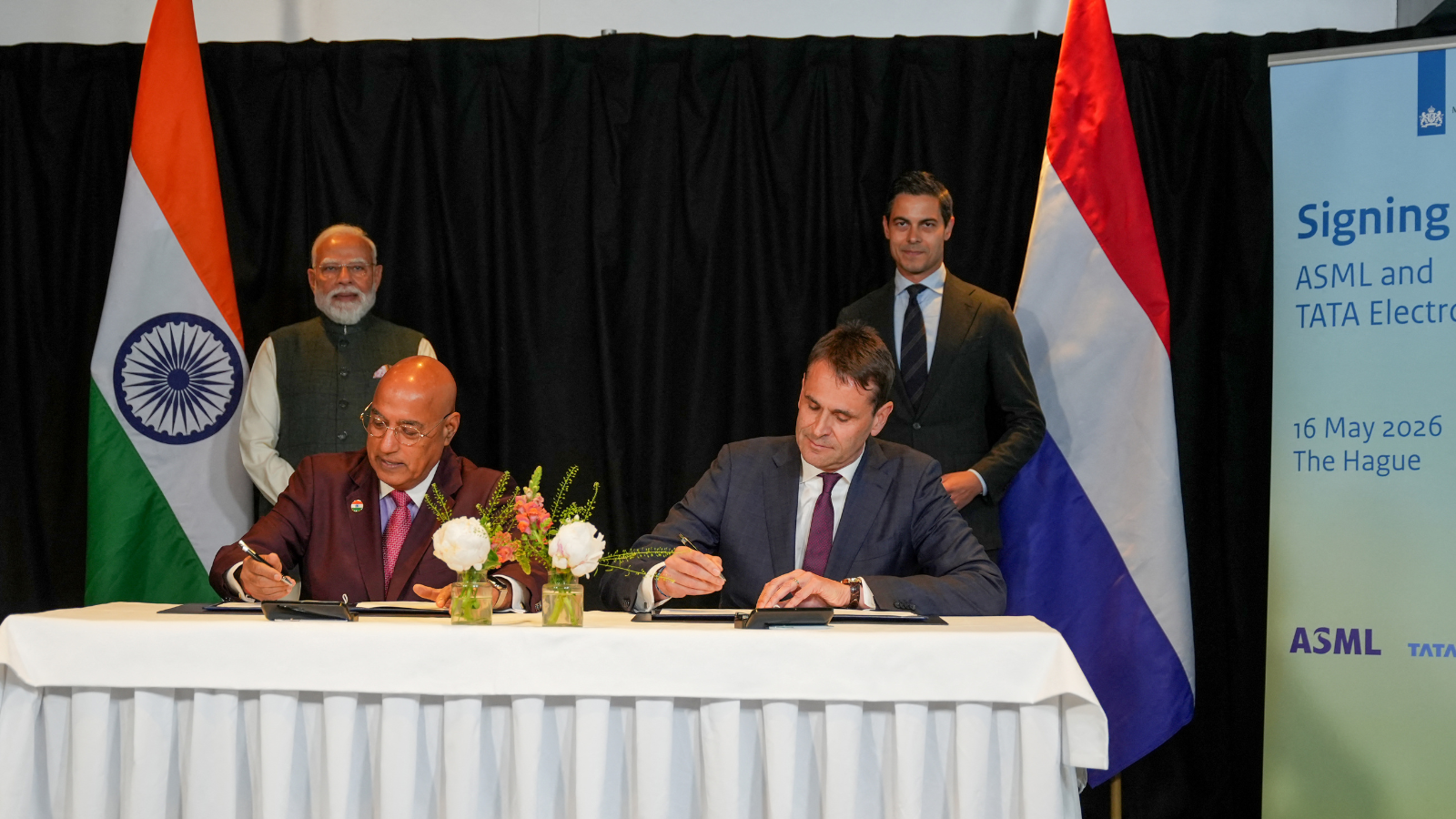
The ASML MoU with Tata Electronics is an indicator of how far the Indian semiconductor ecosystem has come. This ecosystem has been years in the making and represents real commercial logic.
Konark Bhandari

A partnership between India, a country of subcontinental size, and Africa, a continent of fifty-four countries, may seem asymmetric until one notes that both are home to nearly the same number of people—1.4 billion. This essay spells out the existing challenges to the partnership, its optimal potential, and the possible pathways to realize it over the next quarter-century.

Rajiv Bhatia