

Commentary
The Zaidi government’s objective to collect weapons is constrained by regional conflict, but it can take certain measures at home.
Ali Al-Mawlawi
{
  "authors": [
    "John Polcari"
  ],
  "type": "commentary",
  "blog": "Diwan",
  "centerAffiliationAll": "dc",
  "centers": [
    "Carnegie Endowment for International Peace",
    "Malcolm H. Kerr Carnegie Middle East Center"
  ],
  "collections": [],
  "englishNewsletterAll": "menaTransitions",
  "nonEnglishNewsletterAll": "",
  "primaryCenter": "Carnegie Endowment for International Peace",
  "programAffiliation": "MEP",
  "programs": [
    "Middle East"
  ],
  "projects": [],
  "regions": [
    "Middle East",
    "Syria",
    "Levant"
  ],
  "topics": [
    "Political Reform"
  ]
}
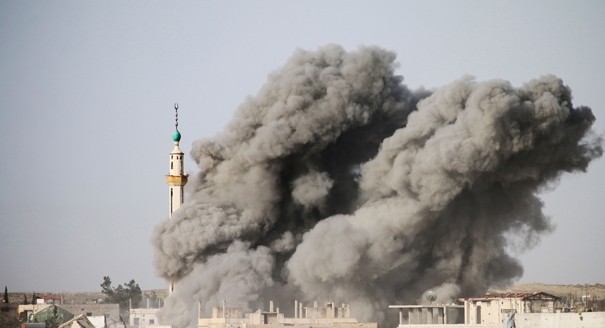
Source: Getty
On the margins of a Carnegie conference, Rouba Mhaissen and Galip Dalay discuss a solution to the Syrian conflict.
The conflict in Syria has grown from a democratic uprising to an intractable conflagration, threatening the stability of the Middle East. It has also created a refugee crisis that has rippled across the globe. The recent chemical weapons attack in Khan Sheikhoun on April 4 and U.S. retaliation against a Syrian regime airbase on April 6 have spurred further debate over the U.S. role in the conflict and how the Trump administration will approach it.
To address these issues, Carnegie’s Middle East Program gathered experts from around the world on April 5 for a conference titled “Syria’s Trajectory and Challenges for the United States.” The aim was to discuss the perspectives of various stakeholders, potential political solutions to the conflict, and paths forward for Syria’s economic reconstruction and a return of refugees.
In the first of a series of interviews conducted by Diwan on the margins of the conference, Rouba Mhaissen, founder and director of Sawa Aid, discussed prospects for a formal political settlement and the elements needed for an enduring solution. In a second interview, Galip Dalay, research director at Al-Sharq Forum and a senior associate fellow at the Al-Jazeera Center for Studies expanded on Turkish views of the conflict.
John Polcari
Former Program Coordinator and Research Assistant, Middle East Program
Carnegie does not take institutional positions on public policy issues; the views represented herein are those of the author(s) and do not necessarily reflect the views of Carnegie, its staff, or its trustees.
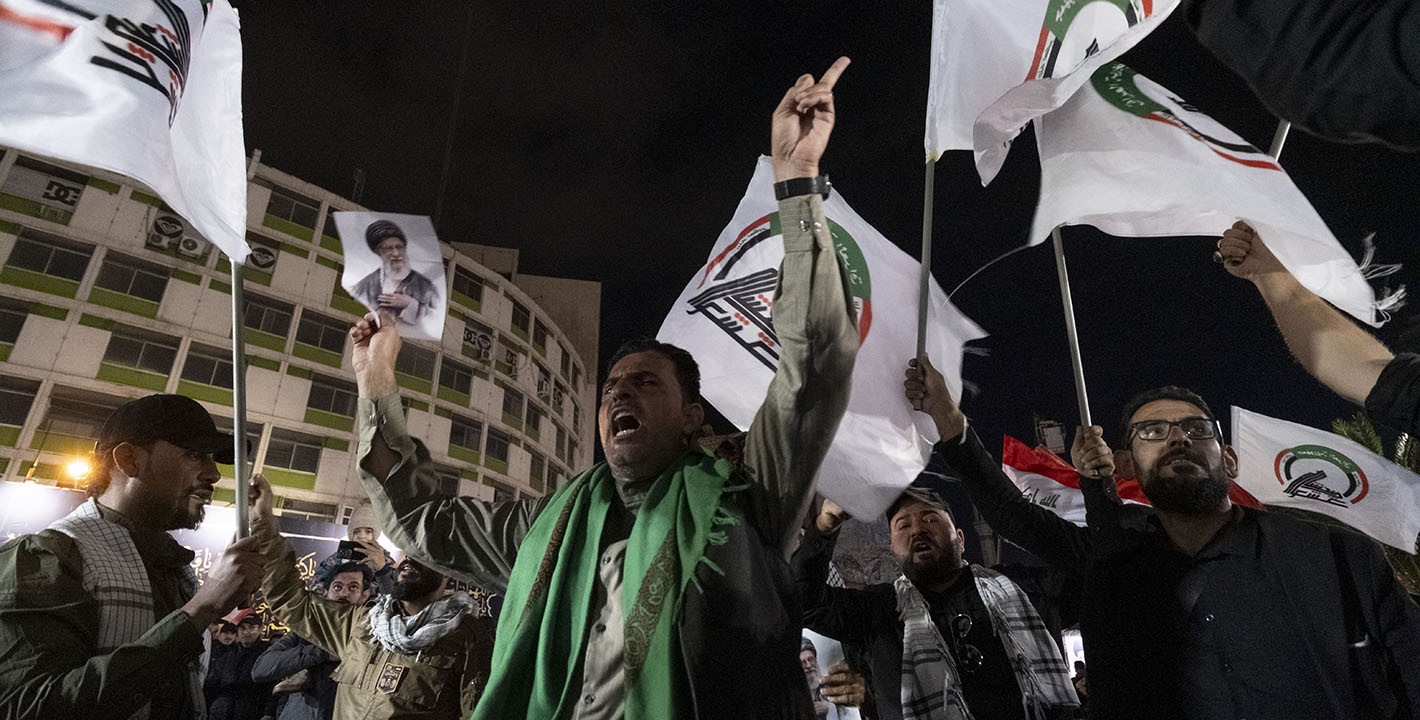
The Zaidi government’s objective to collect weapons is constrained by regional conflict, but it can take certain measures at home.
Ali Al-Mawlawi

Huawei pushed hard to enter the Egyptian data centers market, until the Americans made a better offer.

Angie Omar

The accord represents a pivotal moment in the region to avert a security vacuum in the Gulf.


Azeema Cheema, Mohanad Hage Ali

In an interview, Jason Burke discusses his sweeping account of the “revolutionists” who so shaped the 1970s and early 1980s.

Michael Young
In an interview, Sohaib Jawhar analyzes the profound changes in the ties between the neighboring countries.
Michael Young