

Commentary
Michael Young
{
  "authors": [
    "Michael Young"
  ],
  "type": "commentary",
  "blog": "Diwan",
  "centerAffiliationAll": "dc",
  "centers": [
    "Carnegie Endowment for International Peace",
    "Malcolm H. Kerr Carnegie Middle East Center"
  ],
  "collections": [],
  "englishNewsletterAll": "menaTransitions",
  "nonEnglishNewsletterAll": "",
  "primaryCenter": "Malcolm H. Kerr Carnegie Middle East Center",
  "programAffiliation": "MEP",
  "programs": [
    "Middle East"
  ],
  "projects": [],
  "regions": [
    "Iran",
    "Middle East"
  ],
  "topics": [
    "Political Reform",
    "Nuclear Policy"
  ]
}
Source: Getty
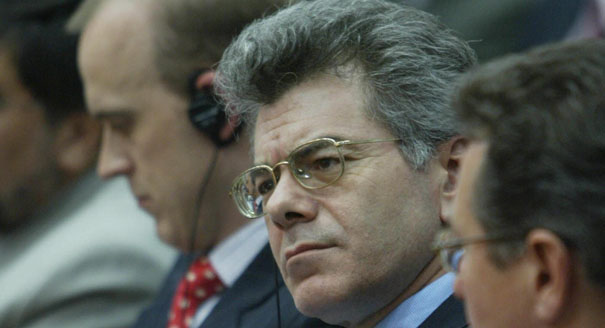
Gary Samore discusses the nuclear deal with Iran and says its flaws may eventually be corrected.
Gary Samore is executive director for research at Harvard University’s Belfer Center for Science and International Affairs. Samore is a former member of the Secretary of Energy Advisory Board (2015–2017) and served as White House coordinator for arms control and weapons of mass destruction under president Barack Obama. He also served as special assistant and senior director for nonproliferation and export controls under president Bill Clinton. Diwan caught up with Samore in late September, in order to get his views of the Joint Comprehensive Plan of Action, the nuclear deal with Iran, amid signs that President Donald Trump may be considering withdrawing from it.
Michael Young: You were closely involved in negotiating the Joint Comprehensive Plan of Action (JCPOA), the nuclear deal with Iran. What do you say to opponents of the deal who say that it merely delays the problem of Tehran’s acquiring nuclear weapons, without resolving the issue in the long term?
Gary Samore: I agree that the Iran nuclear deal does not resolve the threat of Iran seeking to acquire nuclear weapons in the long term. However, the deal buys 10–15 years of very significant constraints on Iran’s ability to produce fissile material as well as intrusive inspection provisions. That is a major achievement, but it does not solve the problem. In my view, no diplomatic agreement can solve the problem as long as the current government rules in Tehran.
MY: How do you interpret President Donald Trump’s approach to the JCPOA? On the one hand he has certified it and effectively extended the exemption of sanctions imposed on Iran; on the other he has called the deal an “embarrassment.” What is going on?
GS: President Trump seems to have developed a very strong personal dislike of the Iran nuclear deal and would like to trash it. However, Secretary of State Rex Tillerson and his foreign policy team know that it would be colossally stupid for the United States to renege on the nuclear deal without cause, because it would isolate the U.S. from the other five permanent members of the United Nations Security Council plus Germany, give Iran a free hand to resume its nuclear activities, and distract attention from the military campaign to defeat the Islamic State. Therefore, Tillerson hopes to convince Trump to continue to waive sanctions under the nuclear deal, in exchange for European support for a U.S. proposal to negotiate a follow-on agreement with Iran that corrects flaws in the current nuclear deal. I believe that Tillerson will be successful.
MY: Assuming that the Trump administration were to withdraw from the deal, is there any military option available to ensure Iran does not get nuclear weapons?
GS: The U.S. has the military ability to destroy Iran’s facilities to produce fissile materials. However, Iran could rebuild these facilities over time. The only way to “ensure” that Iran does not get nuclear weapons is to invade and occupy the country and replace the government. I do not believe the U.S. is prepared to conduct such an extensive military operation at this time.
MY: Are there, as Trump has claimed, any realistic ways to tighten the JCPOA that would be acceptable to both sides?
GS: It is difficult to say. The U.S. can seek to strengthen the nuclear deal in several ways—such as extending the “sunset clauses” or adding restrictions on ballistic missile development—but it must also offer Iran additional sanctions relief, such as eliminating the U.S. trade embargo on Iran. Whether Tehran would accept such a bargain is not clear.
MY: Does Iran’s testing of ballistic missiles constitute a violation of the nuclear deal? And if not, how should we read the Islamic Republic’s decision to do so, particularly as such missiles could eventually be fitted with nuclear warheads?
GS: Iran’s testing of ballistic missiles is not a violation of the deal. Ballistic missiles are dual-purpose weapons. For countries with a very weak air force such as Iran, ballistic missiles provide a long-range conventional strike capability, as we saw during the Iran-Iraq war. Ballistic missiles also provide a nuclear strike option if Iran eventually decides to build nuclear weapons.
MY: How keen was the Obama administration to reach the nuclear deal? And was it so keen, as some critics have claimed, that it left significant loopholes in the agreement?
GS: President Barack Obama thought that the JCPOA was essential to stop Iran from acquiring nuclear weapons and to prevent war in the region. In order to get the deal, he was prepared to offer concessions to Iran, such as allowing Iran to retain a research and development program for advanced centrifuges and accepting that the physical limits on Iran’s fissile material production would be lifted over 10–15 years. Whether a better deal could have been negotiated is impossible to say.
MY: Why do you feel Iran went along with the JCPOA, and how interested is it to preserve the nuclear agreement?
GS: Iran went along with the deal in order to get sanctions relief. In addition, it accepted the nuclear deal because it did not require Iran to permanently give up the option to develop a nuclear weapons production capacity. Iran is very interested in preserving the nuclear deal at this time because it continues to need sanctions relief to develop its economy.
MY: More broadly, are we entering a new phase in the post-Cold War world, where a return to nuclear weapons and weapons of mass destruction is becoming more acceptable to states? And if so, what can be done about it?
GS: No, we are not entering a new phase. The nine countries that currently possess nuclear weapons—the U.S., Russia, China, France, the United Kingdom, India, Pakistan, Israel, and North Korea—will not give them up, but the number of additional countries that might seek nuclear weapons in the future is very small, limited only to certain countries in East Asia and the Middle East, including Iran.

Editor, Diwan, Senior Editor, Malcolm H. Kerr Carnegie Middle East Center
Michael Young is the editor of Diwan and a senior editor at the Malcolm H. Kerr Carnegie Middle East Center.
Recent Work
Michael Young
Michael Young
Carnegie does not take institutional positions on public policy issues; the views represented herein are those of the author(s) and do not necessarily reflect the views of Carnegie, its staff, or its trustees.
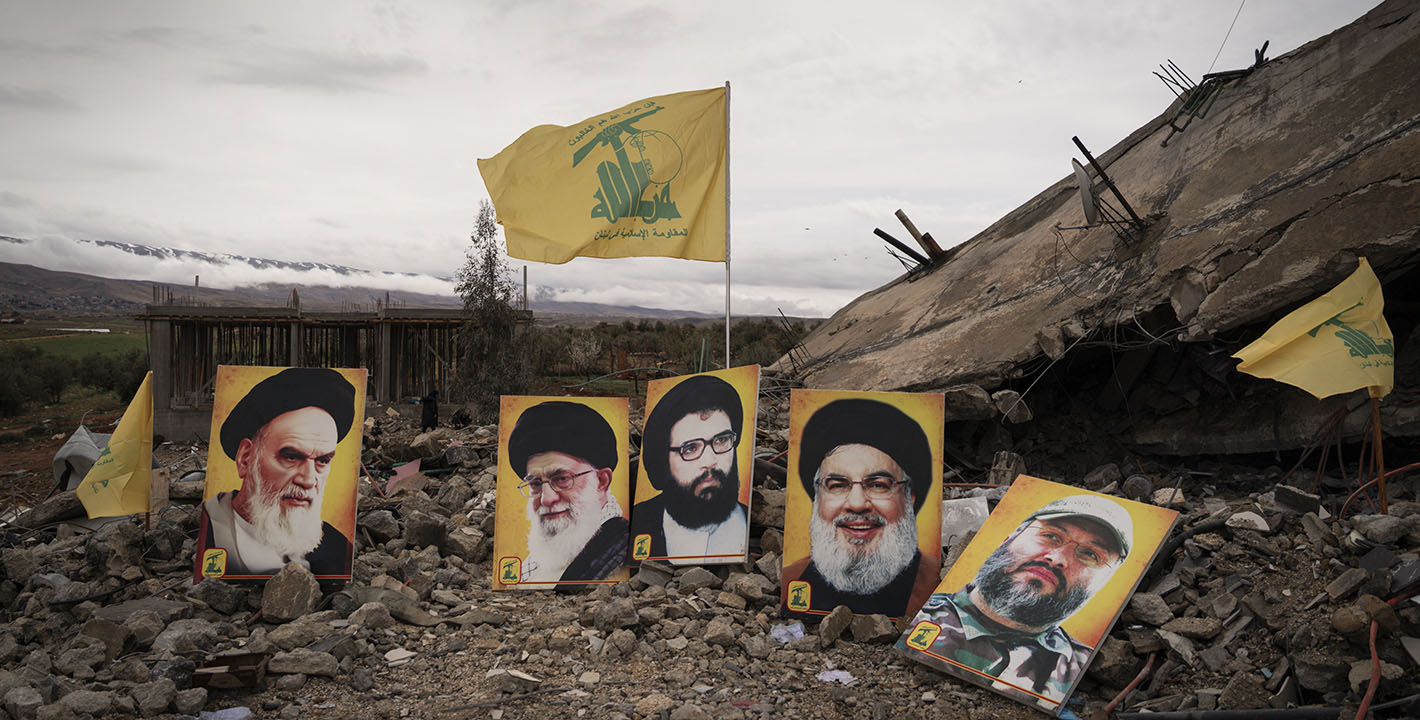
The party’s objectives involve tying together the Lebanese and Iranian fronts, while surviving militarily and politically at home.
Mohamad Fawaz
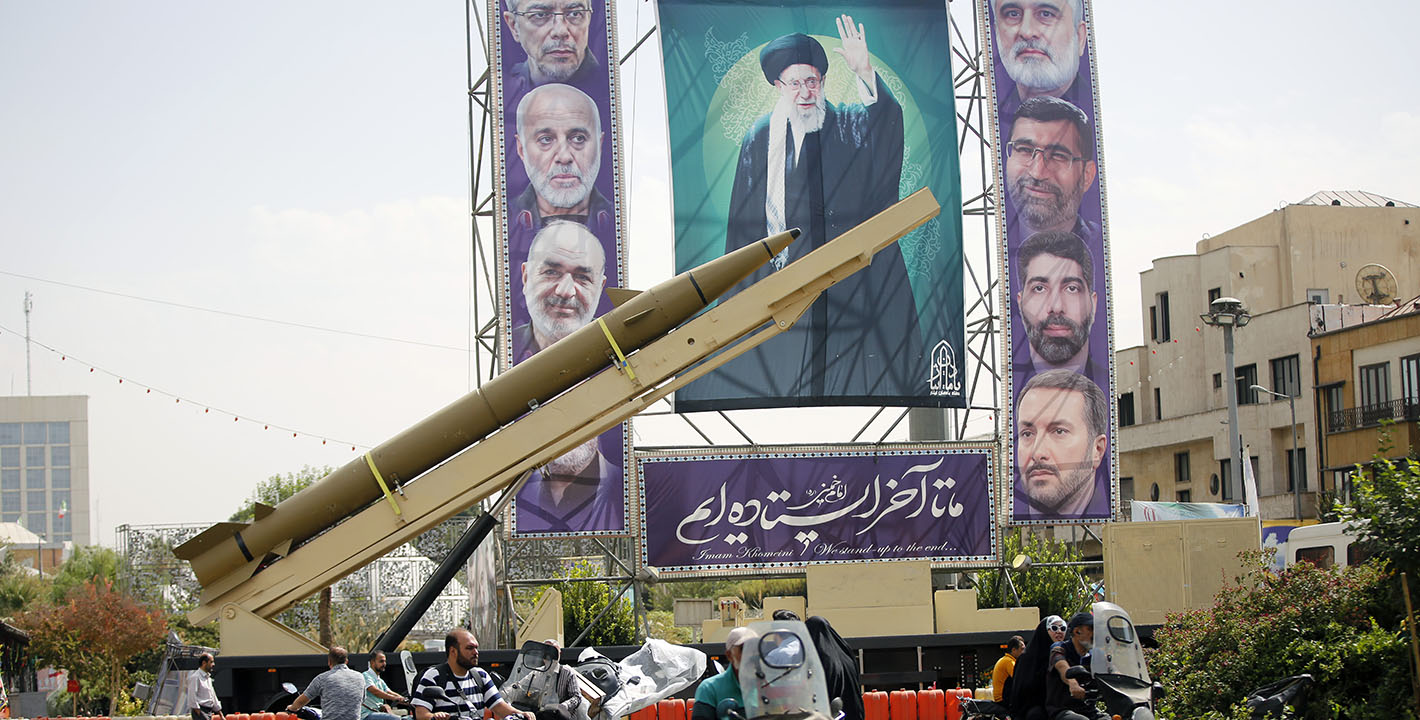
In an interview, Hamidreza Azizi discusses how Tehran has adapted in real time to the conflict with the United States and Israel.
Michael Young
In an interview, Roger Diwan discusses where the global economy may be going in the third week of the U.S.-Israeli war with Iran.

Nur Arafeh
In an interview, Andrew Leber discusses the impact the U.S. and Israeli war against Iran is having on Arab Gulf states.
Michael Young
In an interview, Sergei Melkonian discusses Armenia’s and Azerbaijan’s careful balancing act among the United States, Israel, and Iran.

Armenak Tokmajyan