

Commentary
Michael Young
{
  "authors": [
    "Michael Young"
  ],
  "type": "commentary",
  "blog": "Diwan",
  "centerAffiliationAll": "dc",
  "centers": [
    "Carnegie Endowment for International Peace",
    "Malcolm H. Kerr Carnegie Middle East Center"
  ],
  "collections": [
    "Inquiring Minds"
  ],
  "englishNewsletterAll": "menaTransitions",
  "nonEnglishNewsletterAll": "",
  "primaryCenter": "Malcolm H. Kerr Carnegie Middle East Center",
  "programAffiliation": "MEP",
  "programs": [
    "Middle East"
  ],
  "projects": [],
  "regions": [
    "Gulf",
    "Saudi Arabia",
    "Middle East"
  ],
  "topics": [
    "Political Reform"
  ]
}
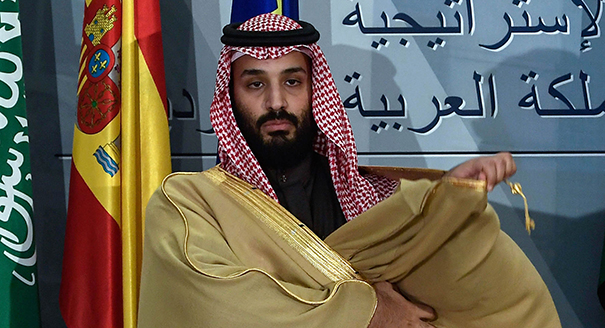
Source: Getty
A regular survey of experts on matters relating to Middle Eastern and North African politics and security.
Madawi Al Rasheed | Visiting professor at the Middle East Center, London School of Economics
Mohammed bin Salman’s presence at the G20 meeting in Argentina will add insult to injury. With everything pointing to his central role in the murder of journalist Jamal Khashoggi, his appearance will send a clear message to a world awaiting real justice. It will be interpreted as reassurance by Saudi Arabia’s close economic and political partners that the regime in general and Mohammed bin Salman in particular will remain unscathed by a crisis of a global magnitude.
His appearance will tarnish all states present at the meeting and implicate them in overlooking a serious breach of diplomatic norms and human rights. It will also confirm the crown prince’s impunity, which can only empower him to continue silencing dissent and even murdering critics abroad. It also means that claims by the world’s major economic players that they are pursuing a moral and ethical foreign policy are empty, and that they are willing to engage in a travesty reflecting a serious degeneration into dangerous pragmatism.
Martin Jay | Beirut-based journalist, winner of the United Nations Correspondents’ Association’s Elizabeth Neuffer Memorial Prize in 2016
The presence of Mohammed bin Salman in Argentina will be significant in that it will show that he is out of the woods in terms of how far the liberal, left-wing U.S. media are prepared to go in achieving their goal, which is to remove him as Saudi crown prince. For most of the world, the murder of Jamal Khashoggi last October is old news. It’s only still a subject of naive and delusional opinion pieces from, say, the Washington Post, as the United States—along with the United Kingdom, France, and Germany—are major arms suppliers to Saudi Arabia. So there is a pretext for the opprobrium, no matter how fatuous it may be given that these countries more or less invented illegal rendition themselves. The presence of Mohammed bin Salman in Argentina will be a signal to the world that the House of Saud has invested a lot in the young crown prince and that he is destined to be the next king and protect its legacy and future.
Simon Henderson | Baker fellow and director of the Bernstein Program on Gulf and Energy Policy at the Washington Institute
For Middle East watchers, the presence of Saudi Crown Prince Mohammed bin Salman at the G20 summit will be very significant for a variety of reasons, some apparently trivial but many, under the current circumstances, important.
At the very least, it will show he feels secure that there will be no family putsch against him in his absence. If precedent is followed, he will be wearing traditional Arab robes rather than a Western business suit. But with whom will he have one-on-one meetings and who will seem to be wanting to keep a distance from him? Where will he stand in the official photograph and who will stand near him?
I asked a veteran former diplomat how officials will cope with the challenge. His response was short and wonderfully diplomatic: “Careful placement.” For British, French, German, European Union, and Turkish representatives, it will be intriguing to observe the solutions found.
For non-Middle East watchers, the prince’s presence is of much less significance. Also, other than the opportunity of appearing on the world stage, there is no particular need for Mohammed bin Salman to turn up. Indeed, at the G20 summit in Hamburg in 2017 the kingdom was represented by its former finance minister, Ibrahim al-Assaf, a minister of state.
Yasmine Farouk | Visiting scholar in the Carnegie Middle East Program
It will be significant, as it will represent Mohammed bin Salman’s first international test since the killing of Jamal Khashoggi. The crown prince has doubled down on his public appearances lately, whether at home or in the Arab world, but only with friendly leaders whose countries showed public support in the aftermath of the killing. The setting will be radically different during the G20 summit, beginning with the presence in Buenos Aires of the Turkish president, Recep Tayyip Erdoğan.
Mohammed bin Salman will have three aims to further consolidate his position. First, to refute international media reports about the uncertainty of his future as crown prince. Second, to meet world leaders who couldn’t or wouldn’t host him in their own capitals. And third, to complement his local media campaign with pictures confirming his and Saudi Arabia’s triumph over the “international conspiracy” that followed Khashoggi’s killing.

Editor, Diwan, Senior Editor, Malcolm H. Kerr Carnegie Middle East Center
Michael Young is the editor of Diwan and a senior editor at the Malcolm H. Kerr Carnegie Middle East Center.
Recent Work
Michael Young
Michael Young
Carnegie does not take institutional positions on public policy issues; the views represented herein are those of the author(s) and do not necessarily reflect the views of Carnegie, its staff, or its trustees.

As the U.S. stumbles in its war with Iran, we are likely to see an acceleration of its disengagement from the region.
Michael Young

Middle Eastern states should welcome an accelerated U.S. disengagement from their region.
Michael Young

The accord represents a pivotal moment in the region to avert a security vacuum in the Gulf.


Azeema Cheema, Mohanad Hage Ali
In an interview, Jason Burke discusses his sweeping account of the “revolutionists” who so shaped the 1970s and early 1980s.
Michael Young
This will be the region’s most representative tournament, amid broad changes in its footballing landscape.

Issam Kayssi