

Commentary
Michael Young
{
  "authors": [
    "Michael Young"
  ],
  "type": "commentary",
  "blog": "Diwan",
  "centerAffiliationAll": "dc",
  "centers": [
    "Carnegie Endowment for International Peace",
    "Malcolm H. Kerr Carnegie Middle East Center"
  ],
  "collections": [
    "Inquiring Minds"
  ],
  "englishNewsletterAll": "menaTransitions",
  "nonEnglishNewsletterAll": "",
  "primaryCenter": "Malcolm H. Kerr Carnegie Middle East Center",
  "programAffiliation": "MEP",
  "programs": [
    "Middle East"
  ],
  "projects": [],
  "regions": [
    "Iran",
    "Middle East"
  ],
  "topics": [
    "Political Reform"
  ]
}
Source: Getty
A regular survey of experts on matters relating to Middle Eastern and North African politics and security.
Richard Sokolsky | Nonresident senior fellow in Carnegie’s Russia and Eurasia Program
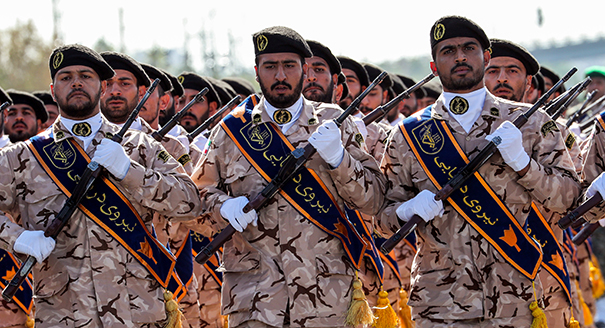
The Trump administration claims that its decision to designate Iran’s Islamic Revolutionary Guard Corps (IRGC) as a Foreign Terrorist Organization is part of its “maximum pressure” campaign against Iran. The aim is to force Tehran to cave in to American demands on the Joint Comprehensive Plan of Action, the nuclear deal with Iran, and end Iran’s destabilizing behavior in the Middle East.
It will do neither. Iran is one of the most heavily sanctioned countries on earth, and the IRGC and its Quds Force are already caught in this web. Those sanctions have brought nearly all foreign trade and investment in Iran to a screeching halt. Anybody who thinks the designation will force regional actors who are deeply entangled with and dependent on the IRGC for their security to sever those ties, or that Tehran will clamp down on these activities, understands neither regional nor internal Iranian dynamics. In short, the designation was a purely symbolic move with no rewards and many risks for U.S. interests in the region.
Negar Mortazavi | Consultant editor for the Independent based in Washington, D.C., on Twitter @NegarMortazavi
The designation will strengthen the Islamic Revolutionary Guard Corps (IRGC) inside Iran and increase tensions across the Middle East. In Iran this is seen as an existential threat from an outside enemy. So Iranian moderates, even those who are staunch critics of the hardliners, now have to rally behind the IRGC. Any criticism of the IRGC inside Iran will be considered treasonous and have high political costs. The Trump administration’s policy of maximal pressure on Iran continues to weaken moderate forces who want better relations with the West, and diminishes the chance for engagement and diplomacy with Iran. It will push the hardliners to crack down on civil society, human rights activists, and those working for a more democratic Iran.
The IRGC is already one of the most heavily sanctioned entities in the world, but those who run the force have benefited from this. Sanctions create a dark financial ecosystem where influential actors engage in nontransparent trade to help the government circumvent sanctions. That creates a breeding ground for massive corruption and the IRGC and associates have been the key beneficiaries.
Ali Hashem | BBC Iran affairs correspondent
Designating Iran’s Islamic Revolutionary Guard Corps (IRGC) as a terrorist organization went much further than what it looked like. The IRGC isn’t just a military force, it is an entity that is involved in several aspects of life in Iran, including construction, tourism, and banking. That means that hundreds of thousands of people will be affected by the American decision. This could lead gradually to a restructuring of the Iranian economy, with the IRGC having minimal involvement in it. However, it is unlikely that the decision will have an impact on Iran’s regional behavior, despite the financial hardships it will cause. Instead, in regional terms the U.S. decision to identify the IRGC and its personnel as legitimate targets will provoke tension that could spark proxy wars in areas of shared U.S.-Iranian influence such as Iraq, Afghanistan, and Syria.
Matthew Levitt | Fromer-Wexler fellow and director of the Reinhard Program on Counterterrorism and Intelligence at the Washington Institute for Near East Policy
The decision by the State Department to designate the Islamic Revolutionary Guard Corps (IRGC) as a Foreign Terrorist Organization is an action heavy on messaging with few practical advantages. The Treasury Department had already designated the IRGC as a terrorist group (as well as for proliferation and human rights violations), and Iran has long been on the list of state sponsors of terrorism. These already subjected the IRGC to powerful sanctions authorities, and those who support it to some criminal liability.
The Foreign Terrorist Organization listing adds only two substantive tools: first, additional immigration restrictions—which could be interpreted in extremely broad terms and apply not just to the IRGC but to anyone that engages with IRGC entities. And second, criminal liability for knowingly providing material support to the group, which includes extraterritorial reach.
Depending on how these new tools are implemented—and what guidance the White House gives border authorities and prosecutors—these could have significant effects, some positive, some not. It also adds yet another layer of sanctions threat, which could sharpen the costs of doing business with Iran more broadly given the extent to which the IRGC is embedded in the Iranian economy. This could prove particularly difficult for Iraq, which is dependent on Iranian energy and whose officials could now be exposed to sanctions and criminal liability.

Editor, Diwan, Senior Editor, Malcolm H. Kerr Carnegie Middle East Center
Michael Young is the editor of Diwan and a senior editor at the Malcolm H. Kerr Carnegie Middle East Center.
Recent Work
Michael Young
Michael Young
Carnegie does not take institutional positions on public policy issues; the views represented herein are those of the author(s) and do not necessarily reflect the views of Carnegie, its staff, or its trustees.
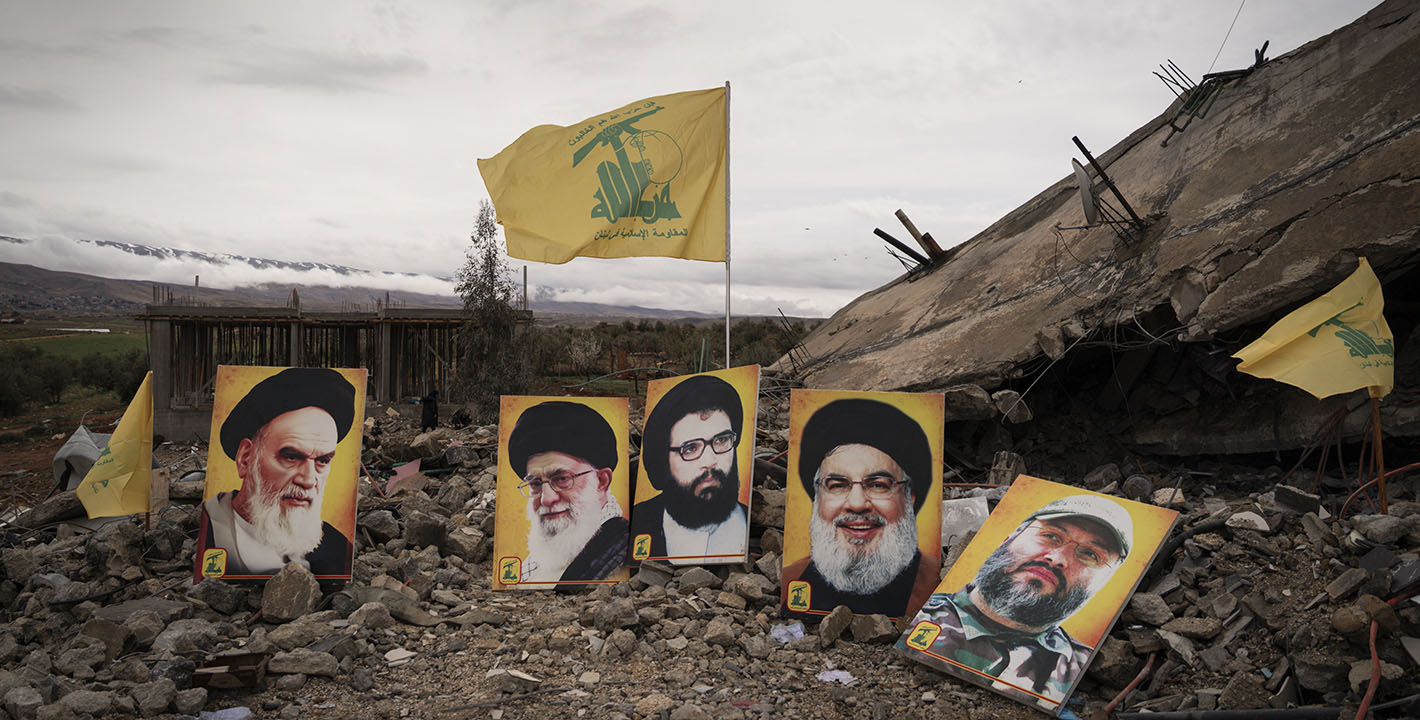
The party’s objectives involve tying together the Lebanese and Iranian fronts, while surviving militarily and politically at home.
Mohamad Fawaz
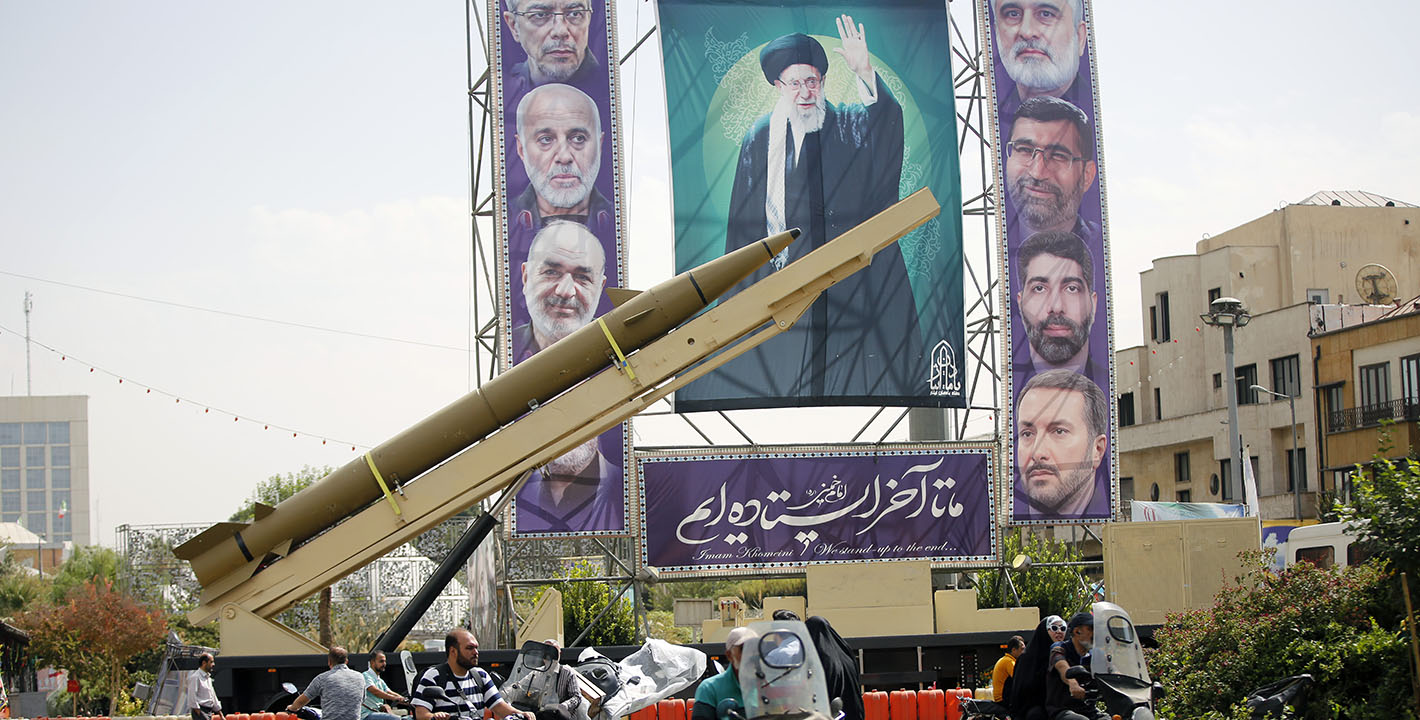
In an interview, Hamidreza Azizi discusses how Tehran has adapted in real time to the conflict with the United States and Israel.
Michael Young
In an interview, Roger Diwan discusses where the global economy may be going in the third week of the U.S.-Israeli war with Iran.

Nur Arafeh
In an interview, Andrew Leber discusses the impact the U.S. and Israeli war against Iran is having on Arab Gulf states.
Michael Young
In an interview, Sergei Melkonian discusses Armenia’s and Azerbaijan’s careful balancing act among the United States, Israel, and Iran.

Armenak Tokmajyan