

Commentary
The accord represents a pivotal moment in the region to avert a security vacuum in the Gulf.
Azeema Cheema, Mohanad Hage Ali
{
  "authors": [
    "Najwa Yassine"
  ],
  "type": "commentary",
  "blog": "Diwan",
  "centerAffiliationAll": "dc",
  "centers": [
    "Carnegie Endowment for International Peace",
    "Malcolm H. Kerr Carnegie Middle East Center"
  ],
  "collections": [],
  "englishNewsletterAll": "menaTransitions",
  "nonEnglishNewsletterAll": "",
  "primaryCenter": "Malcolm H. Kerr Carnegie Middle East Center",
  "programAffiliation": "MEP",
  "programs": [
    "Middle East"
  ],
  "projects": [],
  "regions": [
    "Gulf",
    "Saudi Arabia",
    "Middle East"
  ],
  "topics": [
    "Political Reform"
  ]
}
Source: Getty
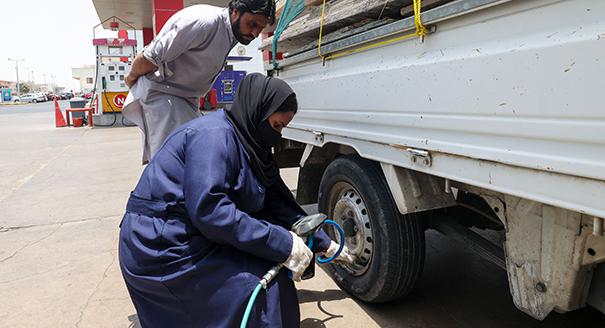
Women in Saudi Arabia still face challenges and obstacles, but the restrictions of the past are being dismantled.
Saudi Arabia hosted the Forbes Middle East Women’s Summit 2023—chaired by H.H. Princess Noura bint Faisal Al Saud—on May 21–23. The event brought together women from business, technology, healthcare, fashion, travel and tourism, and other fields, to shed light on the progress, challenges, and opportunities for women in the kingdom. With a focus on empowerment, leadership, and innovation, the summit was a powerful platform for exchanging ideas, fostering connections, and driving positive change.
For many years, women in Saudi Arabia faced severe restrictions on their participation in public life and education, and in securing employment opportunities. They were subject to guardianship laws, which required them to seek permission from male relatives to engage in various activities, including traveling, studying, and even accessing healthcare. Moreover, until 2018, women were not allowed to drive, further impeding their mobility and independence.
These social norms were deeply entrenched and rooted in interpretations of conservative religious beliefs. Women’s roles were largely confined to the private sphere, with limited opportunities for education and professional advancement. Such limitations hindered the potential of countless women, preventing them from fully contributing to the development and progress of Saudi society.
Furthermore, the historical context of traditional social norms in Saudi Arabia includes strict dress codes and regulations that have affected women’s freedom of expression and individuality. One notable example is the requirement that women wear the abaya, a loose-fitting black cloak, in public. This dress code has been enforced for decades, limiting women’s choices in terms of fashion and personal style. The abaya mandate has been deeply rooted in cultural and religious customs.
In recent years, Saudi Arabia has embarked on a path of transformative change and has taken significant steps toward women’s autonomy. Reforms led by Crown Prince Mohammed bin Salman have aimed to dismantle longstanding barriers and provide greater opportunities for women to participate in various sectors of society. These reforms include lifting the ban on women driving, expanding female access to education and employment, and relaxing guardianship laws.
There have been notable shifts toward more relaxed dress codes and greater freedom for women to choose their attire. Initiatives such as the “Dress Code Initiative” have encouraged more leniency in enforcing strict dress regulations, allowing women to express themselves through their clothing while still adhering to cultural norms. This initiative has given women the option to wear more colorful and stylish abayas, introducing a sense of fashion and creativity into their wardrobes.
According to the New York Times, over the last five years the percentage of women working outside the home has almost doubled, from nearly 18 percent to 32 percent, with official statistics confirming an upward trend. Women today serve as customs officials at King Khalid International Airport in Riyadh, client relationship managers at banks, and hostesses at restaurants.
In addition to changes in the workplace, public space is becoming less strictly segregated by sex. In coffee shops in Riyadh, such as Overdose (motto: “Caffeine, it’s my drug of choice”), male and female customers can now sip lattes in each other’s company.
Women can also attend certain sporting events at stadiums, which was forbidden until a few years ago. They are no longer required to use separate entrances from men, although some establishments still have them. They can also now apply for passports, travel on their own, and live by themselves.
Saudi Arabia adheres to a strict interpretation of Islamic law, which has influenced the legal and social framework within which women’s rights have been defined. As practiced in Saudi Arabia, Islamic law, or Sharia, has often been cited as a justification for the restrictions imposed on women. The guardianship system, which despite some recent reforms is still in place, means that women must rely on permission from men—often their fathers or husbands, but in some cases their sons—to enter marriages and make key decisions. However, in June 2021, an amendment to the “Law of Procedure before Sharia Courts” was enacted, giving divorced, widowed, or single women the right to live independently without permission from their guardians.
While Saudi Arabia has made significant strides in recent years toward promoting women’s rights and advancement, there are still challenges and obstacles that continue to hinder women’s progress in the country. One of these is the persistence of gender-based discrimination and stereotypes. Stereotypes that view women primarily as wives and mothers rather than as individuals with diverse skills and aspirations can hinder female advancement in education, employment, and leadership positions.
The crown prince has made momentous improvements to decrease gender discrimination and segregation, but even if laws change on paper, social norms and notions about women must change as well. Saudi culture has ingrained in the minds of males the belief that women are inferior. Thus, male relatives find ways to hinder the enforcement of laws that give women freedoms. The male guardianship system must be fully removed to ensure that women have control over their own lives to access the same opportunities as males.
As a catalyst for positive change, the Forbes Middle East Women’s Summit played a pivotal role in amplifying women’s voices, advancing women’s rights, and contributing to the ongoing transformation of Saudi Arabia’s social and cultural landscape. With its impact and influence, the summit served as a beacon of hope and inspiration for the continued progress of women in Saudi Arabia and beyond. Progress may be gradual, but Saudi women are boldly taking the road to change.
Najwa Yassine
Media and Events Coordinator
Carnegie does not take institutional positions on public policy issues; the views represented herein are those of the author(s) and do not necessarily reflect the views of Carnegie, its staff, or its trustees.

The accord represents a pivotal moment in the region to avert a security vacuum in the Gulf.


Azeema Cheema, Mohanad Hage Ali

In an interview, Jason Burke discusses his sweeping account of the “revolutionists” who so shaped the 1970s and early 1980s.

Michael Young

There is a disturbing structural parallel between the old global energy economy and the new green transition.

Angie Omar
This will be the region’s most representative tournament, amid broad changes in its footballing landscape.

Issam Kayssi

In an interview, Marc Lynch discusses his new book decrying the post-1990 U.S.-dominated order in the Middle East.
Michael Young