

Commentary
In an interview, Rozina Ali discusses her new book on the rise and manifestations of Islamophobia in the United States.
Michael Young
{
  "authors": [
    "Mohamad Fawaz"
  ],
  "type": "commentary",
  "blog": "Diwan",
  "centerAffiliationAll": "",
  "centers": [
    "Malcolm H. Kerr Carnegie Middle East Center",
    "Carnegie Endowment for International Peace"
  ],
  "englishNewsletterAll": "",
  "nonEnglishNewsletterAll": "",
  "primaryCenter": "Malcolm H. Kerr Carnegie Middle East Center",
  "programAffiliation": "",
  "regions": [
    "Lebanon",
    "United States"
  ]
}
Source: Getty
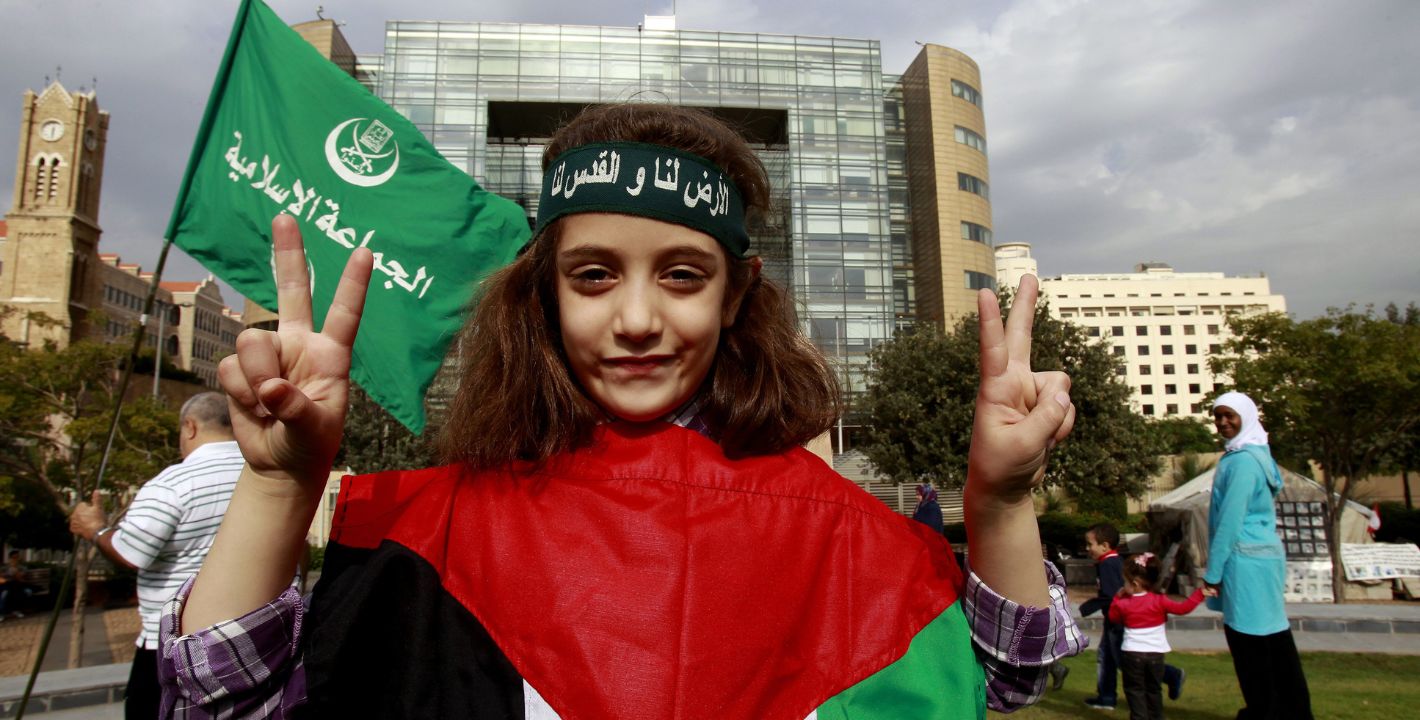
The organization is under U.S. sanctions, caught between a need to change and a refusal to do so.
Over the decades, the Jamaa al-Islamiyya, the Lebanese branch of the Muslim Brotherhood, has faced circumstances that most of its counterparts in other countries have not faced. Due to Lebanon's diversity and the organization’s modest size and political weight, it did not attract much political attention, sparing it pressure from the authorities. Its activities were focused on youth and faith-based outreach, while it refrained from ambitious political mobilization.
However, this also generated discontent among the group’s supporters, given the Jamaa’s inability to produce tangible political gains amid a prolonged vacuum within the Sunni community. This paved the way for a pivotal change in the organization toward the end of 2022, when the Jamaa revamped its structure. It set new priorities and elected a new leadership, with Sheikh Mohammed Taqqoush becoming secretary general. Domestic and regional events, especially after the October 7, 2023 Hamas attack in Israel, reflected the depth of the change. The leadership transition pushed the Jamaa closer to Hamas, which placed resistance to Israel as the organization’s foremost goal and main gateway to securing domestic power, in a form that closely resembled the thinking and approach of Hezbollah.
Unlike 2006, when the organization had taken part in resisting Israel with its limited capacities and under the radar, in 2023–2024 it undertook operations at a more visible level, causing greater media attention. However, the great disproportion in the military capacities of Israel and the Jamaa’s armed wing, the Fajr Forces, not to mention that between Israel and Hezbollah, despite the latter’s military capabilities, soon took the air out of the organization’s enthusiasm for armed struggle. In addition, the Jamaa proved unable to transform its organizational structure into one resembling those of Hezbollah or Hamas, in which militarism and resistance are central. As a result, the Jamaa was unable to maintain the momentum of war with Israel, and the heavy casualties it incurred soon forced it to end its military operations, even before the dramatic Israeli escalation starting in September 2024. It is also important to note that Israel did not even engage in a full-fledged onslaught against the Jamaa. The group’s headquarters and key figures were not attacked, except for those involved in the war.
Nevertheless, Israel did not leave matters there. It also reopened old enmities in April 2025, killing Sheikh Hussein Atwi, who had a long history of combating Israeli forces. Earlier this month, on February 9, in the border area, the Israelis also abducted Atwi Atwi, the Jamaa al-Islamiyya’s leading official in Hasbayya and Marjeyoun and a former mayor of Habbariyeh—one of the few remaining figures from the Jamaa’s early generation that had fought Israel. The abduction came soon after the Jamaa was placed on the U.S. list of Foreign Terrorist Organizations (FTO) on January 13 and also designated a Specially Designated Global Terrorist (SDGT), even as preparations were beginning for parliamentary elections in May.
This came at a difficult moment for the Jamaa, which has faced major challenges in the past year, without the organizational structure and political flexibility to adapt to them. Among these was the arrest in July last year of youths affiliated with the organization, who were accused of operating a military training camp in the Aley district. The Jamaa leadership failed to stand by the young men or secure their quick release. They remained in detention for over two months, despite the fact that the Lebanese army later dismissed terrorism-related charges against them.
The organization now finds itself in a particularly vulnerable position. On the one side are the Israelis, who abducted a senior official without a clash. On another is the Lebanese state, which detained Jamaa members. And on a third are U.S. sanctions against the Muslim Brotherhood in Lebanon Egypt, and Jordan. They are toughest in the Lebanese case, where Washington has applied both the FTO and SDGT labels and sanctioned the group’s secretary-general, while the Egyptian and Jordanian branches were designated solely as SDGTs.
Usually under such circumstances, organizations tend to recalibrate and chart a new course. Yet, the Jamaa did not fundamentally alter the way it operated, except for stepping back from military activities. It made no major changes in its structure or political direction, as if it had failed to process what was taking place. It was clear that the Jamaa’s leadership was unwilling to do so, mainly because it didn’t want to relinquish power. However, the organization continues to emphasize its religious and political moderation, stressing its openness to the various political factions. This reflects a desire to avoid being labeled as an extension of Hezbollah while remaining in a gray zone—neither fully aligned with Hezbollah nor opposed to it.
The impact of the current situation, along with the U.S. sanctions, are becoming more evident by the day. The Jamaa’s only parliamentarian, Imad al-Hout, announced recently that in 2022 he had already requested to be relieved from his organizational duties, and he now intends to run for parliament as an independent. The U.S. sanctions on the Jamaa have made other Lebanese political groups unwilling to enter into electoral alliances with the organization, leaving Hezbollah as the main exception. Therefore, even if the Jamaa has not fundamentally shifted direction, it appears to be reassessing its approach to elections to be able to explore new electoral alliances.
Yet the central question remains: In the absence of meaningful changes within the Jamaa’s structure, leadership, discourse, or political relationships, will the organization be able to escape the weight of U.S. sanctions? And will its candidates find new alliances in the next elections? Or, barring any change, will the Jamaa al-Islamiyya ultimately find itself with no other option than to fully align with Hezbollah?
Mohamad Fawaz
Carnegie does not take institutional positions on public policy issues; the views represented herein are those of the author(s) and do not necessarily reflect the views of Carnegie, its staff, or its trustees.

In an interview, Rozina Ali discusses her new book on the rise and manifestations of Islamophobia in the United States.

Michael Young

In an interview, Ian Lustick and Eli Clifton discuss their new book on why a prominent ally has so much influence in America.
Michael Young

As the U.S. stumbles in its war with Iran, we are likely to see an acceleration of its disengagement from the region.
Michael Young

Middle Eastern states should welcome an accelerated U.S. disengagement from their region.
Michael Young

In an interview, former ambassador Charles Freeman assesses the Trump administration’s war against Iran.
Michael Young