

Commentary
This will be the region’s most representative tournament, amid broad changes in its footballing landscape.
Issam Kayssi
{
  "authors": [
    "Issam Kayssi",
    "Yasmine Zarhloule"
  ],
  "type": "commentary",
  "blog": "Diwan",
  "centerAffiliationAll": "",
  "centers": [
    "Carnegie Endowment for International Peace",
    "Malcolm H. Kerr Carnegie Middle East Center"
  ],
  "englishNewsletterAll": "",
  "nonEnglishNewsletterAll": "",
  "primaryCenter": "Malcolm H. Kerr Carnegie Middle East Center",
  "programAffiliation": "",
  "regions": [
    "North Africa",
    "Morocco",
    "Maghreb"
  ]
}
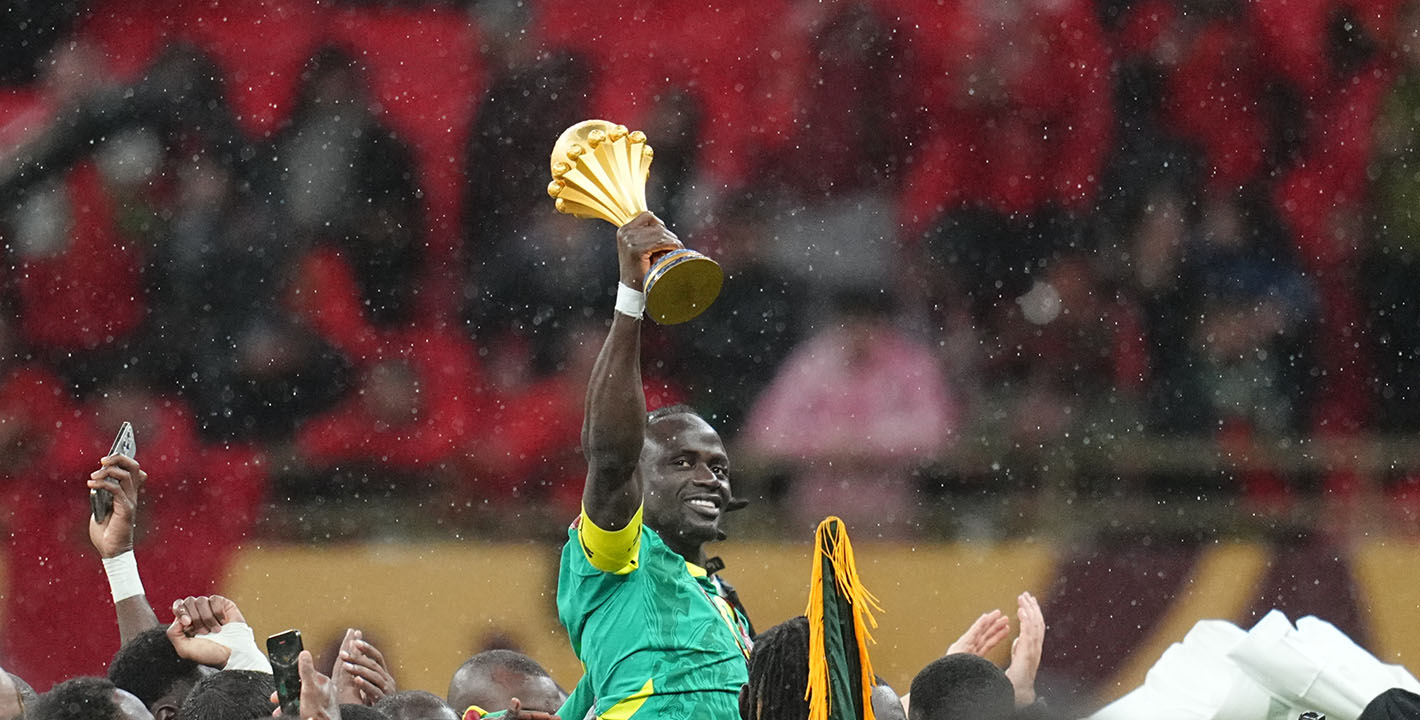
Source: Getty
The recent African Cup of Nations tournament in Morocco touched on issues that largely transcended the sport.
Senegal celebrated its victory over Morocco in the 2025 African Cup of Nations (AFCON), which concluded on January 18, 2026, in Rabat. However, the triumph over the hosts, only the second crowning in Senegal’s history, was overshadowed by tension and controversy. AFCON 2025 was not only about African football. It was a test run for a far bigger spectacle, namely the 2030 World Cup, which Morocco will co-host with Spain and Portugal.
The tournament did, however, offer a window into how contemporary African football has become a place where state-led infrastructural development, diaspora citizenship, and digitally mediated contestation are converging, reshaping notions of belonging and rivalry across the continent and beyond.
Since the early 2020s, Morocco has pursued an ambitious strategy of infrastructure-driven global positioning, with mega-events serving as both catalysts and showcases. Hosting AFCON was an opportunity to demonstrate logistical capacity, modernized stadiums, transport infrastructure, and a polished image to international audiences. In that sense, the tournament allowed the Moroccan authorities to portray the country as a reliable hub at the intersection of Africa and Europe.
Sporting mega-events have long been tools of statecraft. They can mobilize domestic publics, forge international alliances, and enhance global visibility. For Morocco, AFCON was also a means of presenting itself as a gateway for African and global visitors alike to reinforce its broader strategy of infrastructural and geopolitical branding. The tournament carried particular symbolic weight for Moroccans. Despite the country’s recent international successes—its historic participation in the semifinals of the 2022 World Cup, its shock victory in the 2025 FIFA U20 World Cup, and its win in the 2025 FIFA Arab Cup—Morocco has won AFCON only once, in 1976. (In contrast, Egypt has won the tournament a record seven times.) Hosting AFCON thus revived memories of past disappointments while also fueling hopes that a new generation of players could translate global success into continental prestige and confirm Morocco’s growing footballing stature.
The tense wait for victory shaped Moroccan public sentiment throughout the AFCON competition. The loss in the final therefore triggered not only frustration but also broader questions about Morocco’s place in Africa, especially as online reactions from fans in other countries were interpreted as hostile or dismissive. At the same time, AFCON highlighted how African national teams are increasingly reflecting transnational forms of belonging. One of the most striking features of contemporary African football is the prominence of diaspora-born players. Nearly a third of the players in AFCON 2025 were born outside the continent, reflecting longstanding migration patterns and increasingly strategic recruitment practices by national federations. The tournament’s top scorer, Morocco’s Brahim Díaz, for instance, was born in Malaga and has also represented Spain at the international level. Changes in FIFA eligibility rules, particularly the 2021 relaxation of restrictions on switching national teams for players with dual nationality, have further institutionalized this trend.
For African states, recruiting diaspora players is not merely a sporting strategy; it is also a form of transnational nation-building. Countries such as Morocco, Ghana, Nigeria, and Tunisia have developed institutional frameworks to engage their nationals abroad. This includes Morocco’s Ministry in Charge of Moroccans Residing Abroad, Nigeria’s Nigerians in Diaspora Commission, Ghana’s Diaspora Affairs Office, and Tunisia’s Office des Tunisiens à l’Étranger. These institutions reflect a broader shift in how states conceptualize citizenship, extending political and symbolic inclusion beyond territorial borders.
Football provides a particularly visible arena for this expanded notion of nationhood. Diaspora players embody the transnational character of modern African states, connecting domestic publics with global communities and reinforcing narratives of global belonging.
If diaspora players illustrate the transnationalization of African football, digital platforms reveal how sporting events generate new forms of public contestation. Throughout AFCON 2025, moments on the pitch were rapidly transformed into online spectacles, circulating across social media and generating real-time debates about history, identity, and fairness.
A notable example was the viral tribute to Patrice Lumumba by Congolese supporter Michel Nkuka Mboladinga, who stood motionless during a match in a gesture of anticolonial remembrance. Initially mocked by some online users, the tribute was later reappropriated by others as a symbol of continental solidarity, illustrating how historical memory circulates and is reinterpreted in digital spaces.
Disputes over refereeing decisions, celebrations by rivals, and allegations of bias spread rapidly online, shaping how fans experienced the tournament in real time. The Senegalese team’s brief walkout during the final showed how these online narratives could ultimately spill out onto the pitch. The institutional consequences have been strict, however: the Confederation of African Football issued more than $1 million in fines and suspended players and coaches from both finalist teams.
These dynamics are not unique to African football. Similar controversies have surrounded major tournaments in Europe and the Americas—from fan violence at the European Championship to officiating disputes in the Copa América. AFCON 2025, however, was a great example of how digital platforms intensify and politicize sporting events in real time, creating transnational publics where claims about who belongs, who is wronged, and who commands legitimacy are actively disputed rather than passively consumed.
In Morocco, online reactions to the tournament after the final exposed deeper anxieties about the country’s relationship with the rest of the continent. Many Moroccan accounts interpreted celebratory reactions from other African countries, particularly from rivals such as Algeria and Egypt, as evidence that Morocco lacked genuine allies in Africa. It struck a nerve as some commentators went further, calling for a reassessment of Morocco’s policy of hospitality and fraternity toward African visitors and partners, given that such gestures are not reciprocated.
The tensions ultimately entered the legal realm, with eighteen Senegalese supporters detained in the final game reportedly protesting their continued detention amid conflicting accounts about their treatment. The case has since taken on a diplomatic dimension, as the supporters’ defense counsel have appealed to the Moroccan authorities via the Moroccan ambassador in Brussels, alleging procedural irregularities—claims amplified by segments of the Senegalese diaspora. The episode illustrated how mega-events can trigger securitized responses while also activating transnational advocacy networks.
These narratives sit uneasily with Morocco’s broader African diplomacy, which has sought to expand economic, religious, and political ties across the continent. Mega-events like AFCON are meant to reinforce such connections, projecting images of solidarity and shared identity. The tournament, however, demonstrated how fragile these solidarities can be when filtered through the amplifying lens of social media, where rivalry and suspicion can quickly overshadow official narratives of unity.
Despite the chaos of the final and its aftermath, AFCON 2025 showcased a level of organizational and infrastructural capacity that many observers regarded as a milestone for African football. The opening and closing ceremonies, stadium facilities, and logistical arrangements reflected years of investment, demonstrating how sporting events are increasingly intertwined with state-led development agendas. In this sense, the tournament represented both an infrastructural success and a social and political stress test.
AFCON 2025 therefore illustrated how continental championships now extend far beyond sport. They mobilize infrastructure, engage diasporic citizenship, and generate digitally mediated publics in which memory, identity, and rivalry are continuously contested. Social media platforms intensify both recognition and suspicion, solidarity and contestation, creating an environment in which sporting outcomes quickly become proxies for broader political and social debates.
For Morocco, the tournament revealed both the promise and limits of mega-event diplomacy. While infrastructural investments and global visibility positioned the kingdom as a key player in African and global football, the digital aftershocks of the tournament exposed persistent anxieties about belonging, reciprocity, and regional hierarchies. As the 2030 World Cup approaches, these dynamics are likely to intensify, with mega-events continuing to serve as arenas where politics, identity, and spectacle converge.
Whether such tournaments can foster lasting continental solidarity, or whether they will increasingly generate fragmented digital publics and rival narratives, remains an open question. What is clear is that African football is no longer just a game. It is a stage on which infrastructures, diasporas, and online communities contest what belonging, authority, and solidarity mean in contemporary Africa.

Research Analyst, Malcolm H. Kerr Carnegie Middle East Center
Issam Kayssi is a research analyst at the Malcolm H. Kerr Carnegie Middle East Center.

Nonresident Scholar, Malcolm H. Kerr Carnegie Middle East Center
Yasmine Zarhloule is a nonresident scholar at the Malcolm H. Kerr Carnegie Middle East Center.
Carnegie does not take institutional positions on public policy issues; the views represented herein are those of the author(s) and do not necessarily reflect the views of Carnegie, its staff, or its trustees.
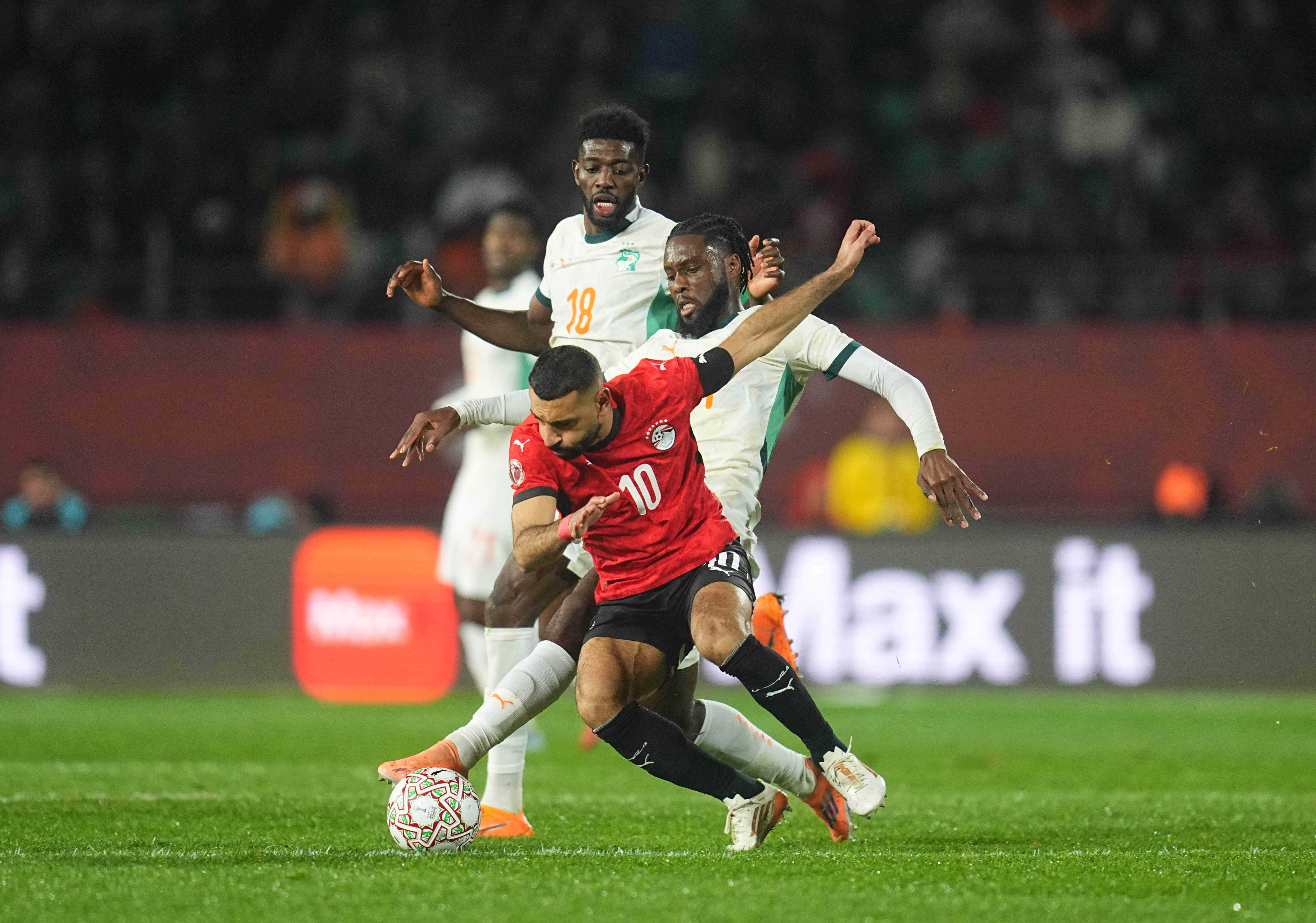
This will be the region’s most representative tournament, amid broad changes in its footballing landscape.
Issam Kayssi
Mustaqbal Misr has expanded its portfolio with remarkable speed, but a lack of transparency remains.

Yezid Sayigh
The burden of environmental degradation is felt not only through physical labor but also emotional and social loss.
Yasmine Zarhloule, Ella Williams
The country’s youthful protest movement is seeking economic improvement, social justice, and just a little hope.
Yasmine Zarhloule
The Moroccan-Algerian rivalry is playing itself out in ties with Burkina Faso, Niger, and Mali.
Yasmine Zarhloule