

{
  "authors": [
    "Marinika Babanazarova",
    "Thomas de Waal"
  ],
  "type": "event",
  "centerAffiliationAll": "dc",
  "centers": [
    "Carnegie Endowment for International Peace"
  ],
  "collections": [],
  "englishNewsletterAll": "ctw",
  "nonEnglishNewsletterAll": "",
  "primaryCenter": "Carnegie Endowment for International Peace",
  "programAffiliation": "russia",
  "programs": [
    "Russia and Eurasia"
  ],
  "projects": [],
  "regions": [
    "Central Asia",
    "Uzbekistan",
    "Caucasus",
    "Russia"
  ],
  "topics": []
}
The Desert of Forbidden Art
Mon, December 17th, 2012
Washington, D.C.
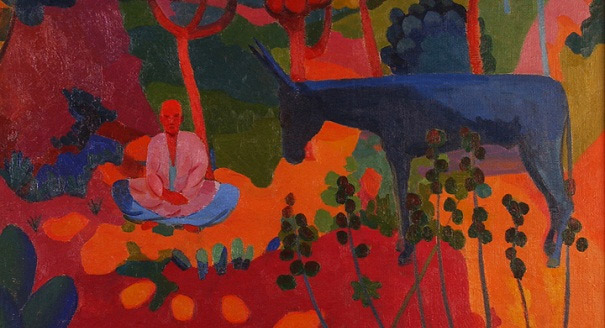
IMGXYZ4061IMGZYXPlease join us and the Eurasia Foundation for a screening of “The Desert of Forbidden Art,” the incredible story of how a treasure trove of banned Soviet art worth millions of dollars was stashed in a far-off desert of Uzbekistan. Marinika Babanazarova, director of the Savitsky Karakalpakstan Art Museum, and a Eurasia Foundation Bill Maynes Fellow, will join us for a discussion after the screening. Carnegie’s Thomas de Waal will moderate.
During the Soviet regime, a small group of artists remain true to their vision despite threats of torture, imprisonment, and death.
Their plight inspires frustrated young painter, Igor Savitsky. Pretending to buy state-approved art, Savitsky instead daringly rescues 40,000 works from forbidden artists and creates a museum in the desert of Uzbekistan, far from the watchful eyes of the KGB. Though a penniless artist himself, he cajoles the cash to pay for the art from the same authorities who are banning it. He amasses an eclectic mix of Russian avant-garde art. But his greatest discovery is an unknown school of artists who settle in Uzbekistan after the Russian revolution of 1917, encountering a unique Islamic culture, as exotic to them as Tahiti was for Gauguin. They develop a startlingly original style, fusing European modernism with centuries-old Eastern traditions.
Carnegie does not take institutional positions on public policy issues; the views represented herein are those of the author(s) and do not necessarily reflect the views of Carnegie, its staff, or its trustees.
Event Speakers
Marinika Babanazarova
Senior Fellow, Carnegie Europe

Thomas de Waal is a senior fellow at Carnegie Europe, specializing in Eastern Europe and the Caucasus.