

{
  "authors": [
    "Dmitri Trenin",
    "William J. Burns",
    "Andrew S. Weiss"
  ],
  "type": "event",
  "centerAffiliationAll": "dc",
  "centers": [
    "Carnegie Endowment for International Peace"
  ],
  "collections": [],
  "englishNewsletterAll": "ctw",
  "nonEnglishNewsletterAll": "",
  "primaryCenter": "Carnegie Endowment for International Peace",
  "programAffiliation": "russia",
  "programs": [
    "Russia and Eurasia",
    "American Statecraft"
  ],
  "projects": [],
  "regions": [
    "North America",
    "United States",
    "Russia"
  ],
  "topics": [
    "Foreign Policy"
  ]
}
Should We Fear Russia?, November, 30, 2016
Wed, November 30th, 2016
Washington, DC
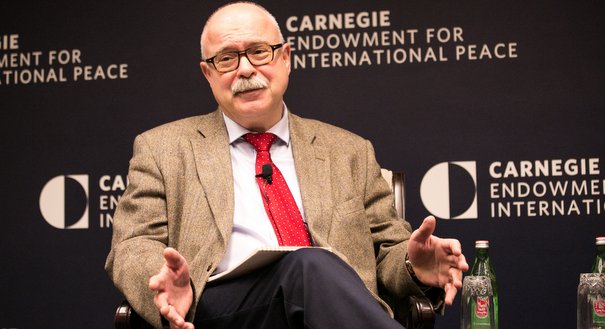
The Carnegie Endowment for International Peace hosted the launch of Dmitri Trenin’s new book, Should We Fear Russia? (Polity, 2016).
Since the outbreak of the Ukraine crisis, there has been much talk of a new Cold War between Russia and the West. Russian President Vladimir Putin is widely seen as volatile, belligerent, and willing to use military force to get his way.
In this latest book, Dmitri Trenin, the longtime director of the Carnegie Moscow Center, explains why the Cold War analogy is misleading. Relations between the West and Russia are certainly bad and dangerous but, he argues, they are bad and dangerous in new ways. Trenin outlines the crucial differences, which make the current rivalry between Russia, the EU, and the United States more fluid and unpredictable. By unpacking the dynamics of this increasingly strained relationship, Trenin makes the case for handling Russia with pragmatism and care and cautions against simply giving into fear.
William J. Burns
William J. Burns is president of the Carnegie Endowment for International Peace.
Dmitri Trenin
Dmitri Trenin, director of the Carnegie Moscow Center, has been with the center since its inception. He also chairs the research council and the Foreign and Security Policy Program.
Andrew S. Weiss
Andrew S. Weiss is vice president for studies at the Carnegie Endowment for International Peace, where he oversees research in Washington and Moscow on Russia and Eurasia.
Carnegie does not take institutional positions on public policy issues; the views represented herein are those of the author(s) and do not necessarily reflect the views of Carnegie, its staff, or its trustees.
Event Speakers
Former Director, Carnegie Moscow Center
Trenin was director of the Carnegie Moscow Center from 2008 to early 2022.
Former Career Diplomat
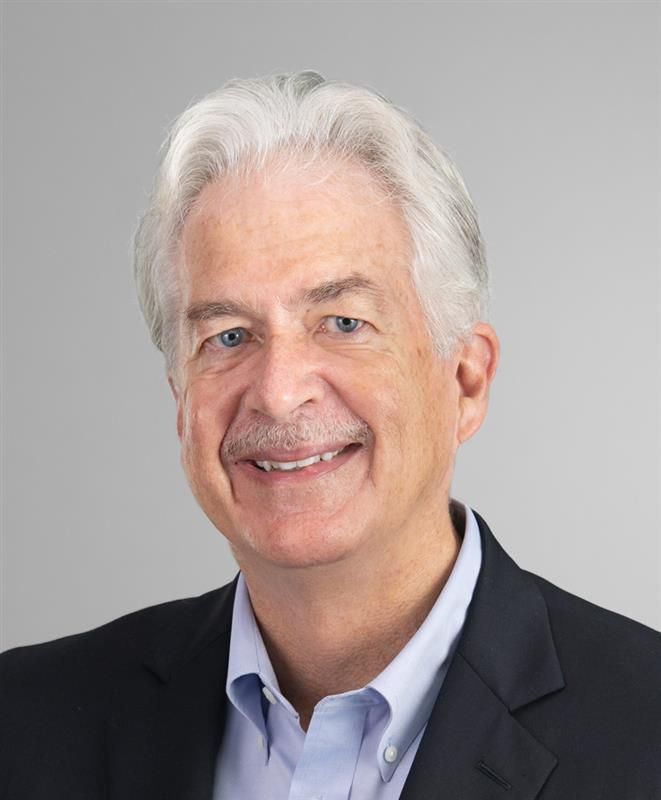
A former career diplomat, William J. Burns served as director of the CIA, deputy secretary of State, and ambassador to Russia and Jordan. Burns was also president of the Carnegie Endowment for International Peace from 2015 to 2021.
James Family Chair, Vice President for Studies

Andrew S. Weiss is the James Family Chair and vice president for studies at the Carnegie Endowment for International Peace, where he oversees research on Russia, Ukraine, and Eurasia. His graphic novel biography of Vladimir Putin, Accidental Czar: the Life and Lies of Vladimir Putin, was published by First Second/Macmillan in 2022.